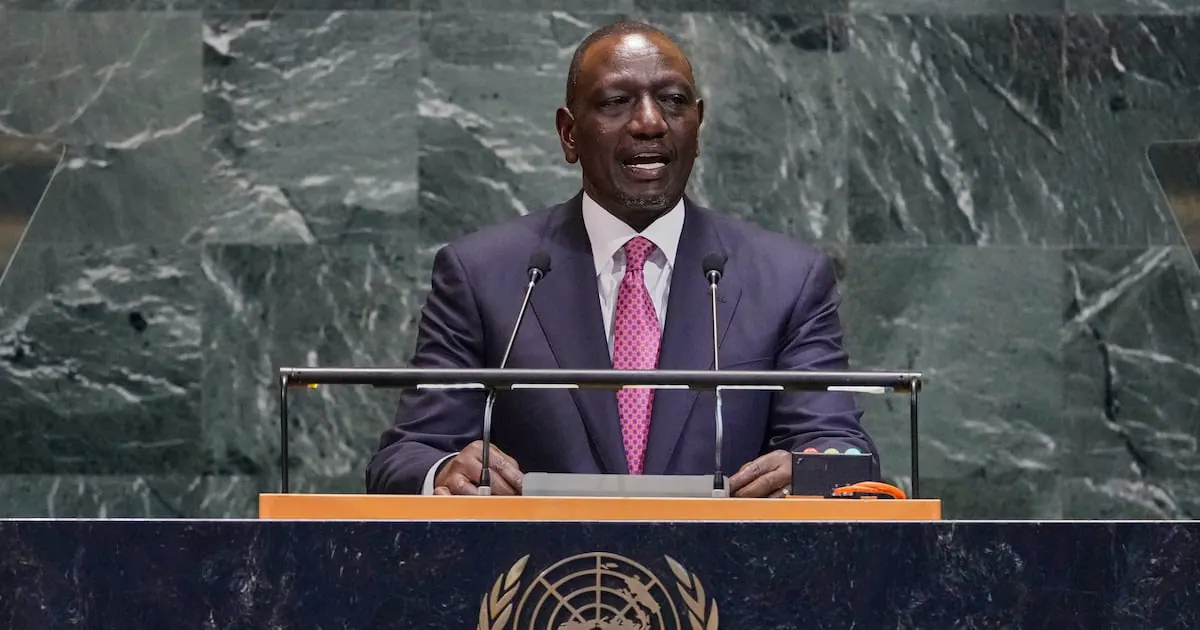
The African Union's recent report on reforms, championed by Kenyan President William Ruto, has been met with skepticism. Released in February, the document focuses on peace and security, but critics argue it relies on bureaucratic solutions to inherently political problems. The report's language has been described as high-sounding but lacking concrete, practical ideas.
The report pushes for the alignment of the African Peace and Security Architecture and the African Governance Architecture, citing delays due to limited implementation of AU legal and policy frameworks. Proposed solutions include renewing member states' adherence to AU instruments and principles, reinvigorating African unity, and reaffirming collective ownership of the AU agenda.
Critics argue that these proposals are too vague, and the report's focus on human security lacks a clear definition or concrete suggestions for achievement. The report also suggests strengthening weak institutions, such as the African Peer Review Mechanism and the Pan-African Parliament.
The report proposes setting up independent panels to harmonize an implementation plan and draft an African foreign policy framework. It also calls for a memorandum of understanding between the AU and African regional economic communities, such as the Southern African Development Community, to take decisions on using the African Standby Force.
The African Standby Force, a pan-continental force of five subregional brigades, was supposed to be established by 2015 but remains far from operational. The report suggests better coordination between the AU Commission, the Continental Early Warning System, Africa's regional economic communities, civil society bodies, and AU organs.
The report also recommends institutionalizing compliance and accountability mechanisms, drafting an AU early action guideline, and updating the AU Master Roadmap of Practical Steps to Silencing the Guns. However, some argue that these suggestions focus too much on bureaucratic coordination and not enough on building effective subregional economic pillars.
The report's proposal to increase the AU Peace Fund from $400m to $1bn has been met with skepticism, given the enormous resources required and the debt burdens of member states. Only 24% of the AU's programme budget is funded by its member states, with external donors providing the bulk of security funding.
Key points
- The AU's report on reforms has been criticized for its lack of concrete, practical ideas.
- The report's focus on bureaucratic solutions to political problems has been met with skepticism.
- The proposal to increase the AU Peace Fund from $400m to $1bn has been questioned due to the enormous resources required.