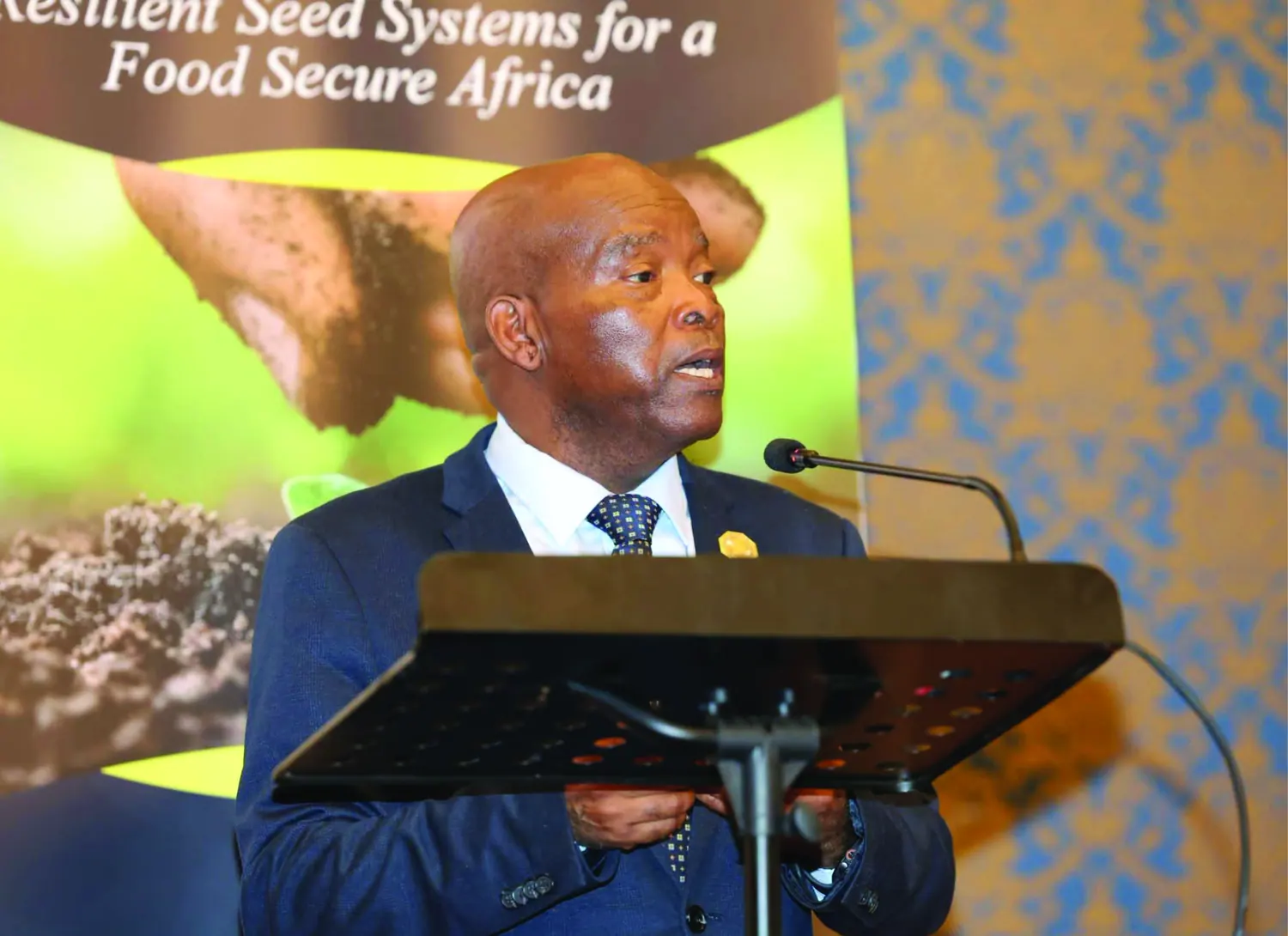
The African Union is pushing for a continental seed and genetic resources bank to strengthen investment, innovation, and resilience in Africa's agriculture sector. Commissioner Moses Vilakati stated that the proposed facility would form part of a wider network of regional and national seed banks and genebanks. This initiative aims to serve as Africa's collective insurance policy against the loss of biodiversity and genetic resources. The proposal comes as African countries face growing pressure to improve agricultural productivity while adapting to climate change.
Millions of farmers in Africa still struggle to access quality, affordable, and climate-resilient seed, while weak seed systems, limited investment, and fragmented markets continue to constrain agricultural transformation. Vilakati emphasized the need to protect indigenous crops, traditional farmer varieties, and wild relatives of cultivated crops, which provide genetic material that can support future agricultural development. However, these genetic resources remain vulnerable to biodiversity loss, climate change, land degradation, pests, diseases, and other emerging threats.
The proposed continental institution would work with regional economic communities, governments, research institutions, universities, farming communities, and the private sector. Vilakati mentioned that the initiative would support the conservation, characterization, documentation, and sustainable use of genetic resources, while strengthening research and innovation. The development of crops capable of withstanding climate pressures and emerging agricultural threats is also a key goal. This could strengthen the foundations for investment across Africa's seed and agricultural technology value chains.
Eswatini has mobilized approximately E8 million to host the inaugural African Seed Summit, with the majority of funding coming from international partners. The summit, held from October 5-7, brought together African political leaders, agriculture ministers, development organizations, farmers, researchers, and private-sector players to discuss strengthening the continent's seed systems. The event aimed to mobilize sustainable public and private investment in the seed sector, unlock co-investment opportunities, and strengthen policy and regulatory frameworks.
The African Union's vision for the seed sector extends beyond conservation, focusing on seed policy harmonization, investment in research and innovation, stronger seed enterprises, farmer-managed seed systems, seed trade, and biotechnology. Improved coordination of seed systems and policies could create a more supportive environment for seed companies, researchers, and agricultural technology firms operating across African markets. The proposed continental bank would facilitate the responsible exchange of genetic resources and support the development of climate-resilient and pest-resistant crops.
The summit resulted in the Ezulwini Declaration on African Seed Systems, which provides a shared continental vision for transforming Africa's seed sector. The declaration may include a collective commitment to establishing the continental seed and genetic resources bank. Eswatini's King Mswati III hosted the summit, and the country's Minister of Agriculture, Mandla Tshawuka, noted that the event provided a platform for businesses and investors to engage with policymakers on opportunities across the seed value chain.
The African Union has identified increased investment, stronger institutions, innovation, and improved access to quality seed as essential to raising agricultural productivity, strengthening food security, and building climate resilience across the continent. The summit concluded with commitments on Africa's seed systems, including a summit declaration, an implementation roadmap, and a revised 10-year action plan for the Africa seed and biotechnology program. The event targeted seed trade barriers and sought to harmonize seed policies to facilitate cross-border trade.
Key points
- The African Union proposes a continental seed and genetic resources bank to strengthen Africa's agriculture sector.
- Eswatini hosted the inaugural African Seed Summit, mobilizing E8 million in funding.
- The summit resulted in the Ezulwini Declaration on African Seed Systems, outlining a shared continental vision for transforming Africa's seed sector.