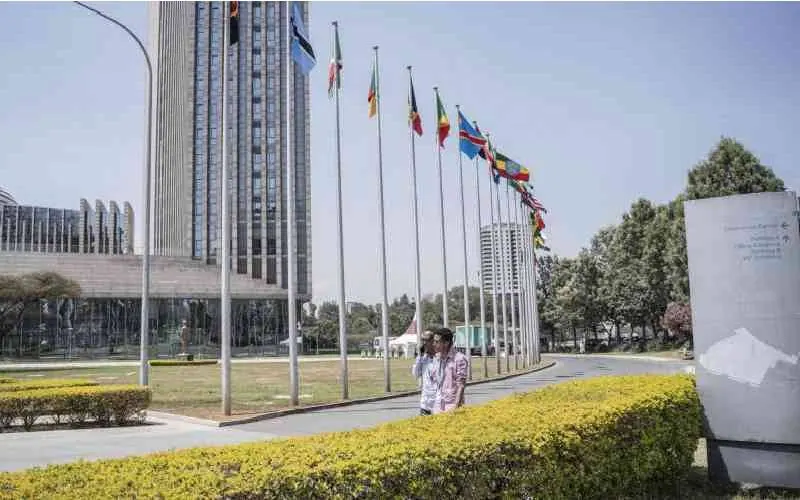
The African Union and other major Pan-African bodies have been criticized for their inability to effectively address pressing issues facing the continent, including autocracy, electoral malpractice, economic decline, military rule, and constitutional abuse. Despite being created to address these problems, these institutions have been accused of thriving on rhetoric or retreating into silence in the face of crises. This has led to a decline in trust in these institutions at home and a thinning of Africa's voice abroad.
The African Union has been specifically criticized for its handling of several recent crises, including the conflict in Tigray, Ethiopia, which erupted six years ago. Despite reports of atrocities and displacement, the AU was accused of balking at confronting the Ethiopian government. Similarly, in Sudan, mediation efforts by the AU and other regional bodies have been criticized for producing communiqués without tangible results. This has led to questions about the effectiveness of these institutions in promoting peace and stability in the region.
The Sahel region has also exposed the weaknesses of Pan-African institutions, with Mali, Burkina Faso, and Niger falling to coups and the Economic Community of West African States (ECOWAS) deterrents wobbling. In Burkina Faso, the military government of Captain Ibrahim Traore has been praised for its reformist rhetoric, but criticized for undermining democracy. The AU and other regional bodies have been accused of equivocating in the face of repression and hesitating during times of war.
The leadership deficit in the AU has also been highlighted, with Mahmoud Ali Youssouf of Djibouti becoming chairperson last year, defeating Raila Odinga. However, hopes for change have faded, and the AU has been criticized for its lack of a common position on key issues such as Gaza, Ukraine, and Iran. This has led to questions about the continent's ability to project a unified voice on the international stage.
The Pan-African Parliament, based in South Africa, has also been criticized for its limitations, with some arguing that it should be a full parliament with directly elected members, rather than a consultative talking shop. The African Court of Justice and Human Rights in Arusha has also been criticized for its limited powers, and the need for African leaders to strengthen their own institutions to try high-caliber cases.
African leaders have been accused of selective outrage, with some countries condemning genocide in Gaza but staying ambivalent about human rights abuses at home. This double standard has been criticized for diluting moral authority and undermining the credibility of Pan-African institutions. The need for African leaders to speak with one voice on key issues has been highlighted, particularly in international forums such as the United Nations and the World Trade Organization.
To address these challenges, some have argued that Africa needs to strengthen its institutions, including the AU and other regional bodies, and to promote a culture of accountability and transparency. This includes empowering the African Court of Justice and Human Rights, and promoting direct elections to the Pan-African Parliament. It also requires African leaders to take a unified position on key issues, and to promote a culture of democracy and human rights across the continent.
Key points
- The African Union and other Pan-African institutions have failed to effectively address pressing issues facing the continent.
- The AU has been criticized for its handling of several recent crises, including the conflict in Tigray, Ethiopia, and the situation in Sudan.
- To address these challenges, Africa needs to strengthen its institutions, promote accountability and transparency, and take a unified position on key issues.