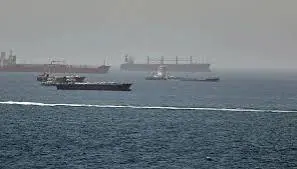
According to maritime security sources, the number of attacks on oil tankers passing through the Strait of Hormuz has reached its highest weekly level since the start of the Iran war. The Joint Maritime Information Centre, led by the US Navy, reported that these attacks, including attempts and harassment by the Iranian Revolutionary Guard, continue to show Iran's intent to assert its presence along major shipping lanes.
The Joint Maritime Information Centre noted that the Iranian Revolutionary Guard has been involved in various activities, including flying drones for surveillance and reconnaissance, as well as contacting ships via high-frequency radio. These actions demonstrate Iran's ongoing efforts to exert pressure on vessels transiting the Strait of Hormuz. The centre's report was released on Sunday.
Data collected by three maritime security providers indicates that at least 12 attacks occurred in the Strait of Hormuz area between September 28 and October 5. This represents the highest number of attacks in a single week since the start of the Iran war on February 28. The incidents involved oil and gas tankers, as well as liquefied natural gas and liquefied petroleum gas carriers.
The International Maritime Organization, a United Nations agency, has also verified nine incidents involving ships in the region during the same week. However, the agency typically takes longer to verify and officially record such incidents. According to separate data from the organization, the week ending July 13 was the closest in terms of the number of similar incidents, with eight reported.
Despite the increase in attacks, data shows that oil exports from Gulf countries have exceeded pre-war levels for nearly half of September. However, the recent surge in attacks on tankers and logistical challenges have raised concerns about the sustainability of this increase in oil flows. The situation remains a concern for the shipping industry.
On Tuesday, the Indian Ministry of External Affairs reported that 12 crew members were injured when an unidentified projectile hit the Panama-flagged oil tanker "On Peace" while it was transiting the Strait of Hormuz. The incident highlights the ongoing risks faced by ships navigating the region.
The escalation of attacks on oil tankers in the Strait of Hormuz has significant implications for global energy markets. With the region being a critical shipping lane for oil exports, any further disruptions could have far-reaching consequences for the global economy. The international community remains concerned about the situation, with the UN Secretary-General calling for an end to the conflict in the Middle East.
Key points
- The number of attacks on oil tankers in the Strait of Hormuz has reached its highest weekly level since the start of the Iran war.
- At least 12 incidents were reported between September 28 and October 5, involving oil and gas tankers.
- The incidents have raised concerns about the sustainability of increased oil flows from Gulf countries.