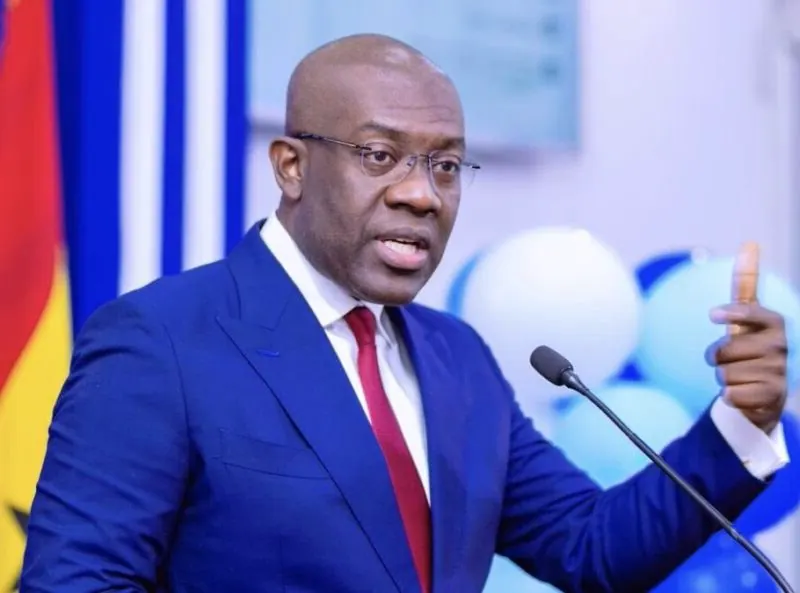
Ghana's Finance Minister, Dr. Cassiel Ato Forson, is touring industry groups to introduce the 'New Economy' concept ahead of the 2027 Budget. The initiative aims to boost local production and create jobs. This goal echoes earlier flagship programmes, such as One District One Factory and Planting for Food and Jobs, which faced criticism over their delivery.
Questions are mounting over the fate of the government's own flagship job-creation programmes. According to Kojo Oppong Nkrumah, a Member of Parliament, the Mahama administration launched several local-production and job-creation programmes, but most have not shown measurable results. Oppong Nkrumah cited specific figures from government statements to Parliament and public records.
The 24-Hour Economy initiative was presented as central to the NDC's economic plan, promising 1.7 million decent jobs by 2028 and a 2026 budget allocation of GH¢110 million. However, Oppong Nkrumah argues that without visible evidence of workers, employing firms, or SSNIT contributions, Ghanaians have no way of verifying whether those jobs exist. The programme's Secretariat reported 268 filling stations, 33 manufacturers operating in shifts, and 160,000 jobs created through recently signed agreements.
Other programmes, such as the Women's Development Bank, have not disbursed a single cedi nearly two years after its announcement. The government allocated GH¢51.3 million to it in 2025 and several hundred million cedis more in 2026. The Finance Minister told Parliament in July that GH¢400 million had been deposited at the Bank of Ghana as capital, but the entity was only incorporated in January 2026 and is still awaiting a banking licence.
The One Million Coders Programme, which aimed to train 300,000 people in 2026, had recorded 140,000 registrations, 40,000 enrolments, and 28,000 people who completed at least one training module by the mid-year review. Oppong Nkrumah argues that completing a single module falls short of producing a coder, and no figures have been published on how many trainees have found employment.
The 'New Economy' would commit roughly US$10 billion over four years to commercial agriculture, mining value addition, energy, and transport infrastructure. Much of this territory overlaps with existing initiatives, raising questions about what the new label adds beyond a fresh starting point for measuring government performance. The government intends to amend the fiscal responsibility law, cutting the primary surplus floor from 1.5 percent of GDP to 0.5 percent from 2027.
The stakes are high for Ghanaians, who are already navigating the effects of a shrinking trade surplus, rising import bill, and a cedi that was Africa's worst performer in the second quarter of 2026. Oppong Nkrumah's commentary calls on the government to publish a verifiable register of 24-Hour Economy jobs, set a firm date for the Women's Development Bank to begin lending, and commission an independent audit of Nkoko Nkitinkiti beneficiaries before Parliament is asked to weaken the fiscal anchor.
Key points
- The 'New Economy' concept aims to boost local production and create jobs in Ghana.
- Previous job-creation programmes, such as the 24-Hour Economy initiative and One Million Coders Programme, have faced criticism over their delivery and lack of measurable results.
- The government intends to amend the fiscal responsibility law, which could have implications for inflation and currency stability in Ghana.