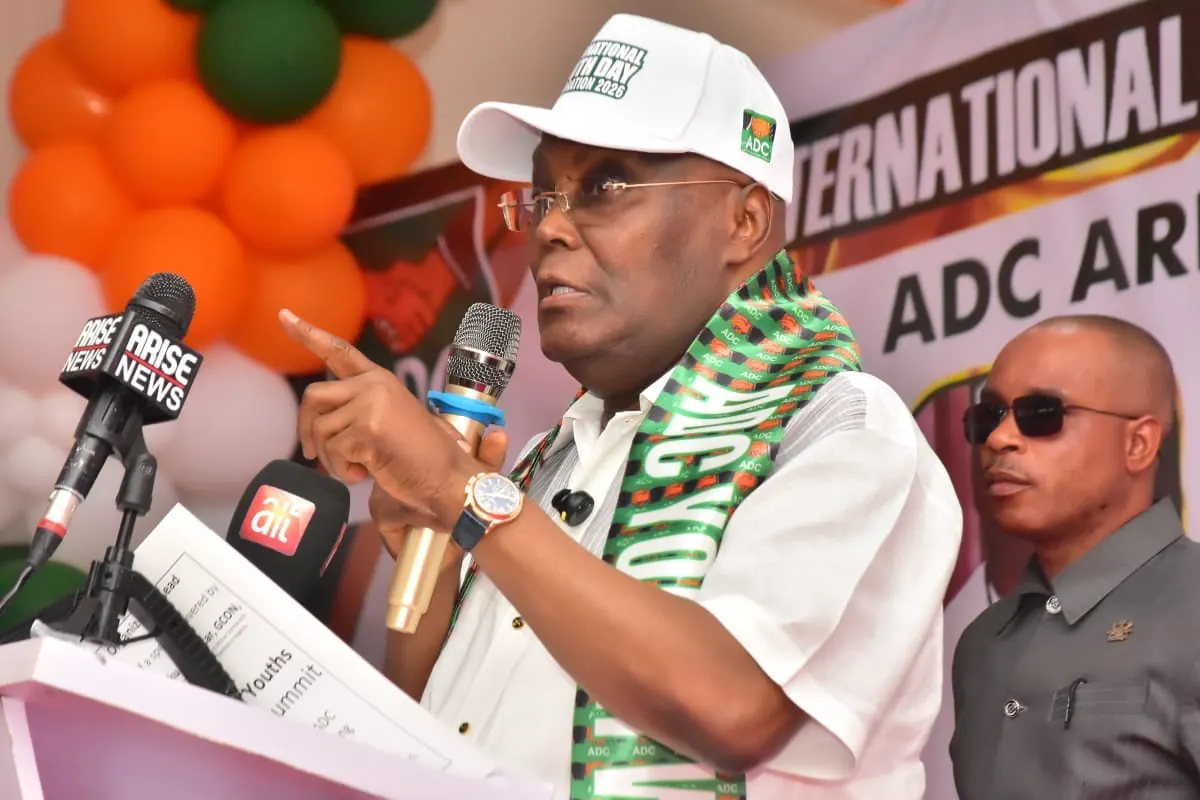
Former Vice President and Presidential Candidate of the African Democratic Congress (ADC), Atiku Abubakar, has called on President Bola Ahmed Tinubu to increase the national minimum wage. In a statement, Atiku said the removal of fuel subsidy by Tinubu had led to a surge in prices of essential commodities, causing hardship for many Nigerians. He emphasized that the current minimum wage is inadequate, accusing the administration of implementing a reform that has become an insult to Nigerians.
Atiku backed the organised labour's demand for a substantial increase in the minimum wage, criticizing Tinubu for presiding over what he described as a ruthless economic squeeze. He noted that workers are paid more on paper but are forced to live on less. The former Vice President cited the example of the current minimum wage of ₦70,000, which can only buy 50 litres of petrol at the current price, leaving workers struggling to meet their other needs.
According to Atiku, the ₦30,000 minimum wage before the Tinubu-led administration could buy roughly 118 litres of petrol at the national average price of ₦254.06 per litre. He contrasted this with the current situation, where the ₦70,000 minimum wage buys just 50 litres of petrol at ₦1,400 per litre. Atiku argued that the increase in minimum wage has failed to restore the purchasing power of Nigerians, with the payslip growing but the fuel it can buy more than halving.
Atiku also highlighted that Nigeria's wage floor compares poorly with those of several oil-producing and African economies. Citing exchange rates from July 24, 2026, he noted that Libya's monthly minimum wage was worth approximately ₦213,000, Algeria's ₦245,000, Equatorial Guinea's ₦302,000, and Gabon's ₦351,000. Even Benin Republic's minimum wage stood above Nigeria's when converted at those rates.
The ADC presidential candidate emphasized that the Nigerian worker is the engine of the country's productive life and cannot be expected to run without fuel. He urged President Tinubu to review workers' salaries and bring down the costs of commodities to cushion the effects of hardship. Atiku challenged Tinubu to agree immediately to a substantial minimum-wage increase that reflects the real cost of food, transport, rent, and power.
Atiku outlined his plan for a targeted production subsidy to support petroleum products refined in Nigeria and sold to Nigerians, subject to a firm spending cap, public accounting, and independent audit. He reaffirmed his commitment to realistic wage adjustments, targeted social protection, and measures to stabilize the cost of essential goods and energy. Atiku emphasized that better pay must be accompanied by lower living costs to repair the damage caused by the current economic situation.
Atiku concluded by stating that Nigerians do not eat FAAC figures, and a full treasury is no answer to an empty kitchen. He stressed that the test of the government is whether the men and women who work all month can live on what they earn. Atiku emphasized that a living wage must buy a living and is not a privilege but a basic right, promising to make life affordable again if elected.
Key points
- Atiku Abubakar urges President Tinubu to increase the national minimum wage amid economic hardship.
- The current minimum wage of ₦70,000 is insufficient, according to Atiku.
- Atiku outlines plan for targeted production subsidy to support petroleum products and stabilize cost of living.