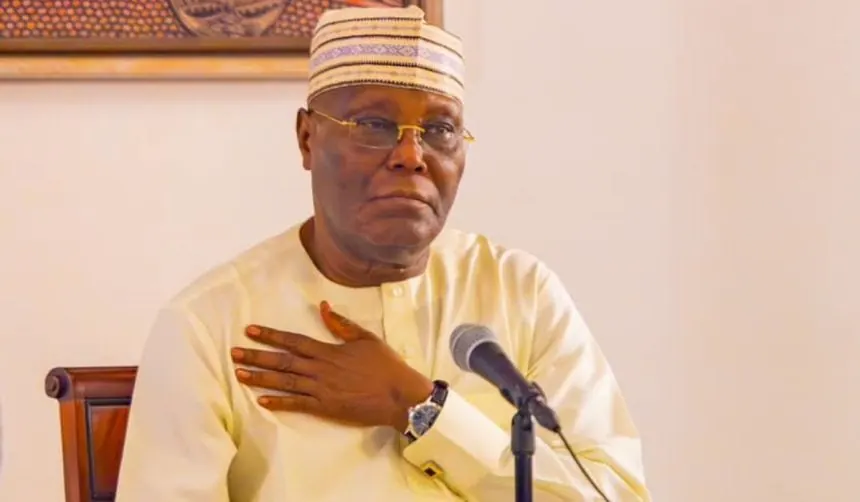
Former Vice President Atiku Abubakar has raised concerns about President Bola Tinubu's repeated absence from the United Nations General Assembly. In a statement issued on Sunday, Atiku questioned whether Tinubu's history with United States law-enforcement agencies has become a burden on Nigeria's foreign relations. This comes after Tinubu delegated Vice President Kashim Shettima to lead Nigeria's delegation to the 81st UNGA in New York.
According to Atiku, Tinubu was absent from the 79th UNGA in 2024, the 80th in 2025, and the ongoing 81st session in 2026, with Shettima representing him on each occasion. Atiku argued that three consecutive absences could no longer be regarded as coincidence or routine delegation, but had become a pattern that required an explanation from the Presidency. He emphasized the importance of the UNGA as a platform for presidents to defend their countries' interests and shape global decisions.
The UNGA brings together representatives of the UN's 193 member states, providing a unique platform for leaders to negotiate partnerships and shape global decisions on trade, security, and development. While acknowledging Shettima's ability to represent the country, Atiku said the Vice President's presence could not permanently replace the President's personal participation at such a major diplomatic forum.
Atiku stressed that presidential absence on the global stage has consequences, including lost opportunities for investment, trade partnerships, and development finance. He noted that when a President makes himself absent from that stage for three consecutive years, his country loses opportunities, and international capital does not pursue a country whose leader repeatedly abandons the room in which consequential economic relationships are being built.
The economic consequences of Tinubu's absence are being felt by Nigerians, with fewer investments meaning fewer businesses and jobs. Reduced capital inflows place additional pressure on the local currency, and a weaker naira raises the cost of imports, production, transportation, and food. These are among the economic pressures now punishing Nigerian families through the worst cost-of-living crisis in living memory.
Atiku also questioned the circumstances surrounding reports that Nigeria's Permanent Representative to the United Nations, had been involved in discussions with US law enforcement agencies. He implied that these circumstances might be related to Tinubu's repeated absence from the UNGA. The situation has raised concerns about the impact of Tinubu's actions on Nigeria's foreign relations and economy.
Atiku concluded that while a President may surrender his seat, a nation cannot escape the bill. He urged Tinubu to explain his repeated absence from the UNGA and to consider the economic and diplomatic consequences of his actions. The situation has sparked a national debate about the role of the President in promoting Nigeria's interests abroad.
Key points
- Atiku Abubakar questions President Tinubu's repeated absence from the UNGA, citing concerns for Nigeria's foreign relations and economic opportunities.
- Tinubu's absence from the UNGA has economic consequences, including lost opportunities for investment, trade partnerships, and development finance.
- Atiku urges Tinubu to explain his repeated absence from the UNGA and to consider the economic and diplomatic consequences of his actions.