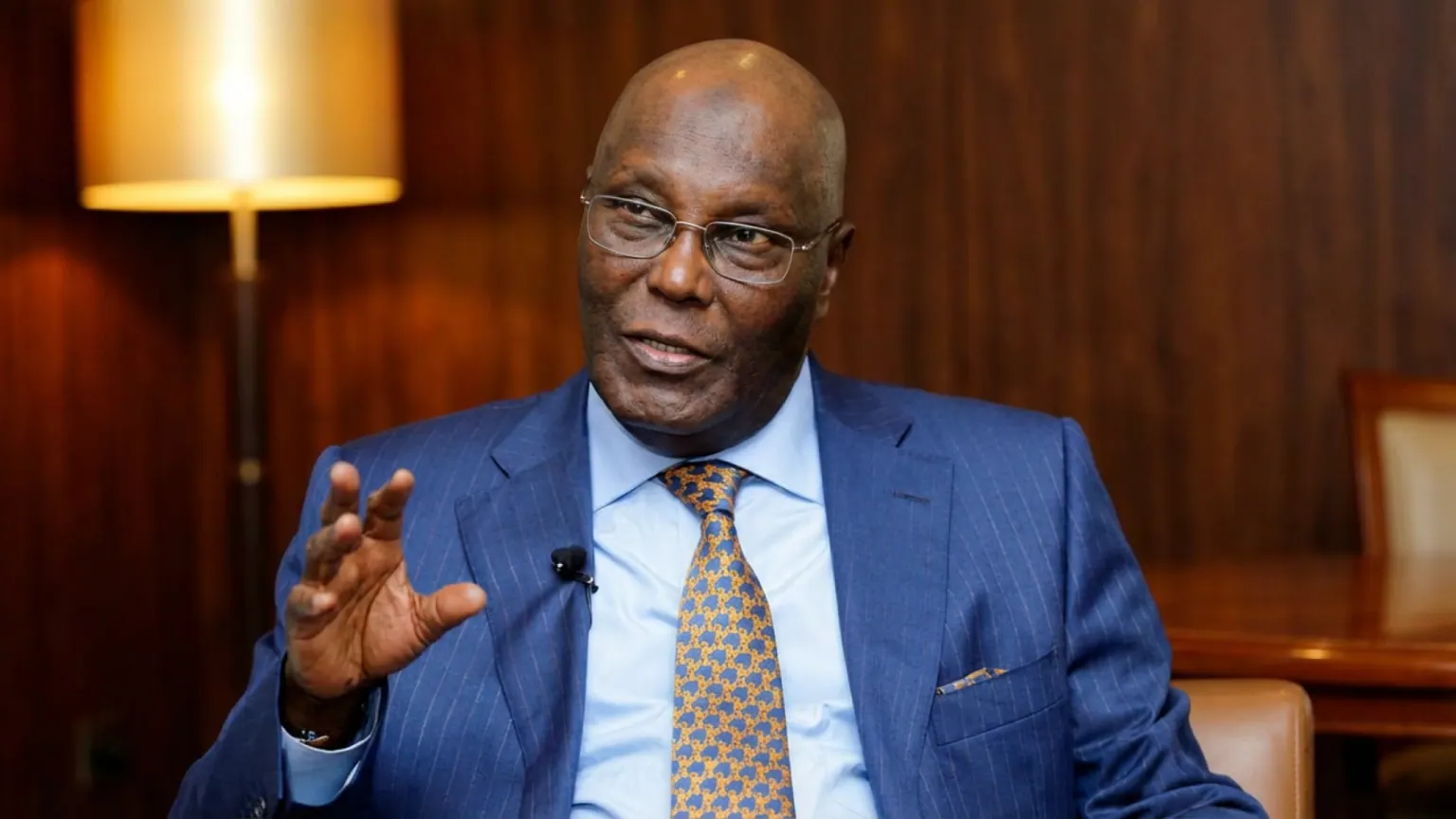
Former Vice President Atiku Abubakar has urged the Federal Government to publish Nigeria's health agreement with the United States, citing concerns over patients' data, pathogen samples, and healthcare funding. The agreement, signed on December 19, 2025, covers disease surveillance, health data systems, and procedures involving pathogen samples. Atiku's demand for publication follows Ghanaian President John Mahama's disclosure that his country rejected a proposed health compact with the United States over concerns relating to medical records, pathogen information, funding obligations, and the inspection of imported medicines.
The Nigeria-U.S. health agreement is a five-year Memorandum of Understanding that includes nearly $2 billion in grants from the United States, while Nigeria has made health spending commitments projected to mobilise nearly $3 billion over five years. Atiku questioned the government's capacity to meet its funding commitments, citing the release of only N36 million from the N218 billion appropriated for capital projects and programmes at the Ministry of Health headquarters in 2025. He also highlighted Nigeria's healthcare challenges, including internationally comparable estimates that put Nigeria's maternal deaths at 75,000 in 2023, the highest total recorded globally.
Atiku's Director of Strategic Communication, Phrank Shaibu, released a statement on behalf of the former Vice President, calling for the publication of the complete MoU and all related protocols, annexes, data-sharing arrangements, specimen-sharing agreements, and financial undertakings. Atiku also demanded the publication of the agreement between Nigeria and the United States on investment in the country's mining sector. His media adviser, Paul Ibe, clarified that the $700 billion figure cited by the Federal Government represented the estimated value of Nigeria's mineral resources, not the amount of investment being committed by the United States.
The Minister of Solid Minerals Development, Dele Alake, disclosed that Nigeria and the United States signed an agreement aimed at deepening American investment in Nigeria's mining sector. The agreement is to strengthen cooperation between Nigeria and the United States in the development of Nigeria's mineral resources, valued at about $700 billion. The framework covers geological data and exploration, mineral development and processing, infrastructure, and technical capacity. Atiku's media adviser questioned whether the agreement contained tax concessions, guarantees, or other preferential fiscal arrangements.
Ibe sought clarification on the specific minerals covered by the agreement, asking whether it included lithium, gold, rare earths, or other resources, and whether American companies would enjoy preferential access. He also questioned whether minerals extracted under the agreement would be required to undergo processing in Nigeria before export or could be shipped out as raw materials. Additionally, he asked whether additional documents, including annexes, side letters, or implementation agreements, existed but had not been made public.
Atiku urged the Federal Government to publish the details of the agreement, including any annexes and side letters, to address concerns surrounding the deal. The former Vice President's demands for transparency come amid concerns over the potential economic and strategic value of Nigeria's mineral resources. The agreements with the United States have sparked debate over the terms and implications for Nigeria's healthcare and mining sectors.
The Federal Government has yet to respond to Atiku's demands for publication of the agreements. The Nigeria-U.S. health agreement and mining investment deal have significant implications for Nigeria's development, and transparency over the terms and conditions is essential for public scrutiny and accountability. Atiku's calls for publication have highlighted the need for greater transparency in Nigeria's international agreements.
Key points
- Atiku Abubakar demands publication of Nigeria-U.S. agreements on health and mining.
- The agreements have sparked concerns over patients' data, funding, and mineral resources.
- The Federal Government has yet to respond to Atiku's demands for publication.