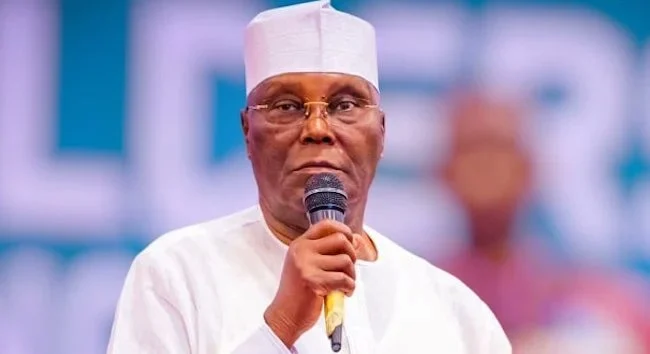
The Presidential Candidate of the African Democratic Congress, Atiku Abubakar, has cited a recent SBM Intelligence survey indicating that a significant majority of Nigerians support the restoration of petrol subsidy. According to the survey, 67.4% of respondents expressed support for the subsidy, reflecting widespread dissatisfaction with President Bola Tinubu's fuel policy. Atiku's Senior Special Assistant on Public Communication, Phrank Shaibu, released a statement on Tuesday highlighting the findings.
The SBM Intelligence survey, part of the Nigeria 2027 Voter Sentiment Tracker, involved face-to-face interviews with 1,103 eligible voters across 12 states and the Federal Capital Territory. The research covered all six geopolitical zones, including both urban and rural areas. The survey found that petrol was identified as the second-most cited national problem and the Tinubu administration's worst-rated policy issue, scoring 1.69 out of four.
Atiku noted that rural respondents were more concerned about petrol than their urban counterparts, with 32.4% of rural respondents identifying petrol as their primary concern, compared to 11.7% in urban areas. He stated that the survey results reflect the growing majority of Nigerians who have rejected Tinubu's economic philosophy and are embracing Atiku's alternative vision of a government that protects its citizens.
The former Vice-President stated that the survey results represent the collective cry of Nigerian families who can no longer afford food, workers whose salaries disappear on transportation, farmers who cannot move their produce to market, and businesses collapsing under the weight of fuel and energy costs. Atiku emphasized that the government could no longer rely on statistics and CNG claims to mask the high cost of petrol and transportation.
Atiku proposed a transparent production subsidy for petroleum products refined and sold domestically, which would replace the past subsidy system. He stated that if elected, he would introduce this policy from May 29, 2027, with a fixed spending limit, National Assembly approval, and independent audits. The goal is to reduce fuel prices, strengthen domestic refining, create Nigerian jobs, and restore purchasing power.
Atiku's proposed policy aims to address the suffering caused by Tinubu's fuel policy, which he believes has caused far more harm than good. The policy has been rejected by Nigerians, and Atiku argues that the government responsible for it must also be rejected. He emphasized that petrol emerged as a leading concern in the Southwest and South-South regions, cutting across geography, ethnicity, and political affiliation.
Atiku concluded that his proposed policy would protect citizens, strengthen domestic production, and shield vulnerable families from devastating economic shocks. He stated that his approach is fundamentally different from Tinubu's, who believes in imposing higher taxes and withdrawing protection, whereas Atiku believes in government intervention to protect citizens and promote economic growth.
Key points
- Atiku Abubakar cites SBM Intelligence survey showing 67.4% of Nigerians support restoring petrol subsidy.
- The survey found that petrol was identified as the second-most cited national problem and the Tinubu administration's worst-rated policy issue.
- Atiku proposes a transparent production subsidy for petroleum products refined and sold domestically to address the suffering caused by Tinubu's fuel policy.