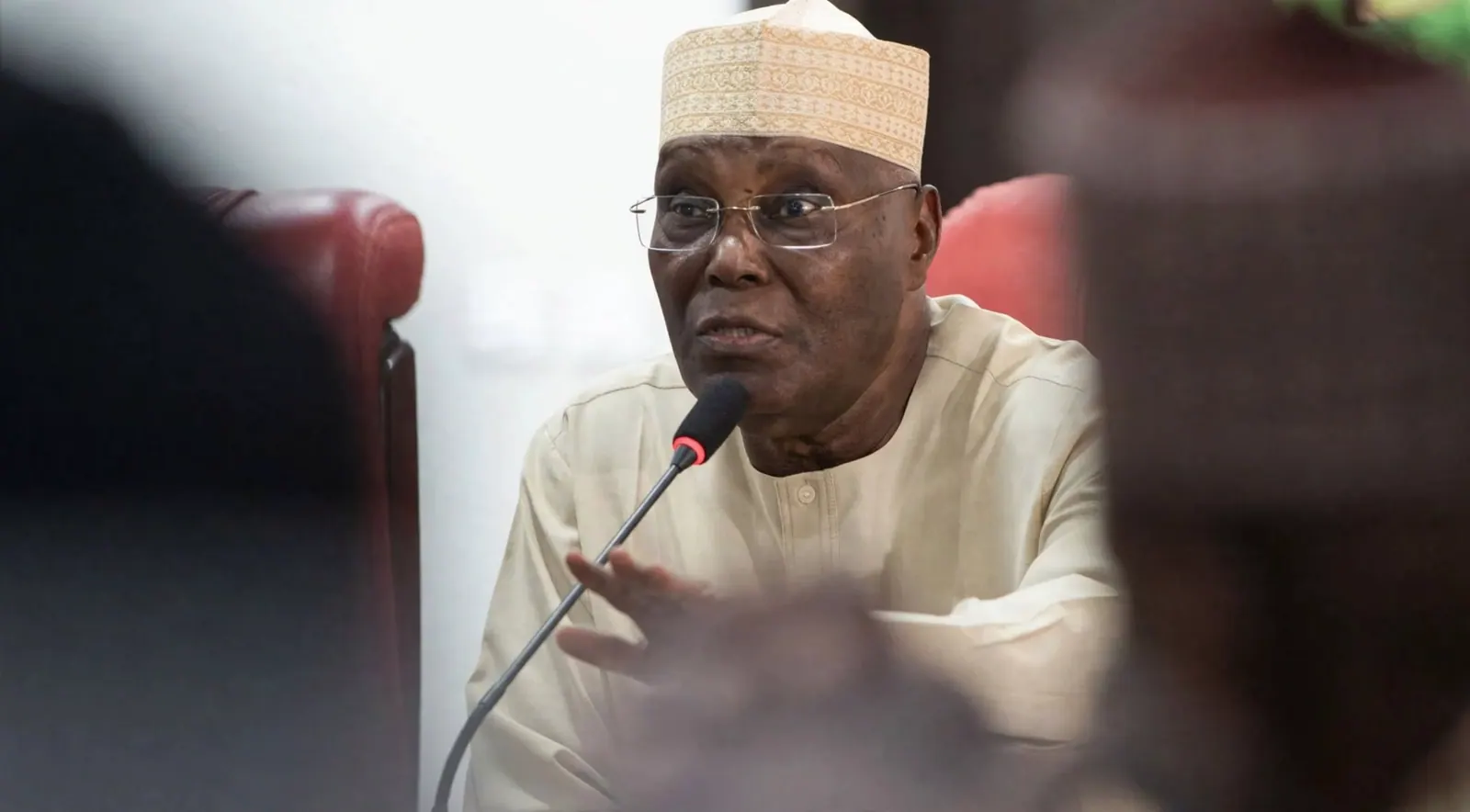
Atiku Abubakar, the African Democratic Congress (ADC) Presidential Candidate and former Vice President of Nigeria, has expressed his support for the demand by organized labour for a substantial increase in the minimum wage. He stated that Nigerian workers need a living wage, emphasizing that the current ₦70,000 minimum wage is insufficient to cater to the rising cost of living in the country. Atiku's call is in line with the recent demand by the Nigeria Labour Congress (NLC) for an upward review of the minimum wage.
Atiku, in a statement by the Director, Strategic Communication, ADC Presidential Campaign Council, Phrank Shaibu, accused President Bola Tinubu of presiding over a ruthless economic squeeze, where workers are paid more on paper but condemned to live on less. He noted that the government's removal of the petrol subsidy sent prices of food and other essential items soaring, without providing credible protection for working families. Atiku described the situation as a callous way to govern people who work hard and ask only for the means to live.
According to Atiku, the ₦70,000 monthly minimum wage buys only 50 litres of petrol at ₦1,400 per litre, leaving workers with insufficient funds for other essential needs such as food and rent. He stated that the increase in minimum wage from ₦30,000 to ₦70,000 by the government has failed to restore purchasing power, citing that as of April 2023, ₦30,000 could buy roughly 118 litres of petrol, while ₦70,000 buys only 50 litres at ₦1,400 per litre.
Atiku also highlighted that Nigeria's wage floor compares poorly with those of several oil-producing and African economies. Using exchange rates from 24 July 2026, he stated that Libya's monthly minimum wage was worth approximately ₦213,000; Algeria's, ₦245,000; Equatorial Guinea's, ₦302,000; and Gabon's, ₦351,000. Even Benin Republic's minimum wage stood above Nigeria's when converted at those rates.
The former Vice President challenged President Tinubu to agree immediately to a substantial minimum-wage increase that reflects the real cost of food, transport, rent, and power. He stated that if President Tinubu has no intention of raising workers' pay, he should say so plainly and stop stringing the Nigeria Labour Congress and other labour leaders along. Atiku emphasized that Nigerian workers deserve an answer, not another round of meetings that ends where it began.
Atiku reaffirmed his commitment to realistic wage adjustments, targeted social protection, and measures to stabilize the cost of essential goods and energy. He stated that if we are serious about repairing the damage, better pay must be accompanied by lower living costs, adding that anything less leaves the Nigerian worker as the guinea pig in Tinubu's economic experiment. Atiku promised that from May 2027, his policies will protect the people, support Nigerian production, deliver relief at the pump, and provide targeted help to those hit hardest by the cost-of-living crisis.
Atiku concluded that a living wage must buy a living, emphasizing that it is not a privilege but a basic right. He stated that President Tinubu has made life painfully expensive and promised to make life affordable again. Atiku's call for a living wage for Nigerian workers is a timely intervention, as the country grapples with the challenges of high inflation and a rising cost of living.
Key points
- Atiku Abubakar supports labour's demand for a higher minimum wage, citing the current ₦70,000 wage as inadequate.
- The current ₦70,000 minimum wage buys only 50 litres of petrol at ₦1,400 per litre, leaving workers with insufficient funds for other essential needs.
- Atiku challenges President Tinubu to agree to a substantial minimum-wage increase that reflects the real cost of food, transport, rent, and power.