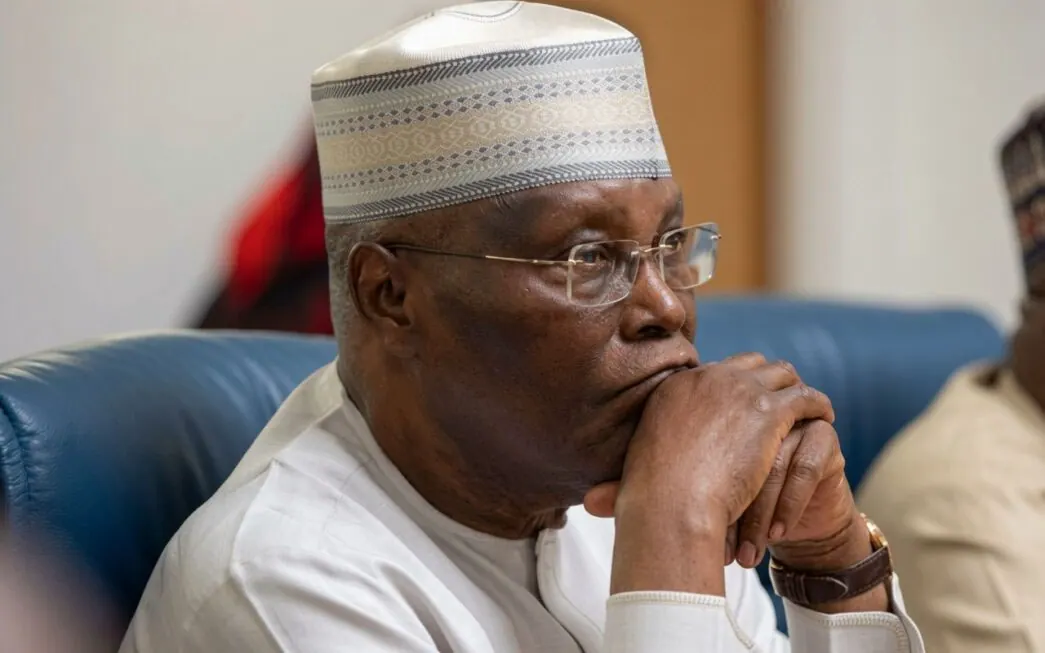
Former Vice President and African Democratic Congress presidential candidate, Atiku Abubakar, has demanded an immediate and substantial increase in Nigeria's minimum wage. He argues that the current N70,000 wage floor no longer reflects the rising cost of living. In a statement issued on Sunday by the Director of Strategic Communications of the ADC Presidential Campaign Council, Phrank Shaibu, Atiku criticized the economic policies of President Bola Tinubu, particularly the removal of the petrol subsidy.
Atiku noted that Nigerian workers were facing mounting pressure from rising fuel, food, transportation, rent, and energy costs. He stated that the increase in the statutory minimum wage from N30,000 to N70,000 had not translated into a corresponding improvement in workers' living standards. According to him, at N1,400 a litre, the entire N70,000 monthly minimum wage buys just 50 litres of petrol, leaving workers with insufficient funds for other essential expenses.
Atiku contrasted the purchasing power of the previous minimum wage with current fuel prices, noting that at the April 2023 national average petrol price of N254.06 per litre, N30,000 could purchase approximately 118 litres. He stated that today, N70,000 buys only 50 litres at N1,400 per litre, adding that the pay slip has grown, but the fuel it can buy has more than halved.
The ADC presidential candidate compared Nigeria's minimum wage with those of selected oil-producing and African countries, citing figures which showed that Nigeria's wage floor remained relatively low. Using exchange rates from July 24, 2026, he put the equivalent monthly minimum wages at approximately N213,000 in Libya, N245,000 in Algeria, N302,000 in Equatorial Guinea, and N351,000 in Gabon.
Atiku acknowledged that wage structures and living costs vary from country to country, but maintained that the differences did not make N70,000 sufficient for Nigerian workers facing current prices. He stated that the Nigerian worker is the engine of this country's productive life, yet President Tinubu expects that engine to run without fuel.
Atiku argued that the impact of high petrol prices extended beyond transportation, noting that increased energy and logistics costs also affected food production, manufacturing, education, and other household expenses. He urged the Federal Government to agree to a substantial review of the minimum wage based on the prevailing cost of food, transportation, housing, and electricity.
The ADC presidential candidate also called on the administration to provide a clear position on the demand by organised labour for improved wages. He stated that Nigerian workers deserve an answer, not another round of meetings that ends where it began, adding that he will begin the work of raising the wage floor from his first day in office if elected.
Key points
- Atiku Abubakar demands immediate increase in Nigeria's minimum wage to reflect rising cost of living
- The current N70,000 wage floor no longer reflects the rising cost of living in Nigeria
- Atiku compares Nigeria's minimum wage with those of selected oil-producing and African countries, citing relatively low wage floor