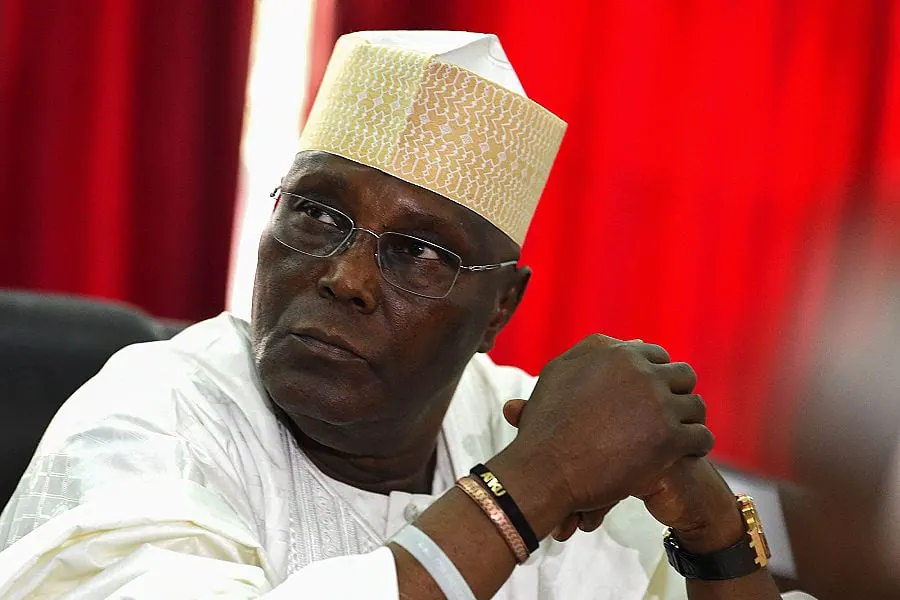
The presidential candidate of the African Democratic Congress, ADC, and former Vice-President, Atiku Abubakar, has expressed concern over the rising cost of living in Nigeria under President Bola Ahmed Tinubu. He stated that the N70,000 minimum wage can only buy 50 litres of petrol at N1,400 per litre. This was disclosed in a statement by his spokesperson, Phrank Shaibu, on Sunday. Atiku's comment comes as Nigerians continue to struggle with the high cost of living.
Atiku Abubakar highlighted the stark contrast between the current minimum wage and its purchasing power compared to previous years. When the country's minimum wage was N30,000, it could buy roughly 118 litres of petrol. However, the current minimum wage of N70,000 can only buy 50 litres. This significant decline in purchasing power has made life increasingly difficult for Nigerians. Atiku's statement reflects growing concerns about the impact of economic policies on ordinary citizens.
Atiku Abubakar also drew comparisons with other oil-producing African countries, including Libya, Algeria, and the Republic of Benin. He noted that Nigerian workers earn less than their counterparts in these countries. While acknowledging that minimum wages differ across countries, Atiku emphasized the need for a more substantial increase in Nigeria's minimum wage. This would help ensure that workers can afford basic necessities.
The former Vice-President questioned how workers can survive on the current minimum wage. At N1,400 a litre, the entire N70,000 monthly minimum wage buys just 50 litres of petrol. Atiku asked, "What does the worker take home to feed the children? What pays the rent? What gets that worker back to work on Monday?" His statement underscores the struggles of low-income earners in Nigeria.
Atiku Abubakar's criticism of the Tinubu administration's economic policies comes as civil servants have proposed a N500,000 minimum wage or a N500-per-litre petrol price. The Tinubu administration has acknowledged that the N70,000 minimum wage can no longer meet workers' needs and has proposed an upward review. This indicates a recognition of the need for change, but the specifics of any new policy remain unclear.
Atiku Abubakar's comments reflect a broader debate about the state of Nigeria's economy and the impact of government policies on citizens. His spokesperson, Phrank Shaibu, emphasized that the payslip has grown, but the fuel it can buy has more than halved. Atiku stated that Tinubu has given workers a larger number but left them with a smaller life. This sentiment is likely to resonate with many Nigerians struggling to make ends meet.
The issue of minimum wage and fuel prices remains a pressing concern in Nigeria. As the government considers an upward review of the minimum wage, Atiku Abubakar's comments serve as a reminder of the need for policies that address the rising cost of living. The government will need to balance the competing demands of workers, businesses, and the broader economy in its decision-making.
Key points
- Atiku Abubakar criticizes Tinubu's N70,000 minimum wage as insufficient.
- The N70,000 minimum wage can only buy 50 litres of petrol at N1,400 per litre.
- Atiku Abubakar calls for a more substantial increase in Nigeria's minimum wage.