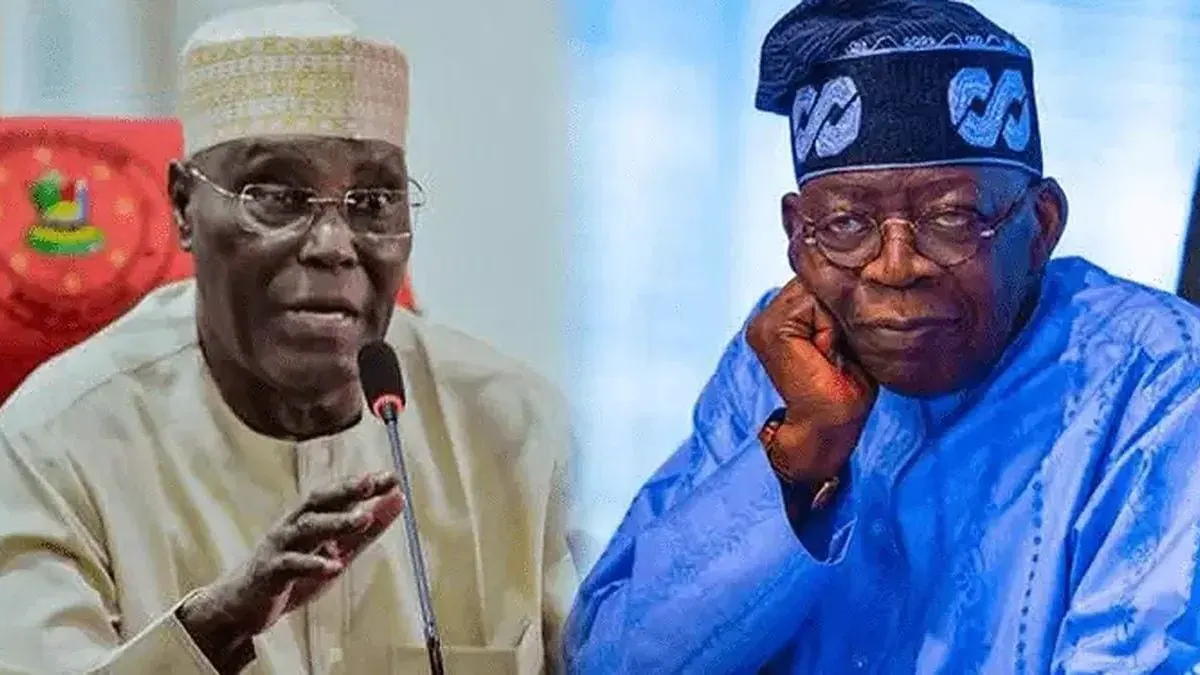
A recent survey conducted by SBM Intelligence has revealed that a significant majority of Nigerians are dissatisfied with President Bola Tinubu's fuel subsidy policy. The survey, which involved 1,103 eligible voters across 12 states and the Federal Capital Territory, found that 67.4% of respondents want the Federal Government to restore petrol subsidy. This development has prompted Atiku Abubakar, the former Vice President, to criticize the policy, describing it as a "reckless experiment" that has caused widespread economic hardship.
According to the survey, petrol has become one of the major issues influencing public sentiment in Nigeria, ranking as the second-most cited national problem. The issue recorded the lowest performance rating among the policy areas tested in relation to the current administration, scoring 1.69 out of four. Atiku Abubakar attributed the widespread discontent to the removal of petrol subsidy, which has led to a surge in transportation costs, food prices, and a decline in household income and business operations.
Atiku Abubakar's Senior Special Assistant on Public Communication, Phrank Shaibu, released a statement on Tuesday, highlighting the former Vice President's position on the survey results. Atiku argued that the removal of petrol subsidy has had a devastating impact on the economy, pushing millions of families into poverty. He emphasized that the survey result is not just an economic assessment but a democratic question, urging the government to listen to the demands of the people.
The survey also revealed differences in concerns between rural and urban respondents, with 32.4% of rural respondents identifying petrol as their primary concern, compared to 11.7% among urban respondents. The issue was particularly prominent in the South-West and South-South regions, where 30.5% and 29.1% of respondents, respectively, identified petrol as their leading concern. Atiku Abubakar noted that these figures demonstrate that the impact of fuel prices is being felt differently across the country.
Atiku Abubakar criticized the Federal Government's handling of the subsidy removal, arguing that adequate measures were not put in place to cushion the effect on households, workers, farmers, and small businesses. He claimed that President Tinubu removed the subsidy without a credible plan for domestic refining, mass transportation, wage protection, or support for small businesses. Atiku has proposed a production subsidy for petroleum products refined in Nigeria and sold to Nigerians as an alternative approach.
Atiku Abubakar's proposed subsidy plan would have a fixed spending limit, require approval from the National Assembly, and involve independent audits. The objective, he stated, is to reduce petrol prices, encourage domestic refining, create jobs, and improve the purchasing power of Nigerians. This proposal differs from a return to the previous subsidy arrangement, as it would only benefit petroleum products refined in Nigeria.
The current petrol price has added pressure to transportation and household expenses, with recent reports showing petrol selling at about N1,400 per litre or higher in major cities. The Tinubu administration has defended the decision to remove the subsidy, citing the burden on public finances. However, Atiku Abubakar and others have continued to argue that the economic consequences of the policy require a different response.
Key points
- Atiku Abubakar criticizes Tinubu's fuel subsidy policy as a "reckless experiment" causing widespread economic hardship.
- A survey by SBM Intelligence finds that 67.4% of Nigerians reject the current petrol subsidy policy.
- Atiku Abubakar proposes a production subsidy for petroleum products refined in Nigeria as an alternative approach.