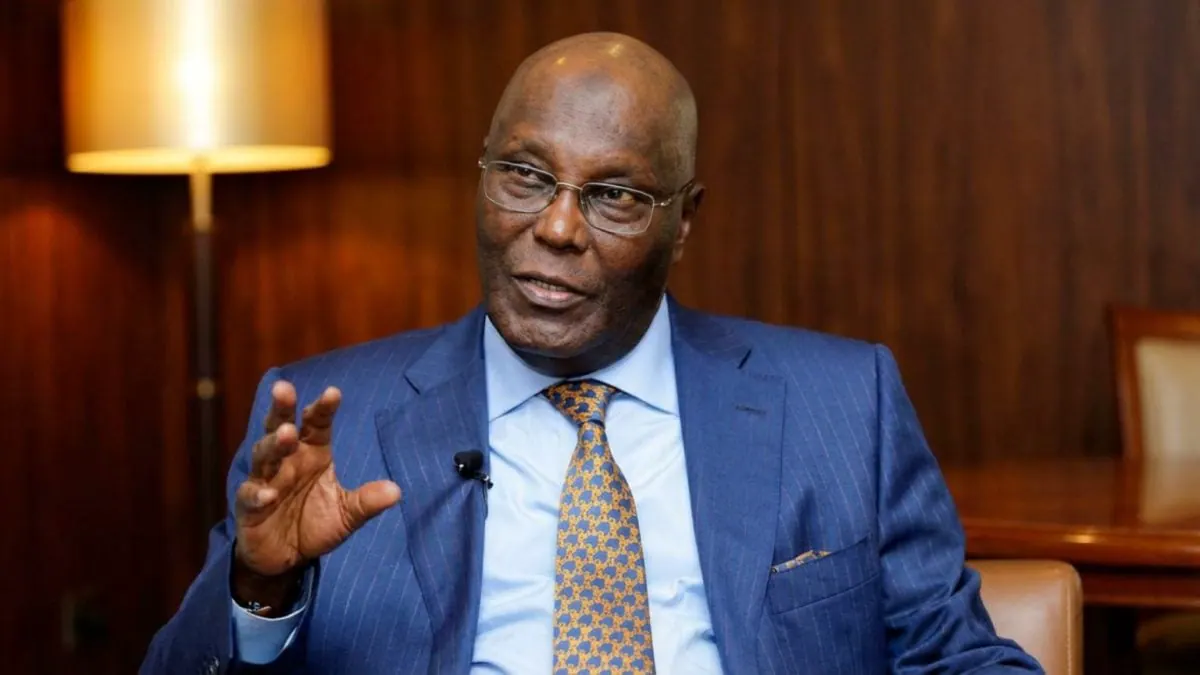
Former Vice President and African Democratic Congress presidential candidate, Atiku Abubakar, has expressed concerns over the N70,000 national minimum wage, stating that it no longer provides sufficient relief for workers due to the sharp increase in the cost of essential goods and services. Atiku argued that the Federal Government should urgently consider a substantial increase in workers' wages. He made this position known in a statement issued by the Director of Strategic Communications of the ADC Presidential Campaign Council, Phrank Shaibu.
Atiku compared the purchasing power of the current minimum wage with that of the previous N30,000 wage, using petrol prices as an example. In April 2023, the national average petrol price was N254.06 per litre, allowing N30,000 to purchase approximately 118 litres of petrol. In contrast, N70,000 at a petrol price of N1,400 per litre would purchase only about 50 litres. Atiku stated that the payslip has grown, but the fuel it can buy has more than halved, describing it as hardship dressed up as a wage increase.
The minimum wage was increased from N30,000 to N70,000 in 2024 following negotiations between the Federal Government and organised labour. President Tinubu had said the new wage would be reviewed after three years. However, Atiku maintained that the review timeline should not prevent the government from responding to worsening economic conditions. He also linked the pressure on workers to the removal of petrol subsidy, a policy introduced by Tinubu at the beginning of his administration in May 2023.
Atiku emphasized that the impact of fuel prices goes beyond the cost of filling a vehicle, as transportation and energy expenses affect the prices of food and other essential commodities. He stated that petrol does not stay at the pump, its price follows the farmer to market, enters the baker's oven, and appears in the fare a parent pays to take a child to school. The former vice president called on Tinubu to clearly state whether his administration intended to increase workers' wages.
Atiku promised that if elected president in 2027, his administration would begin the process of increasing the wage floor from its first day in office. He assured that a higher wage would be accompanied by measures aimed at reducing the cost of living, including support for domestic production, targeted social protection, and interventions in the petroleum sector. Atiku proposed a targeted production subsidy for petroleum products refined in Nigeria and sold to Nigerians.
The former vice president argued that increasing wages alone would not solve the economic difficulties facing households if the prices of food, energy, transport, and other essential commodities continued to rise. Atiku stated that Nigerians do not eat FAAC figures, and a full treasury is no answer to an empty kitchen. He emphasized that a living wage must buy a living, adding that it is not a privilege but a basic right.
Atiku's latest comments are part of his criticism of the Tinubu administration's handling of the economy and the removal of petrol subsidy. He has previously said that he would restore the subsidy if elected president in 2027. During a Facebook Live session in August, Atiku questioned how the savings from the policy were being used, asking if it had been used to improve healthcare, education, or security.
Key points
- Atiku Abubakar criticizes President Tinubu's N70,000 minimum wage as insufficient due to rising costs of living.
- Atiku promises to increase the wage floor from his first day in office if elected president in 2027.
- Atiku proposes a targeted production subsidy for petroleum products refined in Nigeria to support workers and reduce the cost of living.