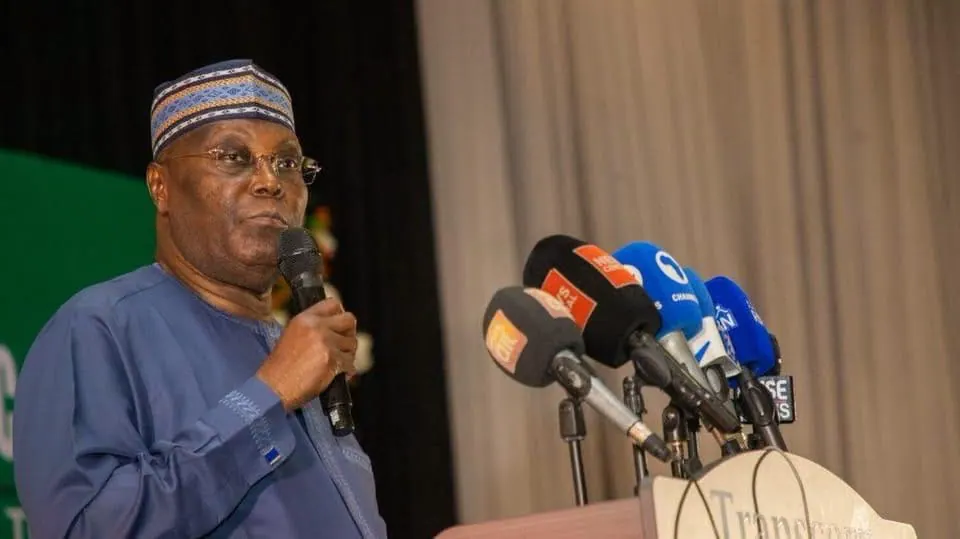
Former Vice-President Atiku Abubakar has strongly criticized President Bola Tinubu's administration, describing it as one of the most ruinous governments Nigeria has endured. In a statement issued on his behalf, Atiku accused Tinubu of making everyday life "punishingly expensive" and still borrowing with an "extraordinary appetite". He expressed concern that despite promises of economic recovery, Nigerians are facing higher food, transport, and energy bills, with strained public services and a growing public debt.
According to Atiku, Nigeria's recorded public debt stood at ₦49.85 trillion in March 2023 and skyrocketed to ₦166.79 trillion by June 2026, as reported by the Debt Management Office. He demanded that President Tinubu provide a full account of the country's debt, including details on old debt, foreign debt, and new loans contracted since he assumed office. Atiku emphasized that the debt question cannot be separated from the widening gulf between official claims of economic recovery and the lived reality of ordinary Nigerians.
Atiku highlighted the contradiction at the heart of the administration's economic reforms, stating that while macroeconomic indicators may look good, millions of citizens are struggling to make ends meet. He argued that an economy cannot be declared successful simply because government revenue is rising, reserves are improving, or official statistics look better, while the purchasing power of ordinary citizens is being destroyed. The true test of economic policy, Atiku said, is whether Nigerians can afford basic necessities like food, transportation, housing, education, healthcare, and electricity.
The cost of carrying Nigeria's debt has become an emergency of its own, with debt service reaching ₦12.52 trillion against ₦18.63 trillion in revenue in the third quarter of 2025, according to BudgIT. This means that roughly ₦67 out of every ₦100 of revenue goes to debt service, leaving limited funds for competing public needs. Atiku questioned where the gains are, considering that Nigerians were told to endure the pain of economic reforms for future benefits.
Atiku also pointed out that recent fuel-price pressures have further intensified the squeeze on household budgets, with petrol selling at around ₦1,400 per litre in Lagos and Abuja and as high as ₦1,500 in parts of northern Nigeria in September, while diesel exceeded ₦2,000 per litre. He demanded greater disclosure concerning the DMO's external debt-service schedule for the second quarter of 2026 and called on President Tinubu to apologize to Nigerians for the hardship imposed by his administration's economic policies since 2023.
Atiku insisted that President Tinubu and the APC owe Nigerians an apology for the hardship caused and must provide a full account of where the sacrifice has gone. He emphasized that good economics must ultimately improve human life, and if government revenue rises while families become poorer, then Nigerians have every right to demand a full account. Atiku urged President Tinubu to apologize, account for the money collected, reconcile the borrowing, explain the charges, and show the people what their sacrifice bought.
Finally, Atiku demanded that President Tinubu and the APC step away from governance rather than ask Nigerians for another mandate to endure this suffering. He emphasized that the real test of this economy is not whether the numbers look good in government presentations but whether ordinary Nigerians can afford to live. Atiku concluded that President Tinubu must take responsibility for the hardship caused and work towards making life affordable for Nigerians again.
Key points
- Atiku Abubakar criticizes President Tinubu's economic policies, describing them as ruinous and causing widespread hardship in Nigeria.
- Nigeria's public debt has skyrocketed to ₦166.79 trillion by June 2026, with debt service consuming a significant portion of government revenue.
- Atiku demands that President Tinubu apologize to Nigerians for the hardship caused and provide a full account of the country's debt and economic policies.