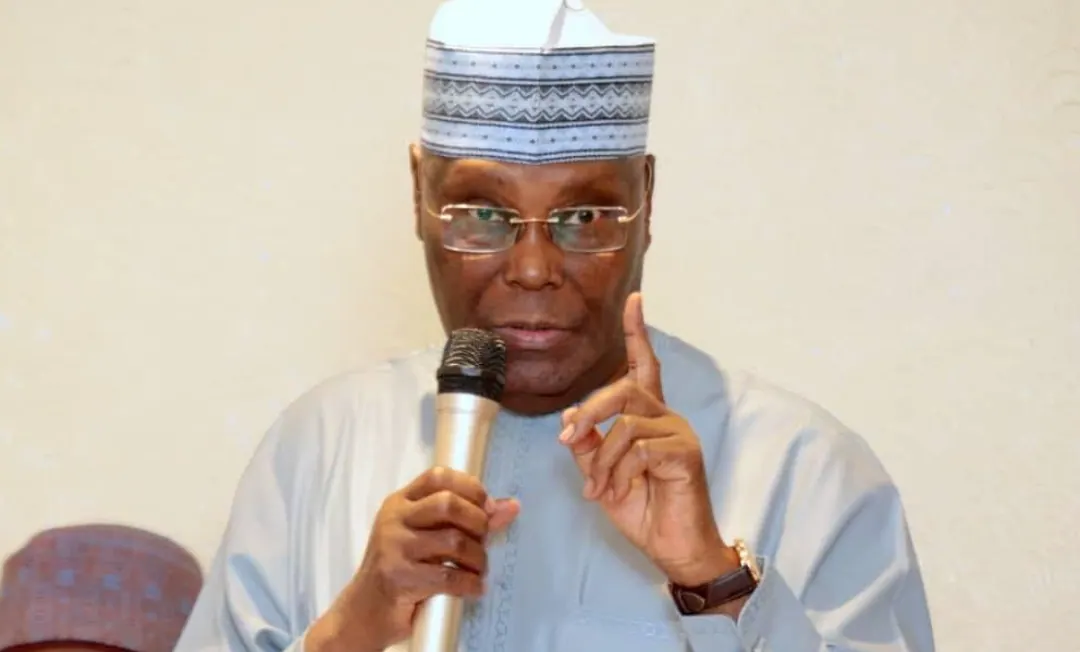
Former Vice President Atiku Abubakar has expressed concern over the borrowing appetite of President Bola Tinubu's administration, stating that it has exacerbated the hardship faced by Nigerians. According to Atiku, the economic policies of the Tinubu-led All Progressives Congress (APC) administration have been ruinous, leading to increased food, transport, and energy bills, as well as strained public services. The public debt of Nigeria has risen to ₦166.79 trillion as of June 30, 2026, according to the Debt Management Office.
Atiku Abubakar, the Presidential candidate of the African Democratic Congress (ADC), questioned the rationale behind the government's continued borrowing despite an increase in public revenues. He stated that the government must explain why it keeps borrowing and why the people paying for its policies cannot see the promised gains. Atiku recalled that Nigeria's public debt stood at ₦49.85 trillion in March 2023 and ₦166.79 trillion by June 2026. He demanded that President Tinubu provide a full account of the country's debt, including the old debt newly recorded, foreign debt, and new loans contracted since he assumed office.
Atiku Abubakar emphasized that the debt question cannot be separated from the widening gulf between official claims of economic recovery and the lived reality of ordinary Nigerians. He stated that the Tinubu economy is producing two Nigerias: one where ordinary citizens are suffocating under rising costs, and another where those with wealth and privilege are better positioned to protect and multiply their fortunes. Atiku argued that an economy cannot be declared successful simply because government revenue is rising, reserves are improving, or official statistics look better, while the purchasing power of ordinary citizens is being destroyed.
The former Vice President cited assessments by international institutions, including the International Monetary Fund (IMF), which acknowledged that conditions remained difficult for many Nigerians, estimating poverty at 63% under the national poverty line and saying 27 million Nigerians had faced food insecurity in the latter part of 2025. Atiku also pointed out that recent fuel-price pressures have further intensified the squeeze on household budgets, with petrol selling at around ₦1,400 per liter in Lagos and Abuja and as high as ₦1,500 in parts of northern Nigeria in September.
Atiku Abubakar criticized the philosophy of economic reform, stating that it cannot be that the poor surrender more and more while those already insulated from hardship become increasingly comfortable. He argued that Nigerians were promised that today's pain would produce tomorrow's gain, but after more than three years, they are entitled to ask: gain for whom? Atiku emphasized that a mother cannot feed her children with a government revenue announcement, and a worker cannot pay transport fare with a speech about reform.
The cost of carrying Nigeria's debt has become an emergency of its own, with BudgIT reporting that by the third quarter of 2025, debt service had reached ₦12.52 trillion against ₦18.63 trillion in revenue - 67.2%. Atiku quoted President Tinubu as saying that Nigeria expected to spend about $11.6 billion on debt service in 2026, describing the amount as nearly half of projected revenue. He demanded greater disclosure concerning the Debt Management Office's external debt-service schedule for the second quarter of 2026.
Atiku Abubakar also demanded a reconciliation of Treasury Bill borrowing, saying the Debt Management Office reported ₦19.48 trillion in outstanding Nigerian Treasury Bills at June 30, 2026. He requested that the government publish what subsequently matured, what was redeemed, what was rolled over, and what constituted genuinely new borrowing. Atiku emphasized that Nigerians need the current outstanding balance and a transparent reconciliation of the transactions behind it.
Key points
- Atiku Abubakar criticizes President Tinubu's borrowing spree, saying it has plunged Nigerians into hardship.
- The public debt of Nigeria has risen to ₦166.79 trillion as of June 30, 2026.
- Atiku demands greater disclosure concerning the Debt Management Office's external debt-service schedule for the second quarter of 2026.