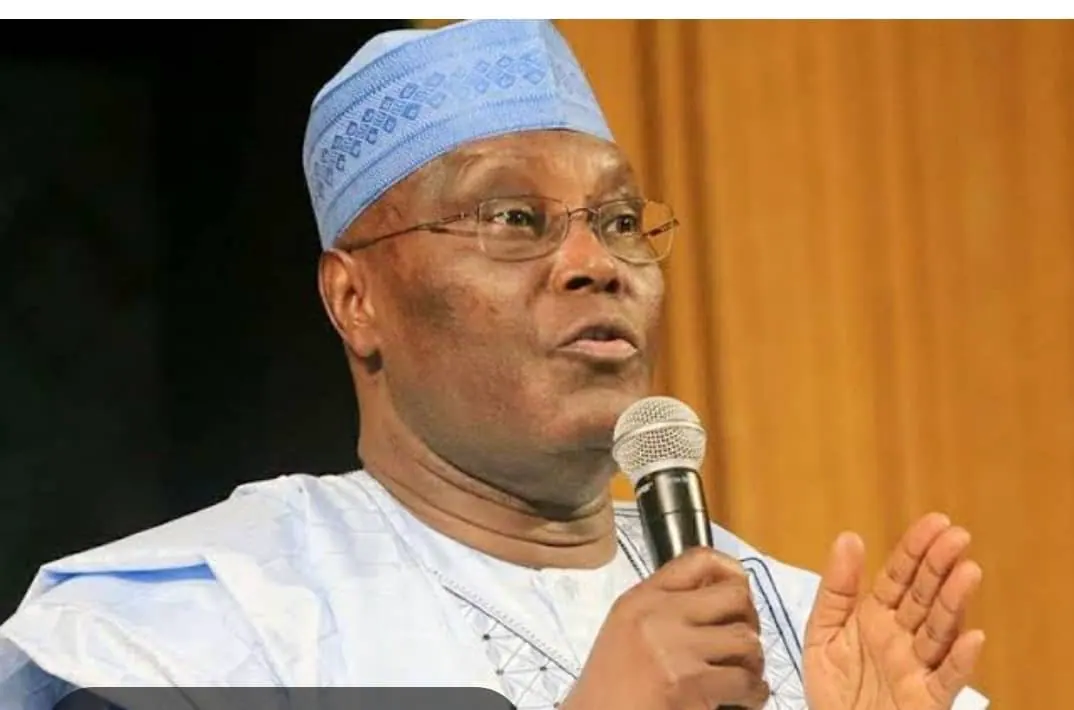
Former Vice President Atiku Abubakar has called on President Bola Tinubu's administration to provide a full account of Nigeria's public debt, amid concerns over the country's rising debt profile and worsening economic pressures on households. In a statement issued on September 26, 2026, Atiku said Nigerians had endured over three years of economic reforms, including the removal of fuel subsidy and increased government revenues, yet public borrowing had continued to expand. He demanded a comprehensive reconciliation of the country's debt position, including inherited obligations, exchange-rate effects on foreign debt, new loans contracted since May 2023, repayments made, and outstanding liabilities.
According to Atiku, the central question confronting the administration is why increased government revenues have not translated into sufficient relief for citizens, while the country continues to accumulate debt. He said a government that claims to have more money coming in must explain why it keeps borrowing and why the people paying for its policies cannot see the promised gains. Atiku's statement comes as the Debt Management Office (DMO) published Nigeria's latest public debt position on September 25, 2026.
Atiku also questioned the gap between official claims of macroeconomic improvement and the economic realities confronting ordinary Nigerians. He said the administration's reforms had produced a situation in which government revenue and selected economic indicators could improve while households continued to struggle with food, transportation, electricity, education, housing, and healthcare costs. This, he argued, had created two Nigerias: one where ordinary citizens are suffocating under rising costs, and another where those with wealth, access, and privilege are better positioned to protect and multiply their fortunes.
The former vice president emphasized that the ultimate measure of economic policy should be its effect on the purchasing power and living standards of citizens. He said an economy cannot be declared successful simply because government revenue is rising, reserves are improving, or official statistics look better, while the purchasing power of ordinary citizens is being destroyed. Atiku's comments align with the International Monetary Fund's (IMF) June 2026 Article IV assessment, which noted that Nigeria's reforms had improved macroeconomic outcomes but also highlighted that conditions remained difficult for many Nigerians.
The IMF estimated poverty at 63% under the national poverty line and said about 27 million Nigerians had faced food insecurity in the fall of 2025. Atiku said this assessment reinforced the need for the government to connect macroeconomic reforms with tangible improvements in citizens' welfare. He argued that the philosophy of economic reform cannot be that the poor surrender more and more while those already insulated from hardship become increasingly comfortable.
Atiku also raised concerns over the cost of servicing Nigeria's debt, citing BudgIT's assessment that debt service had reached ₦12.52 trillion against ₦18.63 trillion in revenue by the third quarter of 2025. He pointed to the 2026 fiscal framework, which provides for expenditure of about ₦68.32 trillion against projected revenue of approximately ₦36.87 trillion, leaving a deficit of about ₦31.45 trillion. President Tinubu had reportedly said Nigeria expected to spend about $11.6 billion on debt service in 2026.
Atiku warned that persistent borrowing and rising debt-service obligations required closer public scrutiny, particularly where new borrowing is used to finance recurring fiscal gaps. He called for greater transparency regarding the DMO's external debt-service figures for the second quarter of 2026, particularly the $22.5 million listed as an "other charge" relating to a First Abu Dhabi Bank Total Return Swap. Atiku demanded a reconciliation of Treasury Bill borrowing, saying Nigerians needed to know how much of reported issues were used to finance the budget.
Key points
- Atiku Abubakar demands a full account of Tinubu's borrowing amid rising hardship in Nigeria.
- The former vice president questions the gap between official claims of macroeconomic improvement and the economic realities confronting ordinary Nigerians.
- Atiku raises concerns over the cost of servicing Nigeria's debt and its impact on public finances.