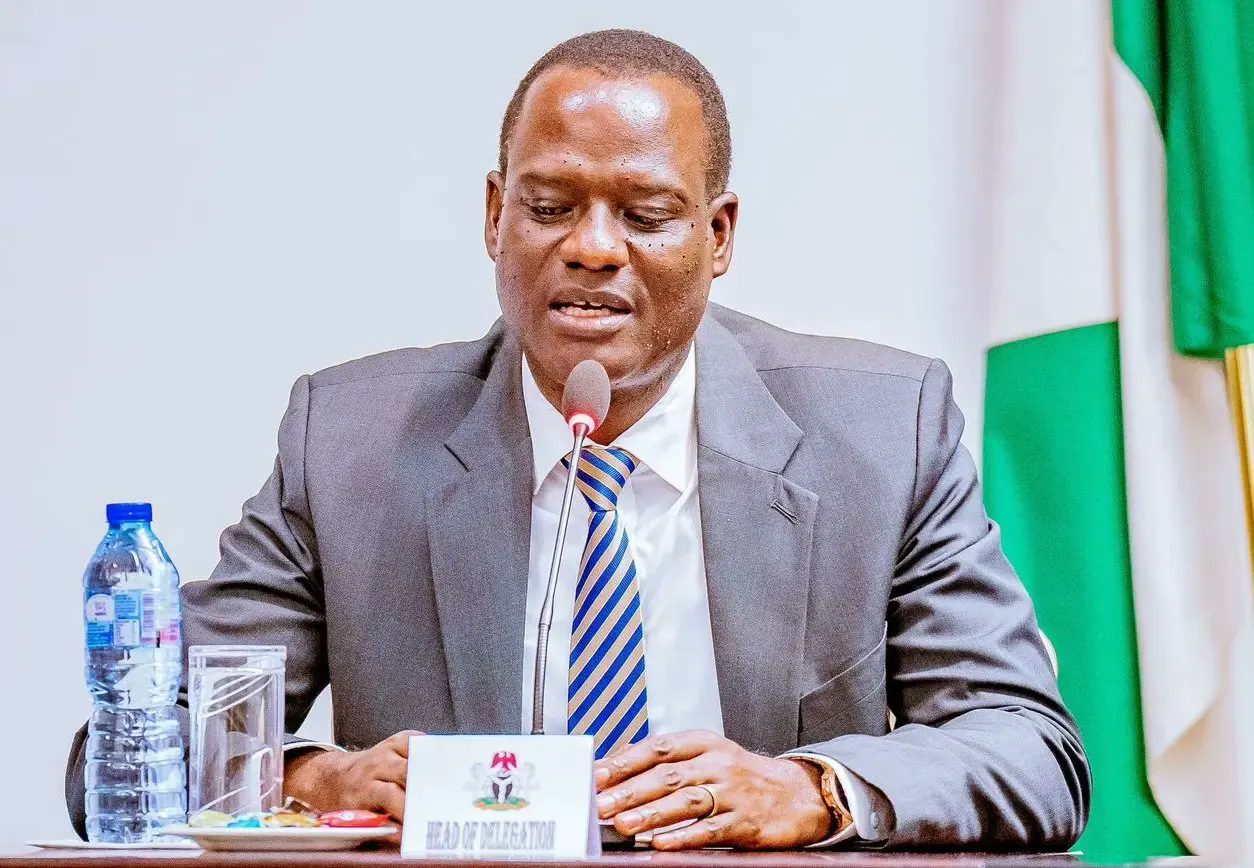
Nigeria's Minister of Finance and Coordinating Minister of the Economy, Taiwo Oyedele, has called for a strategic shift in the approach to climate finance. He made this appeal at the United Nations Dialogue on Solutions to Climate Finance on the sidelines of the 81st Session of the United Nations General Assembly (UNGA) in New York. Oyedele emphasized the need for simpler access to affordable capital for Africa and other developing countries. He also stressed the importance of financing arrangements that better reflect their development realities.
Oyedele highlighted that Africa's development ambitions, particularly its energy needs, are constrained by high financing costs, currency risks, and limited access to affordable long-term capital. Despite Africa's relatively low contribution to global carbon emissions, the continent faces a "prejudice premium" and "narrative cost" in mobilizing financing for critical infrastructure. This has resulted in significant challenges for African countries in raising capital for essential development assets.
The Minister identified additional burdens confronting African countries, including currency risk and a "stereotype tax." These challenges hinder their ability to secure financing for critical energy and other development projects. Oyedele urged the international community to scale up the availability of affordable capital to finance infrastructure and development across the continent. This, he believes, will help address the continent's significant energy-access deficit.
Oyedele also called for greater investment in gas and other transition energy sources, particularly in Africa. This investment would expand access to reliable and affordable energy, helping to address global energy poverty. Furthermore, he noted that increased investment in Africa's energy sector would diversify global energy supply and reduce concentration risks, especially amid disruptions in the Gulf region.
The Minister emphasized that Africa's energy transition must consider the continent's substantial energy-access deficit. He stressed the need for greater investment to enable countries to meet their development needs while pursuing a practical transition to cleaner energy sources. This approach would ensure that Africa's energy transition is both sustainable and equitable.
For Nigeria, Oyedele stated that the immediate priority is to structure and implement policies and programs that reduce poverty, expand economic opportunities, and accelerate the distribution of shared prosperity. Achieving these objectives requires stronger international cooperation and a financing framework that enables developing countries to mobilize the capital needed to invest in infrastructure and improve the lives of their people.
Oyedele's call for a strategic shift in climate finance approach aligns with the need for a more equitable and sustainable global financial system. The Minister's advocacy for Africa's development needs is expected to resonate with other developing countries. His efforts aim to ensure that the continent's unique challenges are addressed through targeted financial solutions.
Key points
- Oyedele urges simpler access to affordable capital for Africa and other developing countries.
- Africa's development ambitions are constrained by high financing costs, currency risks, and limited access to affordable long-term capital.
- Oyedele calls for greater investment in gas and other transition energy sources in Africa.