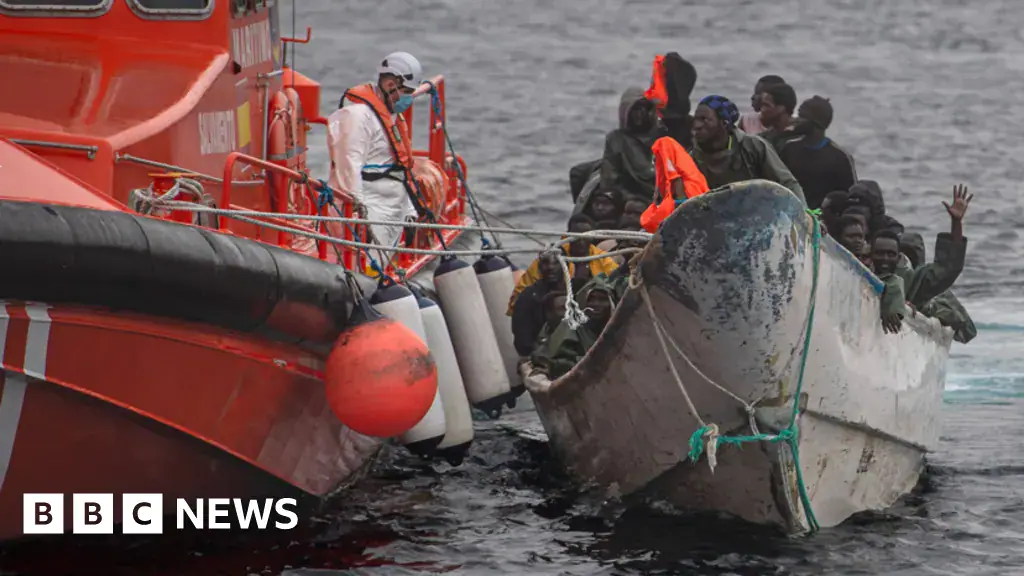
A tragic incident occurred off the coast of Senegal, where a small wooden boat carrying migrants capsized, resulting in the deaths of at least 34 people. The Senegalese Press Agency reported the incident, citing an official source. The Interior ministry stated that one person had been rescued, but the number of people still missing was yet to be established. The boat sank between the capital, Dakar, and the northern city of Saint-Louis, as it headed towards Spain's Canary Islands.
The Atlantic crossing to the Canary Islands remains a perilous route for migrants seeking a better life. Spanish migrant rights group Walking Borders recorded 635 deaths on this route between January and May 2026, the highest toll among the routes it monitors. This route has become a major entry point into Europe for migrants and refugees making the dangerous Atlantic crossing from West Africa. The International Organization for Migration attributes the driving factors behind this migration to limited employment opportunities, family pressures, and established migration networks.
President Bassirou Diomaye Faye expressed his condolences to the victims' families and urged Senegalese nationals not to risk their lives on the dangerous sea crossings. He pledged to intensify efforts to dismantle the networks organising these journeys. In a statement, he said, "We will relentlessly continue the fight against those who organise these crossings and the work that gives our young people reasons to hope here." This incident has raised concerns over the dangers facing migrants attempting to reach Europe by sea.
Senegalese authorities have been working to combat people-smuggling networks. The interior ministry stated that they would continue efforts to strengthen cooperation with neighbouring countries to tackle this issue. On Friday, authorities intercepted another boat carrying 142 migrants, including 23 women, two babies, and two other children, attempting to reach Spain. The group comprised nationals of Senegal, Gambia, Guinea-Bissau, Guinea, and Nigeria.
The surge in migrant arrivals has also affected the Spanish island of El Hierro, where a state of emergency was declared on Saturday. More than 3,300 people have reached the island in about 30 boats since the beginning of November, according to local authorities. This development highlights the challenges faced by European countries in managing migration.
The incident has also shed light on the unemployment challenges in Senegal, where nearly one in four young people was unemployed in the second quarter of 2026, according to the country's statistics agency. This figure underscores the task facing President Faye's government in creating jobs for a predominantly young population. The prospect of finding work and earning more abroad remains a powerful incentive for many young people, despite the risks of crossing the Atlantic in overcrowded boats.
As the situation continues to unfold, Senegalese migrant aid group Boza Fii reported that all the bodies recovered so far were Senegalese, but the nationalities of other people on board were yet to be established. The group, led by Saliou Diouf, continues to provide support to migrants and their families. The tragedy serves as a reminder of the need for comprehensive solutions to address the root causes of migration and ensure safer alternatives for those seeking a better life.
Key points
- At least 34 people died after a boat carrying migrants sank off the coast of Senegal.
- The Atlantic crossing to the Canary Islands remains a perilous route for migrants, with 635 deaths recorded between January and May 2026.
- Senegalese authorities are working to combat people-smuggling networks and strengthen cooperation with neighbouring countries.