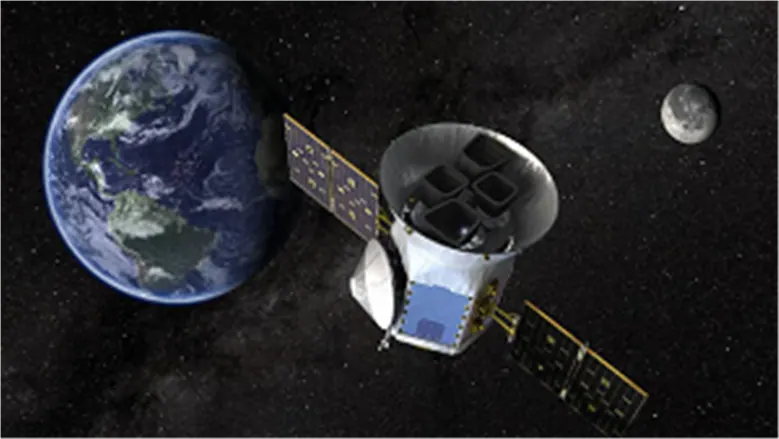
In a groundbreaking discovery, astronomers have identified a second-generation planet orbiting a white dwarf star, marking a historic first in astronomical observations. These second-generation planets form from materials ejected by stars as they die, making them extremely rare. The detection was made possible through the use of NASA's TESS spacecraft, which searches for exoplanets by monitoring the dimming of starlight as planets pass in front of their host stars.
The newly discovered planet, named Phoenix, is a gas giant similar in size to Jupiter and orbits its white dwarf star in a remarkably short 4.4-day period. As Phoenix orbits its star, it is subjected to intense radiation, which gradually vaporizes its atmosphere. This phenomenon provides valuable insights into the planet's composition and its potential for sustaining life. According to researchers, the discovery of Phoenix is a significant find, offering a unique window into the formation and evolution of planetary systems.
White dwarf stars, like the one hosting Phoenix, are the remnants of stars that have exhausted their hydrogen fuel and shed their outer layers. When stars like our Sun deplete their hydrogen, they expand to become red giants, potentially engulfing nearby planets. The study of white dwarfs and their planetary systems provides crucial information about the long-term fate of our own solar system, which is expected to undergo a similar transformation in about six billion years.
The detection of Phoenix was met with surprise by astronomers, as it challenges current understanding of planetary formation and evolution. According to one researcher, the remarkable aspect of Phoenix is that it appears to have formed from the same material ejected by its star during its death, rather than being a relic from the system's formation. This finding has significant implications for our understanding of the origins and diversity of planetary systems.
The study of Phoenix and similar systems will continue to shed light on the complex processes governing planetary formation and evolution. By analyzing the properties of second-generation planets and their host stars, astronomers can gain a deeper understanding of the intricate relationships between stars, planets, and their environments. This knowledge will ultimately help scientists better predict the long-term fate of our own solar system and the potential for life beyond Earth.
Further research on Phoenix and other second-generation planets will focus on characterizing their atmospheric properties and potential biosignatures. The discovery of Phoenix has opened up new avenues for investigation, enabling scientists to explore the properties of planets that form in the vicinity of white dwarf stars. By exploring these unusual systems, astronomers can refine their understanding of planetary formation and the conditions necessary for life to emerge.
The discovery of Phoenix serves as a testament to the advances in astronomical research and the importance of continued exploration of the universe. As new technologies and observational techniques become available, scientists will be able to probe the properties of increasingly distant and exotic planetary systems, ultimately expanding our understanding of the cosmos and our place within it.
Key points
- The discovery of Phoenix, a second-generation planet orbiting a white dwarf star, marks a historic first in astronomical observations.
- Phoenix is a gas giant similar in size to Jupiter and orbits its white dwarf star in a 4.4-day period.
- The study of Phoenix and similar systems will provide insights into the formation and evolution of planetary systems, including the potential for life beyond Earth.