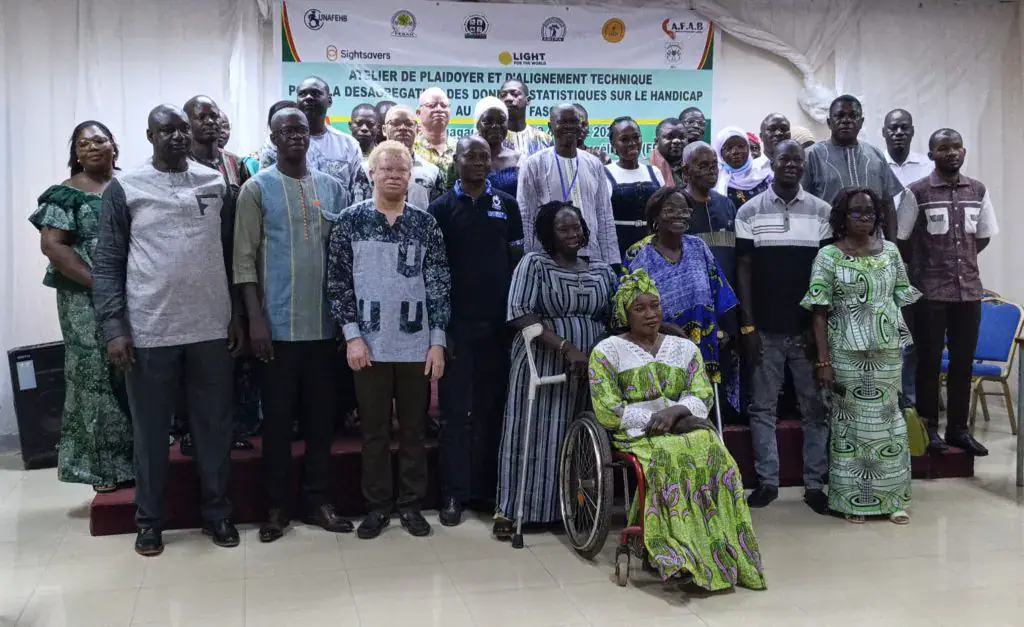
A coalition of disability associations, supported by NGOs Sightsavers and Light for the World, convened an advocacy workshop in Ouagadougou on October 29, 2026. The meeting aimed to secure technical validation from directors general of statistical and sectoral studies within various ministries. The goal is to systematically disaggregate statistical data on disabled individuals in all development initiatives across Burkina Faso. This effort seeks to ensure that disabled persons are properly accounted for in national development plans.
Christophe Oulé, spokesperson for the disability associations, highlighted that disabled individuals feel overlooked in evaluations of actions taken by Burkinabè. He noted that even when data on disabled individuals is collected, it often lacks specificity. Oulé emphasized that without accurate statistics, effective development programs cannot be created. The associations are urging directors general to ensure the availability of disaggregated data on disabled individuals in all development actions.
Étienne Badré, country director of Light for the World, praised Burkina Faso's progress in promoting inclusion for disabled individuals. However, he stressed that more needs to be done to make data on disabled individuals more visible. Badré argued that having such data is crucial for attracting policies that address the specific needs of disabled individuals. He noted that disabled individuals have unique needs that require particular attention.
Pauline Kaboré, a mission officer at the Ministry of Family and Solidarity, recalled that Burkina Faso is committed to leaving no one behind, regardless of their status. She lamented that current statistical data fails to distinguish the needs of disabled individuals. Kaboré welcomed the workshop, seeing it as an opportunity to establish a roadmap and durable mechanism for involving disabled individuals in development planning.
Emmanuel Savadogo, director of monitoring and evaluation at the Ministry of Economy and Finance, emphasized that the principle of "leaving no one behind" requires special attention to individuals facing obstacles in accessing essential services. He noted that Burkina Faso has launched significant initiatives in social protection, inclusive education, and employment promotion for disabled individuals. Savadogo stressed that these efforts must be better documented to assess their impact.
Savadogo also underscored that disabled individuals and their organizations should not be viewed solely as beneficiaries of public policies. Instead, they should be considered equal partners in identifying needs, designing tools, analyzing results, and evaluating interventions. This inclusive approach aims to ensure that development plans effectively address the needs of all citizens, including those with disabilities.
The workshop concluded with a call to action for participants, particularly directors general of statistical and sectoral studies, to commit to concrete actions. The goal is to establish a sustainable mechanism for disaggregating data on disabled individuals, thereby enhancing their visibility and inclusion in development plans. This initiative aligns with Burkina Faso's broader commitment to inclusive development and social justice.
Key points
- Disability associations in Burkina Faso are advocating for better data disaggregation to ensure that development plans address the specific needs of disabled individuals.
- The initiative aims to secure technical validation from directors general of statistical and sectoral studies within various ministries.
- Improved data on disabled individuals will help attract policies that integrate their needs and promote inclusive development.