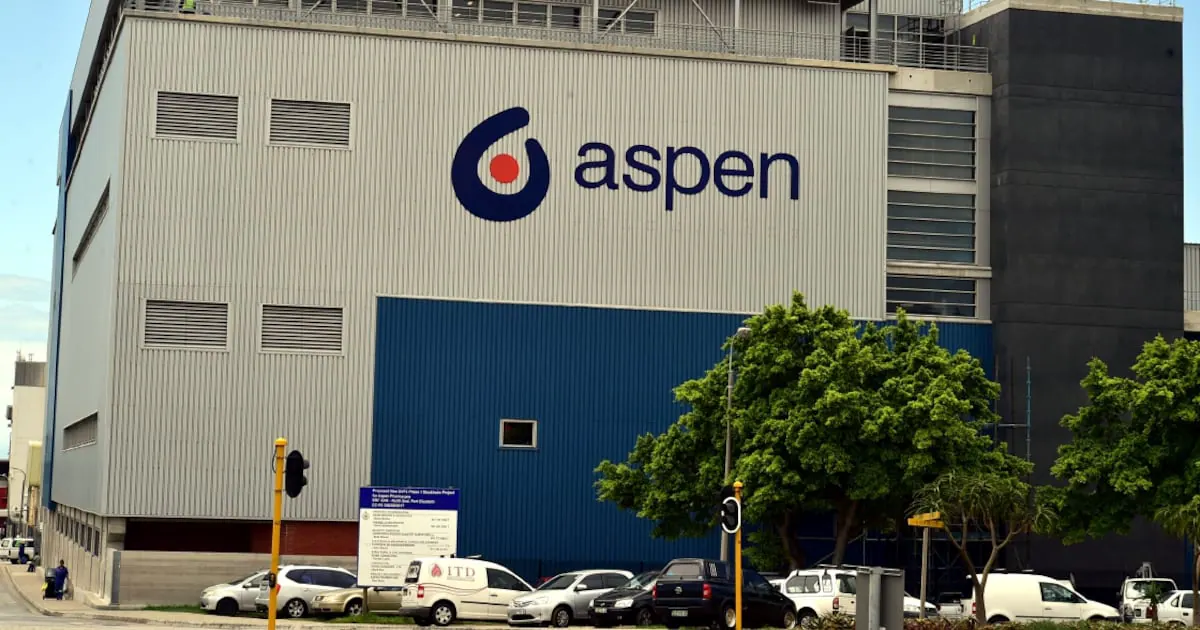
Shares in the health-care sector have been among the top performers on the Johannesburg Stock Exchange (JSE) this year, with Aspen Pharmacare leading the charge. The pharmaceutical group's share price has risen by approximately 40% since January, trading at around R160 this week, valuing the company at roughly R69 billion. This represents a significant turnaround for Aspen after several challenging years marked by restructuring costs, manufacturing issues, and a substantial debt burden.
A key factor contributing to Aspen's resurgence was the disposal of its Asia-Pacific business, excluding China, which was completed in May for gross proceeds of R28 billion. This transaction generated a profit of R2.4 billion and transformed Aspen's balance sheet, with the group ending its 2026 financial year in a net cash position of around R800 million. According to Sean Culverwell, an investment analyst at Anchor Capital, the sale provided the initial catalyst for the recovery, with the market rewarding the deal due to the valuation representing a material premium to the overall group.
Since the sale, Aspen has delivered operational improvements, including the restructuring of underutilized sterile manufacturing facilities, which has started yielding benefits. Commercial production under the Novo Nordisk insulin contract has commenced, and strong demand for Mounjaro has created an additional growth driver in its commercial pharmaceuticals division. The group has also begun returning capital to shareholders through share buybacks. Culverwell noted that at current levels, Aspen is viewed as fairly valued, with the market having adequately embedded the improved outlook in the price.
The focus now shifts to converting the company's existing pipeline into sustainable organic growth rather than relying on acquisition-driven expansion. Key manufacturing growth drivers for 2027 include higher insulin production volumes for Novo Nordisk and increased manufacturing activity in France. Within commercial pharmaceuticals, management is targeting further growth in Mounjaro volumes across sub-Saharan Africa. Aspen has also highlighted the potential of its generic semaglutide products in Canada and Brazil, although competition is expected to be intense.
Other private hospital operators, Life Healthcare and Netcare, have also posted gains this year, though their longer-term prospects remain tied to patient volumes and the affordability of private health care. Life Healthcare is up about 6% since January, while Netcare has gained roughly 12%. Stephan Erasmus, an investment analyst at Anchor Capital, noted that Life Healthcare's shares came under pressure in May after the company warned that a medical scheme placed under curatorship had affected patient numbers, but the stock has since recovered.
Erasmus highlighted that both companies have reported respectable earnings growth, primarily driven by efficiency initiatives rather than stronger patient volumes. Netcare has done a good job of expanding margins through its digitization program, and its buyback has lifted earnings per share. However, the challenge is that efficiency gains alone cannot offset weak volume growth indefinitely, leaving the affordability of medical cover as a key issue for the sector.
For Aspen, the immediate challenge is execution, with Culverwell emphasizing that the company must deliver on its 2027 financial year guidance after a period of repeated overpromising and under-execution. Key downside risks include further contract losses in the manufacturing division, a return to large acquisitions, and an inability to gain meaningful traction with the group's GLP-1 strategy over the next few years.
Key points
- Aspen Pharmacare's share price has risen by approximately 40% since January.
- The company's disposal of its Asia-Pacific business transformed its balance sheet and generated a profit of R2.4 billion.
- Aspen's focus now shifts to converting its existing pipeline into sustainable organic growth.