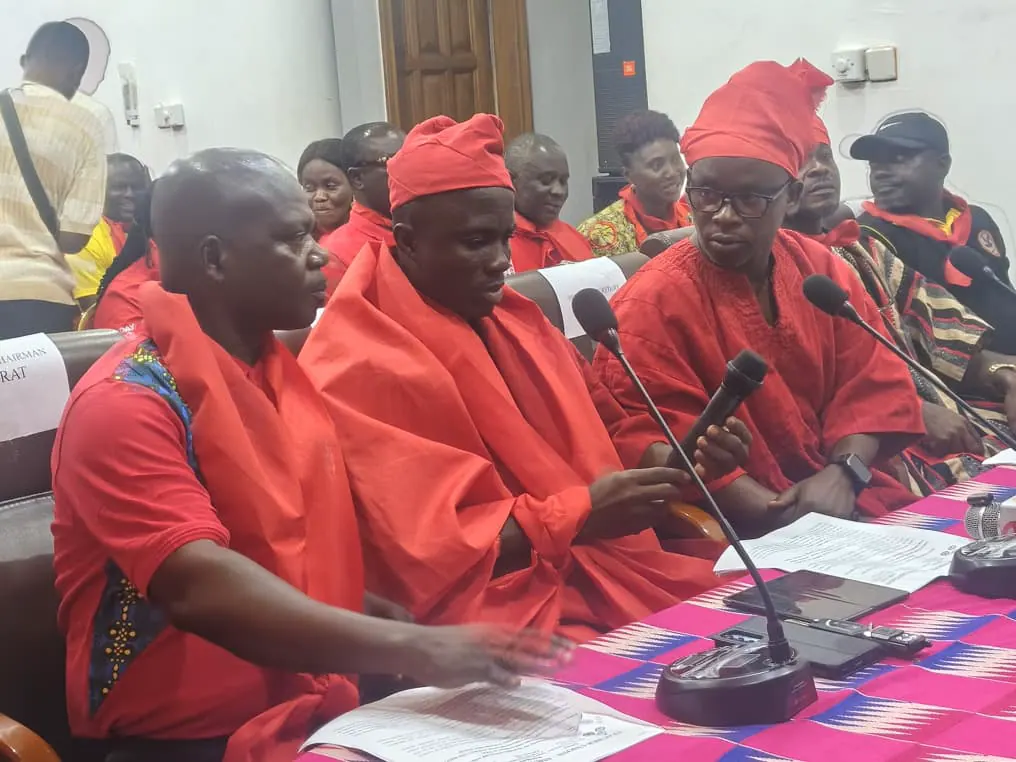
Teacher unions in the Ashanti Region of Ghana, including the Ghana National Association of Teachers (GNAT), National Association of Graduate Teachers (NAGRAT), and the Pre-Tertiary Teachers Association of Ghana (PRETAG), have announced that they will not resume work until they receive verifiable evidence of payment of outstanding promotion-related salaries. The unions, in a joint statement read by Ashanti Regional Secretary of GNAT, Daniel Atakora, emphasized that any decision by their national leadership to call off the ongoing nationwide industrial action must be backed by concrete evidence of payment to affected teachers.
The unions are demanding the immediate placement of teachers who passed the December 2025 and February 2026 promotion examinations on the appropriate salary grades, together with payment of the corresponding arrears effective January 2026. They also want a clear, credible, and time-bound roadmap for concluding and implementing a new collective agreement, as the existing one has expired. Furthermore, the unions are calling for the implementation of the deprived-area allowance for teachers serving in rural and underserved communities.
The teacher unions' concerns go beyond financial issues, as they also raised concerns about excessive workloads and the general welfare and professional dignity of teachers. They argue that teachers are required to undertake various tasks, including classroom preparation, assessment, reporting, meetings, training, administrative duties, and engagements with parents and learners, often under difficult conditions. The unions are calling for a review of workloads, duplication in reporting, and unnecessary administrative demands.
The unions acknowledged recent engagements with the government but stressed that teachers require implementation, not further assurances. They are demanding a transparent monitoring mechanism, verifiable implementation of records, and clear deadlines for resolving outstanding cases. The unions also urged the Ministry of Education, Ghana Education Service, Fair Wages and Salaries Commission, and Controller and Accountant-General's Department to provide a coordinated account of teacher placements and payments.
The teacher unions appealed to President John Dramani Mahama to intervene decisively to resolve the outstanding issues and ensure that commitments made to teachers are honoured. They also appealed to the public to treat teachers' concerns with respect and address concerns about individual misconduct through the appropriate channels. The unions maintained that the strike would continue until the outstanding issues are satisfactorily addressed and their national leadership directs otherwise.
According to Mr. Atakora, promises have been made, and the lines have been crossed, emphasizing that the time for concrete action is now. The unions are waiting for bank alerts proof that the government has fulfilled its commitments to teachers. They stressed that assurances without concrete implementation have become unacceptable, especially since teachers have already made concessions on some months of salary arrears.
The strike by the teacher unions has significant implications for the education sector in Ghana, particularly in the Ashanti Region. The unions' demands are aimed at addressing the challenges faced by teachers, including poor working conditions, inadequate remuneration, and excessive workloads. The outcome of the negotiations between the unions and the government will determine the fate of the strike and the future of education in the region.
Key points
- The teacher unions in Ghana's Ashanti Region insist on verifiable evidence of payment of outstanding promotion-related salaries before ending their strike.
- The unions are demanding the immediate placement of teachers who passed the promotion examinations on the appropriate salary grades, together with payment of the corresponding arrears.
- The strike has significant implications for the education sector in Ghana, particularly in the Ashanti Region.