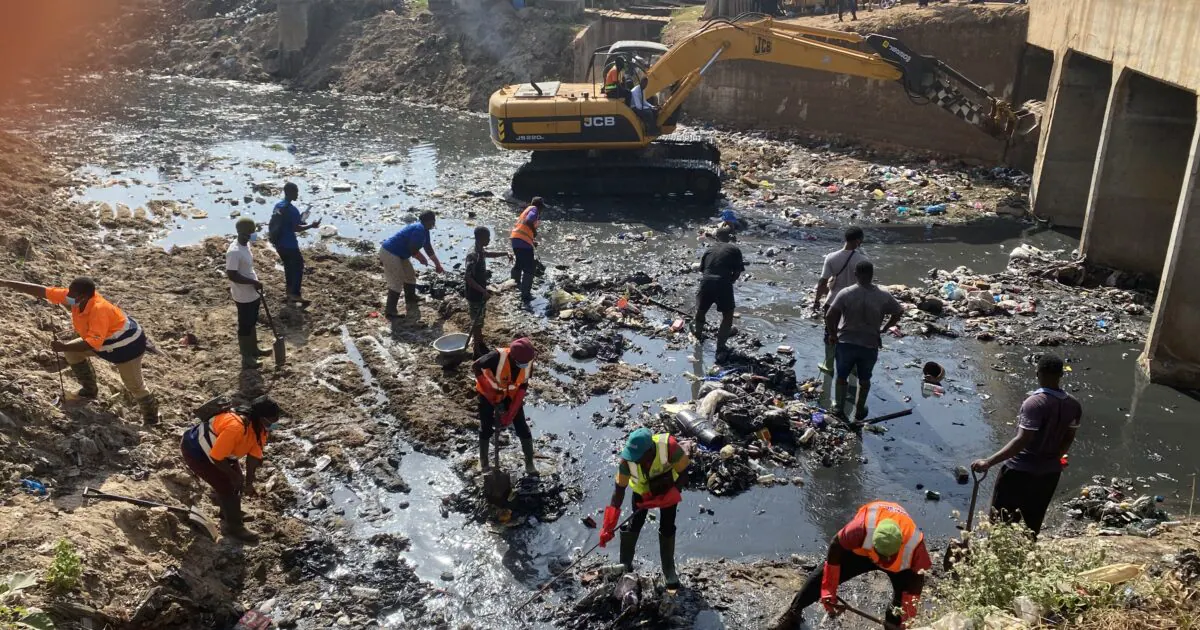
The Ashaiman Municipal Assembly (ASHMA) has marked World Cleanup Day with a major sanitation and dredging exercise targeting the Gbeblemɛ storm drain. The exercise, led by Municipal Chief Executive (MCE) Mr. Freeman Tsekpo, aims to address chronic environmental challenges in the area. The Gbeblemɛ channel serves as the primary storm drain for Ashaiman and falls under the jurisdiction of the Hydrological Services Department of the Ministry of Works and Housing.
The MCE expressed deep concern over the misuse of municipal water channels by residents, who had turned sections of the storm drain into unauthorized refuse dumps. He outlined a two-pronged strategy to address the sanitation challenge, involving the removal of refuse and the setup of a satellite monitoring system to prevent future abuse. The monitoring system is part of community policing initiatives, with local pig farmers engaged as environmental wardens to deter illegal dumping.
The Ashaiman Municipal Assembly is aggressively promoting waste segregation by separating plastic and organic waste, supported by municipal partnerships with smart plastic recycling networks and firms such as Safisana. These partnerships aim to convert organic waste and faecal matter into electricity. The MCE commended assembly members, unit committee members, and residents for supporting concurrent clean-up exercises across various electoral areas.
The Gbeblemɛ storm drain has caused major floods in the past, including incidents in 2010 and 2018, as well as minor incidents up to 2024. However, massive dredging and desilting works undertaken at the Adjei-Kojo exit point have successfully prevented severe flooding during recent seasonal rains. The MCE highlighted that pressure on local sanitation infrastructure remains exceptionally high, with Ashaiman's population exceeding 300,000 and intense commercial activity.
The Ashaiman Municipal Assembly is lobbying to upgrade the ageing earth drain into a modern, fully constructed concrete storm drain. The MCE noted that this upgrade would help mitigate the risk of flooding and improve sanitation in the area. The Assembly's efforts aim to safeguard public health and promote sustainable municipal development.
As part of the community policing initiatives, local pig farmers operating near the area have been engaged to act as environmental wardens. These wardens will help deter illegal dumping and report any incidents of abuse. The MCE emphasized the importance of community involvement in maintaining a clean and healthy environment.
The Ashaiman Municipal Assembly's efforts to address sanitation challenges have been commended by residents and stakeholders. The Assembly's proactive approach to preventing dumping in the storm drain and promoting waste segregation is expected to have a positive impact on the environment and public health. The monitoring system is a key component of this effort, ensuring that the area remains clean and free of unauthorized refuse dumps.
Key points
- The Ashaiman Municipal Assembly has launched a monitoring system to prevent dumping in the Gbeblemɛ storm drain.
- The Assembly is promoting waste segregation and partnering with firms to convert organic waste into electricity.
- The area has experienced major floods in the past, but recent dredging works have helped mitigate the risk.