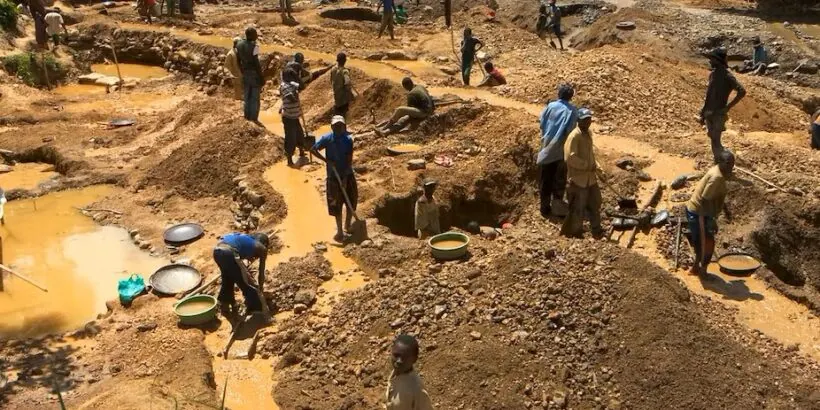
The Asantehene, Otumfuo Osei Tutu II, will lead an environmental restoration effort at the Jimi Land Reclamation and River Watercourse Rehabilitation Project near Obuasi on Wednesday, October 14, 2026. During his visit, he will plant trees and inspect Lot 1 of the project, marking a significant milestone in restoring lands severely degraded by unregulated small-scale mining. This initiative aims to restore lands damaged by galamsey, a practice that has stripped forest vegetation, contaminated soils, and left hazardous open, water-filled pits across the Obuasi and Adansi areas.
The environmental damage caused by unregulated small-scale gold mining, known as galamsey, has had severe consequences for the environment and local communities. The Jimi River, which is a critical source of drinking water for communities across the Adanse Traditional Area, is threatened by toxic runoff and heavy sediment buildup. The Jimi Dam, which supplies drinking water to these communities, is also at risk due to the environmental degradation. The Asantehene's advocacy against illegal mining during the Mining in Motion forum led to the creation of the Ashanti Green Initiative, which includes the Jimi reclamation project as its flagship pilot.
The Jimi reclamation project brings together key institutional partners, including the Manhyia Palace, Ashanti Green Initiative, AngloGold Ashanti, Ministry of Lands and Natural Resources, and the Environmental Protection Authority (EPA). These partners are working together to restore 153 hectares of heavily impacted sites across three designated lots in the Obuasi East Municipality and the Adansi Akrofuom and Adansi Asokwa Districts. The project involves a six-step process, including backfilling open mining pits, re-grading spoil heaps, containing heavy-metal soil contamination, installing drainage and erosion control structures, restoring topsoil health, and replanting the land with kenaf, a commercial fibre crop.
Due to residual heavy-metal contamination risks in the soil, kenaf was selected over food crops for the replanting process. The fast-growing fibre crop will be harvested for manufacturing sacks, rope, and eco-composites, establishing a secure income stream for local farmers. The project also includes long-term plans for continuous water testing to protect the Jimi Dam, as well as ongoing tracking of soil, vegetation, biodiversity, and community health outcomes. This will ensure that the environmental restoration effort is sustainable and effective in the long term.
The Jimi pilot project aims to serve as a national model to rehabilitate other mining-damaged land and water systems across Ghana. The project has the potential to make a significant impact on the environment and local communities, and its success could be replicated in other areas affected by galamsey. The Asantehene's involvement in the project highlights the importance of royal patronage and community engagement in environmental restoration efforts.
The Ashanti Green Initiative, which is driving the Jimi reclamation project, is part of a broader effort to promote sustainable development and environmental protection in Ghana. The initiative aims to bring together stakeholders from various sectors to address the environmental and social impacts of mining and promote sustainable livelihoods for local communities. By working together, the initiative hopes to create a more sustainable future for Ghana's mining communities.
The Jimi Land Reclamation and River Watercourse Rehabilitation Project is a significant step towards restoring the environmental health of the Obuasi and Adansi areas. With the Asantehene's leadership and the support of key institutional partners, the project has the potential to make a lasting impact on the environment and local communities. The project's focus on sustainable livelihoods and environmental restoration sets a positive precedent for future environmental initiatives in Ghana.
Key points
- The Asantehene, Otumfuo Osei Tutu II, will lead an environmental restoration effort at the Jimi Land Reclamation and River Watercourse Rehabilitation Project near Obuasi on October 14, 2026.
- The Jimi reclamation project aims to restore 153 hectares of heavily impacted sites across three designated lots in the Obuasi East Municipality and the Adansi Akrofuom and Adansi Asokwa Districts.
- The project involves a six-step process, including backfilling open mining pits, re-grading spoil heaps, containing heavy-metal soil contamination, installing drainage and erosion control structures, restoring topsoil health, and replanting the land with kenaf.