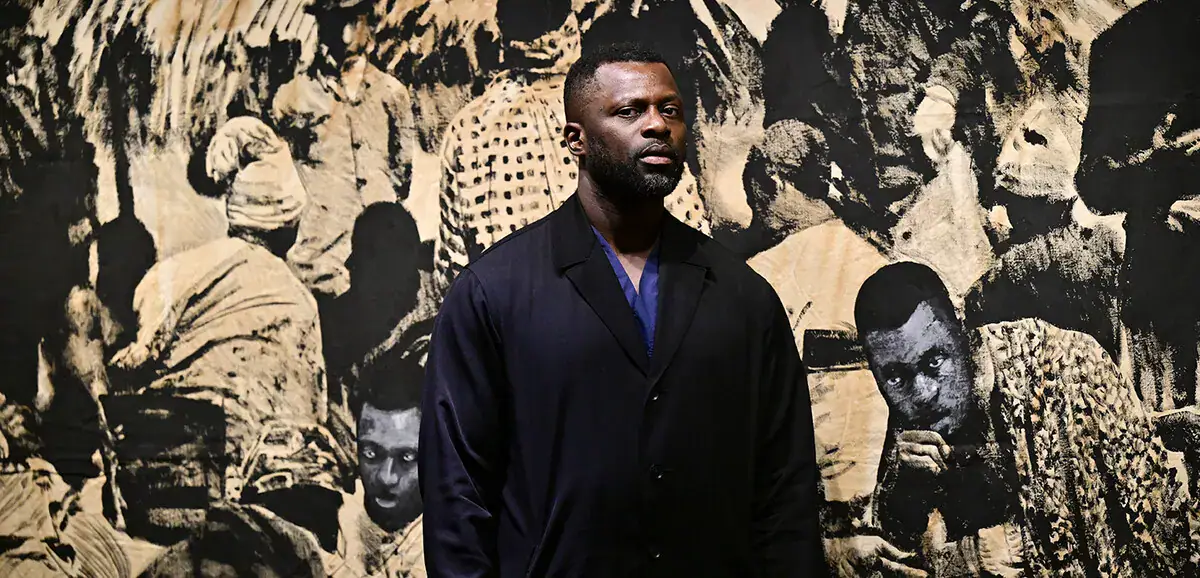
The Musée du Quai Branly–Jacques Chirac in Paris is hosting an exhibition titled "Violence silencieuse" by Béninois artist Roméo Mivekannin. The exhibition features ironwork birdcages and paintings inspired by photographs of human zoos, highlighting the role of museums during colonial times. Mivekannin's work is a reflection of his own heritage, as a descendant of King Béhanzin, and his experiences with the legacy of colonialism. The exhibition is part of a larger conversation about the restitution of cultural artifacts and the role of museums in preserving history.
Mivekannin's exhibition is a personal reflection on the artist's heritage and the history of colonialism. He notes that as a person living in the present, he has a duty to participate in rewriting new narratives for the future. The exhibition title "Violence silencieuse" refers to the silent violence that exists but is not visible. Mivekannin aims to spark a conversation about the complexities of violence and its various forms. His work also touches on the theme of universalism and its limitations.
The exhibition is not just about the past but also about the present and future. Mivekannin believes that the future is yet to be constructed and that it requires a collective effort. He draws inspiration from the philosophy of sankofa, which emphasizes the importance of looking back to move forward. The artist's use of autoportraits in his paintings is a way of reactivating historical archives and making them more relatable to contemporary audiences.
Mivekannin's work is part of a larger movement to reexamine the legacy of colonialism and its impact on museums. The Musée du Quai Branly has been at the center of discussions around restitution, and Mivekannin's exhibition is a contribution to this conversation. He notes that restitution is a symbolic act, but it is not enough; it is a continuous process that requires ongoing effort.
The artist's vision for the future of museums, particularly on the African continent, is one of reinvention. He believes that museums should be mobile and inclusive, reflecting the diversity of cultures and experiences. Mivekannin's definition of universalism is one of pluriversalism, where different perspectives are acknowledged and valued.
Mivekannin's exhibition has sparked a conversation about the role of museums in preserving history and promoting cultural understanding. The exhibition is a testament to the power of art to challenge and transform our understanding of the world. It is a call to action, encouraging viewers to think critically about the past and its ongoing impact on the present.
The exhibition "Violence silencieuse" will run until April 4, 2027, at the Musée du Quai Branly–Jacques Chirac. It is a must-see for anyone interested in contemporary art, colonial history, and the role of museums in shaping our understanding of the world.
Key points
- The exhibition "Violence silencieuse" explores the legacy of colonialism and its impact on museums.
- The artist's use of autoportraits and ironwork birdcages is a way of reactivating historical archives and making them more relatable to contemporary audiences.
- Mivekannin's vision for the future of museums is one of reinvention, inclusivity, and diversity.