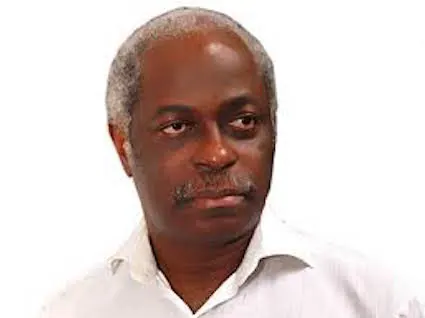
In the Bible, humans are likened to trees, and Jesus is referred to as the Tree of Life. According to Femi Aribisala, a pastor at Healing Wings church in Nigeria, this concept is central to understanding the gospel of the kingdom of God. The church, which started in 1994, has been guided by Aribisala's vision of a Promised Land, which he believes was revealed to him by God. This vision was confirmed by the presence of fruit trees at a dilapidated building at 12 Festival Road, Victoria Island, Lagos.
The Bible describes the Garden of Eden, where God placed two prominent trees: the Tree of Life and the Tree of the Knowledge of Good and Evil. Adam and Eve were forbidden from eating the fruit of the Tree of the Knowledge of Good and Evil, but not from the Tree of Life. However, they disobeyed God and ate the forbidden fruit, leading to sin and death entering the world. As a result, God kicked them out of the Garden of Eden to prevent them from eating from the Tree of Life and living forever in their sins.
Aribisala notes that Jesus came to earth to make humans "trees of righteousness," as stated in Isaiah 61:3. In Psalm 1:3, the psalmist describes the redeemed as being like trees planted by rivers of water, bearing fruit in their season. Jesus himself uses trees as object lessons for humans, saying that every good tree bears good fruit, but a bad tree bears bad fruit. He warns that every tree that does not bear good fruit will be cut down and thrown into the fire.
According to Aribisala, Jesus is referred to as the last Adam, who enables humans to regain access to the fruit of the Tree of Life. Through Jesus' sacrifice on the cross, humans can be joined with Him in His righteousness. Jesus was tempted by Satan, but unlike Adam and Eve, He did not succumb to the temptations. As a result, Jesus' sacrifice took away humans' sins, and the cherubim with the flaming sword that prevented access to the Tree of Life was removed.
Aribisala highlights that Jesus' cross is referred to as a tree in the New Testament. Peter says that Jesus bore humans' sins in His own body on the tree, and the book of Acts describes Jesus as being killed by hanging on a tree. Since death came to the world through a tree, life had to overcome death through another tree. Jesus, the Tree of Life, was crucified on the tree of Calvary for humans' redemption.
Aribisala emphasizes that Jesus' sacrifice enables humans to eat the fruit of the Tree of Life and live forever without the bondage of sin. Jesus says that humans must eat His flesh and drink His blood to have eternal life. Aribisala notes that the Old Testament is full of types and shadows of Jesus as the Tree of Life. By understanding Jesus as the Tree of Life, humans can appreciate the significance of His sacrifice and the gift of eternal life.
Aribisala's perspective on Jesus as the Tree of Life offers a unique insight into the Christian faith. His interpretation of biblical scripture highlights the significance of trees and fruit in understanding the gospel. By recognizing Jesus as the Tree of Life, Christians can deepen their understanding of God's plan for humanity and the gift of salvation. Healing Wings church, which Aribisala leads, continues to share this message with its congregation and the wider community.
Key points
- Jesus is referred to as the Tree of Life in the Bible.
- Humans are likened to trees in the Bible, and Jesus came to make humans "trees of righteousness."
- Jesus' sacrifice on the cross, referred to as a tree, enables humans to regain access to the fruit of the Tree of Life.