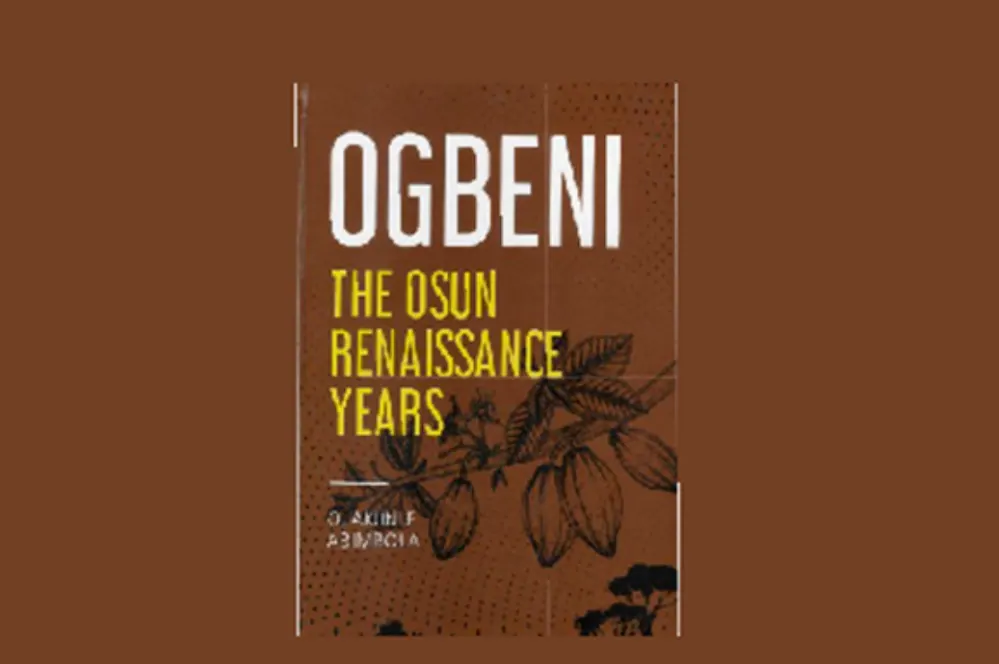
A comprehensive book titled 'Ogbeni: The Renaissance Years' has been written by seasoned journalist and author, Olakunle Abimbola, reflecting on Ogbeni Raufu Aregbesola's eight-year stint as governor of Osun State. The 411-page book, published by Safari Books Ltd, Ibadan, is divided into two sections and 15 chapters. Abimbola, known for his meticulous research and compelling writing style, provides an in-depth analysis of Aregbesola's governance and policy imprints.
The book's first part chronicles Aregbesola's rise to power, from his days as a Lagos politician and Commissioner of Works and Infrastructure under Governor Bola Tinubu, to his emergence as governor of Osun State in 2010. Abimbola captures the collapse of the Alliance for Democracy (AD) in Osun State and the Southwest, following the 2003 elections, which saw the Peoples Democratic Party (PDP) gain control in five of six states in the region.
Abimbola details Aregbesola's increasing emergence as the symbol to lead the resurrection of the progressives in Osun, with the support of Asiwaju Tinubu. He describes the formation of groups such as the Friends of Aregbesola (FoRA) and the People-Friendly Government (PFG), which catalyzed Aregbesola's ascension to power. The support base of the Ogbeni for Osun governor movement had a pan-Yoruba and cosmopolitan outlook, with individuals from Lagos and other parts of the Southwest joining in the effort.
The book also examines the tensions and violence that arose during Aregbesola's campaign for the 2007 elections, including the confrontation at the Oroki Day commemoration in Osogbo and the violent attack on Ayinke Towers, Aregbesola's campaign headquarters. Abimbola's account suggests that the Aregbesola group was largely at the receiving end of violence perpetrated by the incumbent PDP administration.
Abimbola devotes a chapter to Aregbesola's three-year battle in the courts to retrieve a mandate that was widely perceived as stolen in the 2007 general elections. The petition was heard by two tribunals until the Court of Appeal gave its final verdict in favour of Aregbesola on 26 November 2010. However, Abimbola omits to mention who suggested the idea of forensic analysis of the ballot and who was instrumental in getting Adrian Forty to handle the case.
The central thrust of the book is Aregbesola's policy imprints as governor of Osun State between 2010 and 2018. Abimbola examines the policy blueprint of the Ogbeni administration, which is the focus of part two of the book. The book is subtitled 'An African Guide to Grassroots Politics and Development', reflecting Abimbola's aim to provide a comprehensive guide to grassroots politics and development.
The book provides an insightful analysis of Aregbesola's governance and policy decisions, offering a reflective mirror on his eight-year tenure as governor of Osun State. Abimbola's work is a significant contribution to the understanding of grassroots politics and development in Nigeria, and will be of interest to students of politics, governance, and development.
Key points
- The book 'Ogbeni: The Renaissance Years' provides an in-depth analysis of Aregbesola's governance and policy imprints during his eight-year tenure as governor of Osun State.