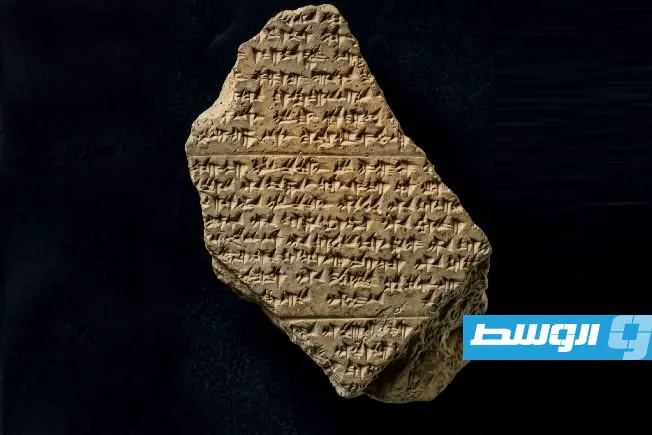
Libyan archaeologist Khaled Al-Hadar has embarked on an archaeological reading of the story of Troy, tracing the evidence that has contributed to moving it from the realm of legend to the pages of history. Al-Hadar points to clay tablets discovered in the region, which date back to the Bronze Age and contain references to the kingdom of Wilusa in northwest Anatolia. These findings have sparked significant interest in understanding the historical context of the epic poem by Homer.
The sources of Greek mythology have long linked the name Wilusa to the ancient name Wilius or Ilius, both associated with Troy. This connection has made these texts a crucial axis in discussions about the historical basis of the story told in Homer's epics. Al-Hadar believes that the importance of these findings lies not in proving the details of the Trojan War as described in Greek literature but in revealing that the region was indeed a stage for political relations and regional conflicts during the Bronze Age.
Troy remains one of the most striking examples of the overlap between literature, mythology, and history. As discoveries and ancient texts continue to provide evidence, researchers are able to reinterpret the city immortalized by Homer. Al-Hadar's work invites a deeper exploration of the historical context that may have later been linked to the famous epic.
Al-Hadar's study focuses on archaeological sites and artifacts, calling for the restoration of the city's artifacts and the establishment of a museum. His work is part of a broader effort to integrate archaeological findings with historical narratives. In Libya, a workshop in Benghazi is examining the integration of geological and archaeological heritage in the Green Mountains.
The archaeological community continues to study the findings from Troy, seeking to understand the complex history of the region. By examining the available evidence, researchers aim to reconstruct the events that may have inspired the legendary story of the Trojan War. Al-Hadar's contributions to this field have sparked renewed interest in the historical roots of the epic poem.
As scholars strive to separate fact from fiction, they are uncovering a nuanced understanding of Troy's significance in the ancient world. The study of Troy serves as a prime example of how archaeological discoveries can challenge and enrich our understanding of historical events.
Al-Hadar's exploration of Troy highlights the ongoing quest to understand the intersection of history, literature, and mythology. By shedding light on the archaeological evidence, he provides a new perspective on the legendary city and its enduring significance in the cultural imagination.
Key points
- Archaeologist Khaled Al-Hadar explores the legend of Troy through archaeological evidence.
- The discovery of clay tablets referencing the kingdom of Wilusa supports the historical basis of the story of Troy.
- Al-Hadar's work calls for the restoration of Troy's artifacts and the establishment of a museum.