A recent archaeological and geological study has uncovered the intricate details of the ancient Greek settlement of Apollonia, located on the Libyan coast. The research, published in the Libyan Studies journal, reveals that the Greeks implemented extensive engineering works to convert the coastline into a vital sea route and commercial hub. The site, now known as Susa in the Benghazi region, was a crucial port for the city of Cyrena, located 15 kilometers inland.
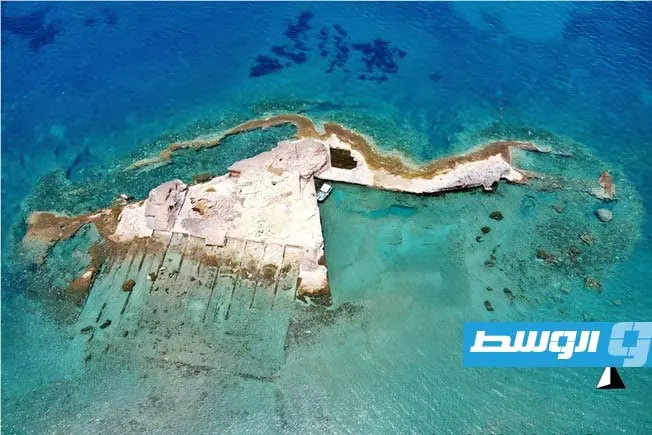
The study highlights the significant geographical changes that occurred in the area over the centuries, with a substantial portion of the ancient coastline and harbor now submerged underwater. Researchers estimate that the sea level has risen by approximately 2.4 meters over the past 25 centuries, primarily due to tectonic activity. To uncover the submerged structures, researchers combined old underwater surveys from 1958 and 1959 with a recent survey conducted in 2025 using drones and advanced diving techniques.
The findings indicate that the harbor's design was not simply a utilization of natural features, but rather a sophisticated engineering project. The Greek builders excavated and removed large quantities of soft limestone rocks from the coastal elevations and nearby islands to create artificial harbors, channels, and breakwaters. These modifications enabled the harbor to play a pivotal role in trade, agriculture, and maritime activities for over 1,200 years.
To protect large ships from the strong Mediterranean waves, the Greeks constructed a 200-meter-long breakwater near the "Grotta" area. The structure required approximately 8,800 cubic meters of rubble and stones to build. Additionally, a navigable channel was excavated through a sandy bar near the island of Hammam to provide a secure passage for commercial and warships into the inner harbor.
The study also reveals that the island of Hammam was extensively modified, with its northern side transformed into a steep cliff to withstand wave action, while the southern areas were leveled to create flat surfaces. In the 5th or 4th century BCE, the Greeks carved long slipways into the island's rocks to store and maintain warships. These slipways feature a unique architectural style rarely seen in other Mediterranean ports.
The development of the harbor was closely tied to the economic growth of Cyrena during the 5th century BCE, with Apollonia serving as a primary export hub for agricultural products and the rare "silphium" plant. As the Hellenistic era progressed, the harbor continued to expand, with the addition of defensive walls and towers, transforming Apollonia into a fully fortified coastal city.
The study emphasizes that the harbor was not constructed according to a single, sudden architectural plan, but rather evolved through a gradual accumulation of organized modifications responding to trade and defense requirements. The research team calls for targeted underwater excavations to establish a more precise chronology for the various construction phases of this historic site.
Key points
- The ancient Greek settlement of Apollonia in Libya was transformed into a vital sea route through extensive engineering works.
- The harbor played a crucial role in trade, agriculture, and maritime activities for over 1,200 years.
- The study highlights the significant geographical changes that occurred in the area over the centuries, with a substantial portion of the ancient coastline and harbor now submerged underwater.