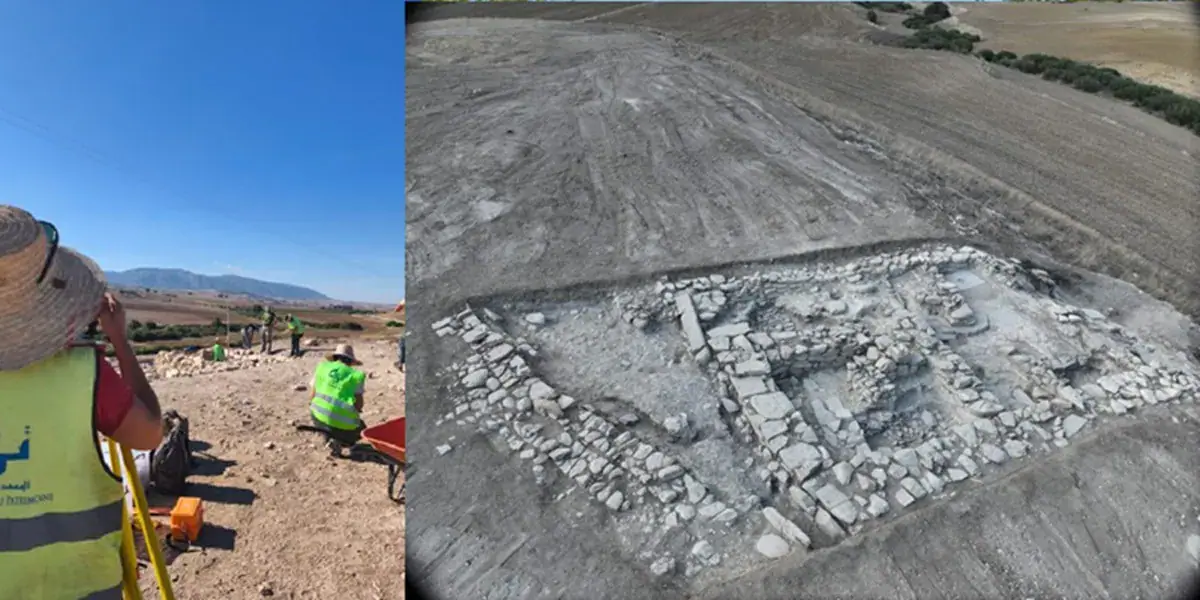
A recent archaeological campaign in Sidi Saïd, Siliana, has led to the discovery of a 2,400-year-old Numidian house, dating back to the 4th century BC. The excavation, conducted from September 16 to October 6, 2026, was a collaboration between the Institut catalan d'archéologie classique and the Institut national du patrimoine. The site, located in the delegation of Bargou, features a well-preserved house with multiple rooms, built against the fortifications of the ancient settlement.
The excavated house provides valuable insights into the organization of ancient habitats and their relationship with defensive systems. The building underwent several transformations during its use, indicating a long history of occupation. Archaeologists have also uncovered local and Carthaginian ceramics, as well as objects used around domestic hearths. These findings offer a glimpse into the daily lives of the people who lived in this ancient Numidian house.
The site has been under investigation since 2017, when it was first discovered during the expansion of the national road 4. Preventive excavations took place between December 2017 and April 2018, and further research was announced on October 7, 2026. The latest campaign aimed to document the habitations and fortifications of the site, which date back to between the 5th and 3rd centuries BC.
The discovery is part of a larger archaeological project that includes the exploration of a pre-Roman necropolis nearby. The necropolis features at least 85 monuments, and investigations began in 2025. The site provides a unique opportunity for researchers to study ancient Numidian culture and its interactions with other civilizations in the region.
According to the Institut catalan d'archéologie classique, the excavation has yielded significant results, including the almost complete plan of the Numidian house. This allows researchers to analyze the layout of the rooms and the relationship between the house and the fortifications. The findings have been published in a report on October 28, 2026.
The archaeological campaign is a testament to the ongoing efforts to preserve and study Tunisia's rich cultural heritage. The discovery of the 2,400-year-old Numidian house is a significant addition to the country's archaeological record, providing new insights into the lives of ancient civilizations in the region. Further research is expected to shed more light on this fascinating site.
The excavation is a collaborative effort between Tunisian and international institutions, highlighting the importance of cooperation in the field of archaeology. The findings will contribute to a better understanding of the history and culture of ancient Tunisia, and will likely have a lasting impact on the field of archaeological research.
Key points
- A 2,400-year-old Numidian house has been discovered in Siliana, Tunisia, featuring a well-preserved plan and providing insights into ancient habitation and defensive systems.
- The excavation was a collaboration between the Institut catalan d'archéologie classique and the Institut national du patrimoine.
- The site includes a pre-Roman necropolis with at least 85 monuments, which has been under investigation since 2025.