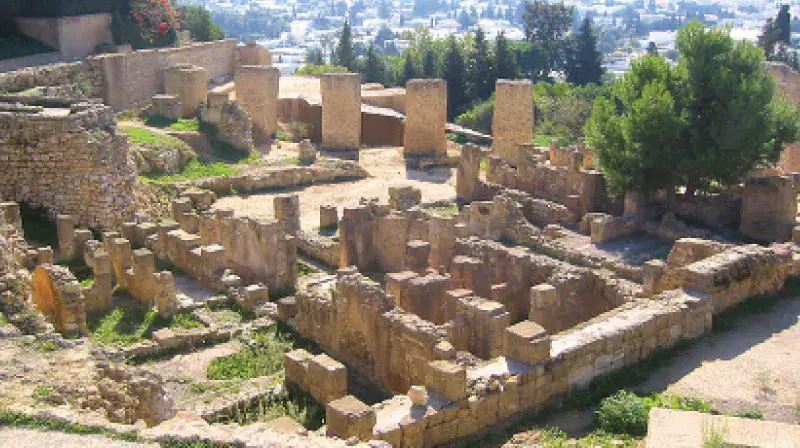
Archaeologists conducting excavations at the Punic ports in Carthage, Tunisia, have made significant discoveries that shed light on the site's rich history. The excavations, which began on October 19, 2026, are a collaborative effort between the National Heritage Institute and the China National Cultural Heritage Center. A recently unearthed fortification wall dating back to the Roman era is believed to be part of the outer wall of the circular harbor.
The excavations have uncovered a range of artifacts, including pottery, oil lamps, and bronze coins, which indicate human settlement at the site from the Punic period to the Byzantine era. These findings provide valuable insights into the lives of people who lived and worked in Carthage throughout its history. The discoveries also highlight the significance of Carthage as an archaeological site and its importance in understanding the cultural and historical heritage of Tunisia.
The project aims to deepen our understanding of the Punic ports in Carthage and their historical development. The excavations are taking place within the framework of international cooperation between Tunisia and China, under the supervision of the Ministry of Cultural Affairs. The work involves a thorough analysis of the site's archaeological components and the various stages of its evolution over time.
The fieldwork and documentation phases of the project are ongoing, with a focus on understanding the relationship between the archaeological layers and the architectural foundations of the discovered structures. The team is also working to identify the engineering characteristics and development stages of the port facility, which is a key component of the Carthage archaeological site.
The discoveries made during the excavations have significant implications for our understanding of Carthage's history and cultural heritage. The site has been an important center of trade and commerce for centuries, and the findings provide a unique window into the lives of people who lived and worked there. The project is expected to contribute to the preservation and promotion of Tunisia's cultural heritage.
The collaboration between the National Heritage Institute and the China National Cultural Heritage Center is a significant example of international cooperation in the field of archaeology. The project highlights the importance of working together to protect and preserve cultural heritage sites, and to promote our understanding of the past.
The excavations in Carthage are a significant step forward in our understanding of the site's history and cultural significance. The discoveries made during the project will contribute to a greater understanding of Tunisia's rich cultural heritage and its importance in the Mediterranean region.
Key points
- The excavations have uncovered a Roman-era fortification wall and artifacts spanning multiple historical periods.
Reporting sources
- Établissement de la Radiodiffusion-Télévision Tunisienne · Établissement de la Radiodiffusion-Télévision Tunisienne