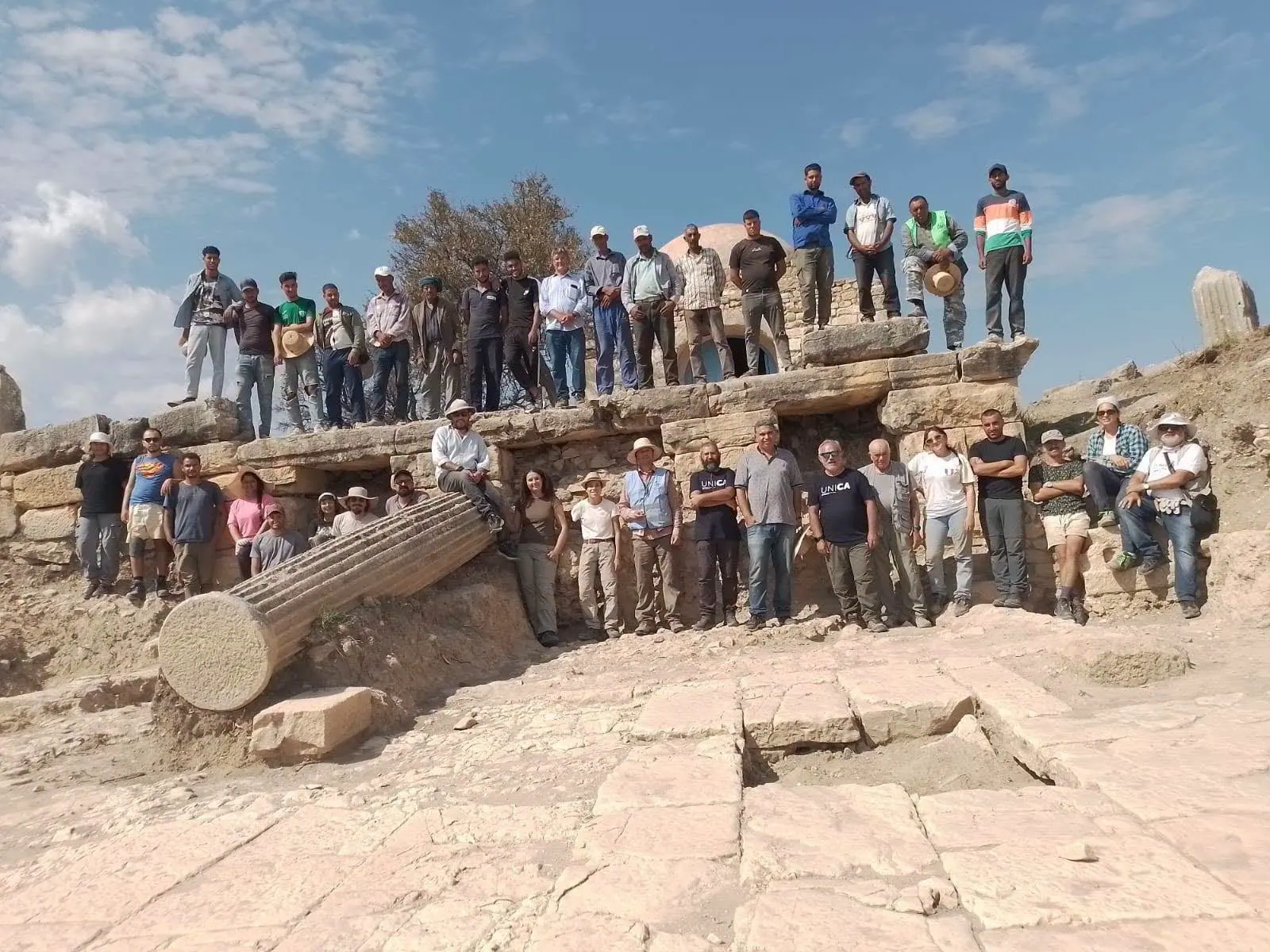
A recent archaeological excavation at Henshir El Matria, located in the Bajah Governorate of northern Tunisia, has yielded significant discoveries dating back to the Roman period and the 5th century AD. Conducted by the National Institute of Heritage in collaboration with the University of Sassari, Italy, the dig took place from September 6 to October 4, 2026. The excavation involved researchers and students from various levels, focusing on exploring and evaluating two main sections of the ancient city known as Numluli.
The first section of the excavation site features the Capitol Temple, constructed in 170 AD. The team unearthed several Roman-era components, including public square pavement, a fountain, and various temple elements such as capitals, columns, diverse geometric decorations, and fragments of statues. These findings provide valuable insights into the architectural and artistic styles prevalent during the Roman period in the region.
The second section of the site contains a church and a baptistery built in the mid-5th century AD. The excavation revealed Christian-era tombs, different rooms, walls, funerary jars, and vertically embedded jars used for storing provisions. Additionally, the team discovered unique mosaic panels reflecting the lifestyle of the city's inhabitants during the late historical period. These findings highlight the significance of Henshir El Matria as a site for understanding the transition from Roman to early Christian influences in the region.
The excavation was conducted under an international cooperation agreement between Tunisia and Italy, emphasizing the importance of collaborative efforts in preserving and understanding cultural heritage. The National Institute of Heritage and the University of Sassari worked together to ensure the success of the project, which not only uncovered historical artifacts but also provided an opportunity for students to participate in hands-on archaeological research.
The discoveries made at Henshir El Matria contribute to a broader understanding of the historical and cultural evolution of the region. The site offers a unique glimpse into the lives of the people who inhabited Numluli during the Roman and early Christian periods. Further analysis of the findings is expected to shed more light on the social, economic, and cultural dynamics of the ancient city.
The excavation project demonstrates the ongoing efforts of Tunisian authorities to preserve and promote the country's rich cultural heritage. By collaborating with international partners, the National Institute of Heritage aims to continue uncovering the secrets of Tunisia's past, providing valuable insights for researchers, students, and the general public.
The results of the excavation at Henshir El Matria are a testament to the significance of archaeological research in understanding the complexities of human history. As the analysis of the findings continues, it is likely that new information will emerge, further enriching our understanding of the region's cultural and historical landscape.
Key points
- Archaeologists discover Roman and 5th-century AD remains at Henshir El Matria site in Bajah Governorate, Tunisia.
- The excavation was conducted in collaboration with the University of Sassari, Italy, as part of an international cooperation agreement.
- The findings include Roman-era temple components and 5th-century AD church and baptistery remains, providing insights into the region's cultural and historical evolution.