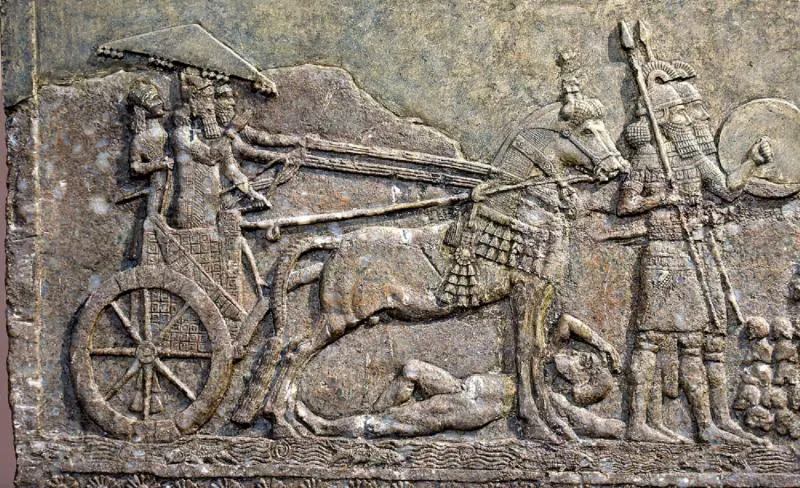
In 1843, French diplomat Paul-Émile Botta made a groundbreaking discovery in the ancient Mesopotamian region, uncovering the long-lost cities of Ninive and Khorsabad. As the French consul in Mossoul, Iraq, Botta was tasked with strengthening France's presence in the region. His archaeological endeavors led to the excavation of the site of Khorsabad, which corresponded to the ancient city of Dūr-Šarrukīn, built in 707 BC under Sargon II.
The discovery sparked significant interest in the press, shedding light on a previously unexplored aspect of ancient Oriental history. Prior to this find, knowledge of Mesopotamia was limited to biblical accounts and classical Greek texts. The region had been explored since 1834, but earlier expeditions, such as those led by Charles Texier and Édouard de Sercy, were primarily diplomatic in nature and did not involve excavations.
Botta's initial excavations at the tell of Kuyunjik, near modern-day Mosul, were unsuccessful. However, his subsequent excavations at Khorsabad revealed impressive archaeological finds, including a remarkable monument adorned with sculptures and inscriptions. In a letter to the Société asiatique de France, published in the Gazette nationale on June 19, 1843, Botta described his discoveries, including a well-preserved female figure with intricate details and a unique headdress.
The excavated site of Khorsabad revealed extensive walls made of marble and copper, as well as numerous bas-reliefs and frescoes in cuneiform script. Botta's descriptions also mentioned the presence of lamassu, winged bulls with human heads, which were believed to be protective genies. These discoveries not only shed light on the culture and art of ancient Assyria but also provided valuable insights into the deciphering of cuneiform script.
The French government's support for Botta's excavations marked a significant milestone in the development of Assyriology, a field that would go on to shape our understanding of ancient Mesopotamian civilizations. Botta's findings, along with those of his contemporaries, laid the groundwork for future archaeological research in the region, enabling scholars to reconstruct the history of ancient Assyria and its cultural achievements.
The discovery of Ninive and Khorsabad also sparked a wave of interest in Orientalism, with many scholars and intellectuals drawn to the study of ancient Mesopotamian cultures. The excavation of these sites not only uncovered the remnants of a bygone era but also inspired new perspectives on the history and cultural heritage of the region.
Today, the discoveries made by Botta and other archaeologists continue to influence our understanding of ancient Mesopotamia, providing a unique window into the culture, politics, and daily life of the people who once inhabited this fascinating region. As researchers continue to study and analyze the findings from Ninive and Khorsabad, we are reminded of the significance of archaeological discoveries in shaping our knowledge of human history and cultural heritage.
Key points
- French diplomat Paul-Émile Botta discovered the ancient Assyrian cities of Ninive and Khorsabad in 1843, marking a significant milestone in the development of Assyriology.