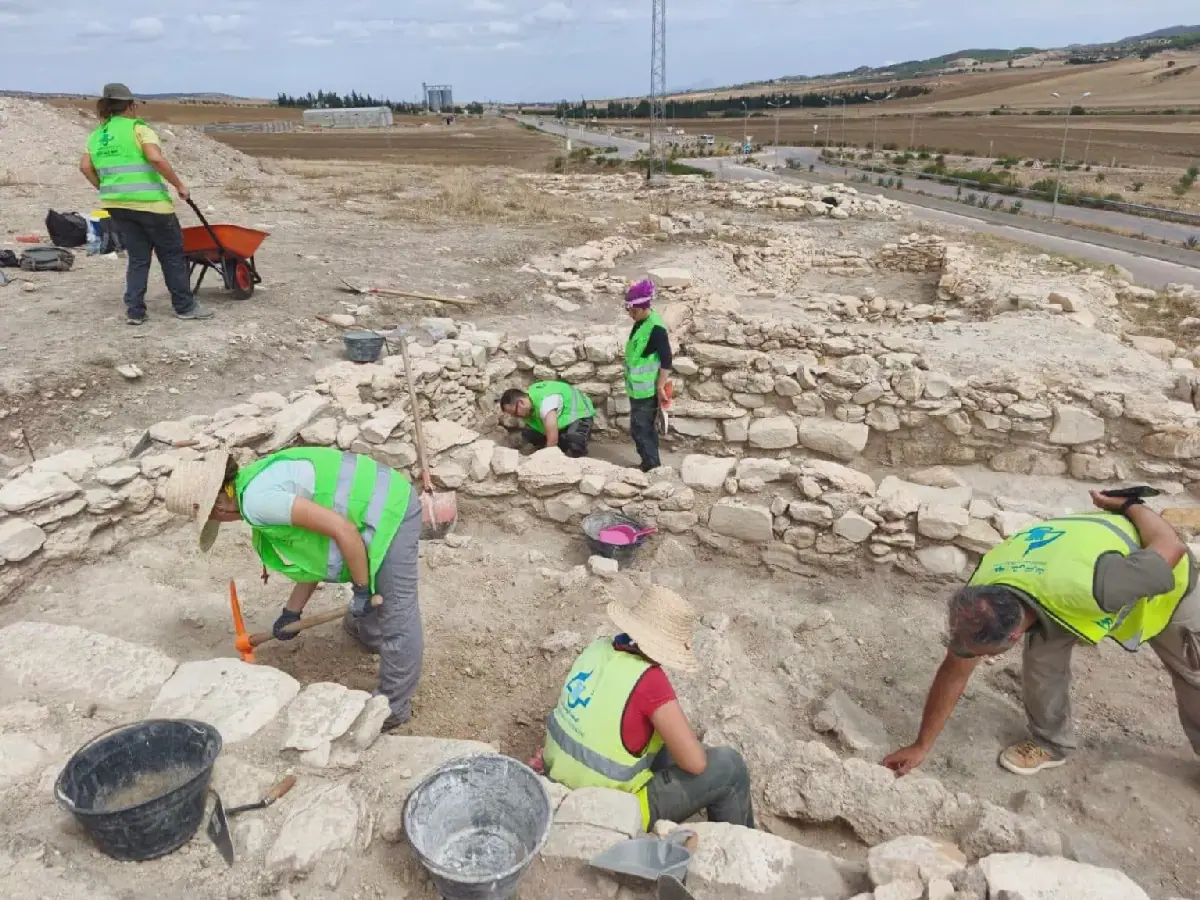
A recent archaeological mission in Tunisia has led to the discovery of a 2,300-year-old Numidian habitation in Sidi Saïd, a site in the Siliana Governorate. The mission, conducted by a team of Tunisian and Catalan researchers, has uncovered the almost complete plan of a house dating back to the 4th century BC. This significant find is part of the second excavation campaign, which took place from September 16 to October 6, 2026.
The discovered house is located in the north-eastern part of the site, in zone 3, and features a complex organization with multiple rooms. The ground plan of the house is almost entirely preserved, allowing researchers to gain a better understanding of the domestic spaces within this ancient Numidian settlement. The house was built against the city's defensive wall, which had been partially documented in zone 2 during the 2025 excavation campaign.
The archaeological team has also identified several architectural modifications made to the building during its use. This discovery provides new insights into the urban organization of Sidi Saïd and the relationships between residential areas and the city's defensive system. The mission is a collaboration between the Tunisian National Heritage Institute (INP) and the Catalan Institute of Classical Archaeology (ICAC).
The excavation campaign has also shed light on the construction techniques, materials, and domestic installations used in the ancient settlement. Researchers have uncovered a range of artifacts, including locally produced ceramics, Carthaginian ceramics, and cooking equipment. These finds offer valuable insights into the daily practices and cultural exchange between communities in the region.
In addition to the excavation work, the team conducted a survey of the surrounding area, where a pre-Roman necropolis was identified during the 2025 research. The necropolis contains at least 85 funerary monuments, which will be studied to gain a deeper understanding of the funerary practices and communities that inhabited the region during antiquity.
The mission was co-directed by Tunisian researchers Yamen Sghaïer and Chokri Touihri, and Catalan researchers Maria Carme Belarte and David Montanero. The team included researchers, conservators, and students from both countries, with the support of the Palarq Foundation. The site of Sidi Saïd was initially discovered during roadwork in 2017, which led to preventative archaeological excavations being conducted between December 2017 and April 2018.
The discoveries made during the 2025 and 2026 campaigns have helped to refine the chronology of the Numidian settlement, which dates back to the 5th century BC. The findings contribute to a better understanding of the habitat, fortifications, material culture, and funerary practices of the populations that lived in the region before the Roman period.
Key points
- A 2,300-year-old Numidian house was discovered in Sidi Saïd, Tunisia, with a nearly complete ground plan.
- The archaeological mission was a collaboration between the Tunisian National Heritage Institute (INP) and the Catalan Institute of Classical Archaeology (ICAC).
- The site of Sidi Saïd provides valuable insights into the daily practices, cultural exchange, and funerary practices of the populations that lived in the region during antiquity.


