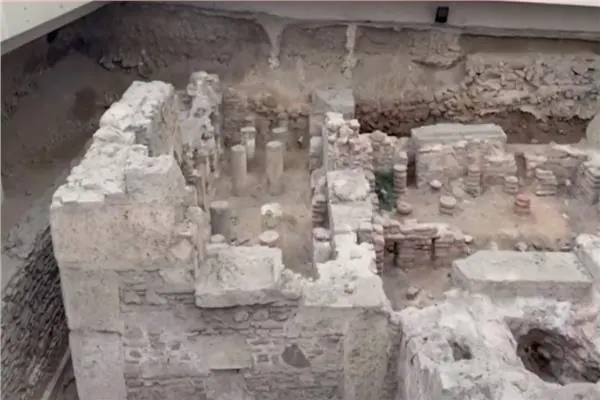
A recent archaeological discovery in Athens has shed new light on the city's ancient past. According to Egyptian news outlet Akhbar el-Yom, reporter Mustafa Ahmed, citing a source from Cairo News Channel, stated that the findings in the Greek capital demonstrate how modern Athens was built on top of the ancient city. The newly uncovered site, located on Vasileos Olgas Street in central Athens, features a collection of artifacts from various historical periods.
The site boasts a large Roman complex dating back to the 3rd to 5th centuries AD, which includes a semi-circular courtyard and corridors. Additionally, a portion of the Themistocles Wall, a historic fortification, has been unearthed. This section, carved into the natural rock, provides valuable insights into the city's defensive structures. The archaeological site has been secured with glass barriers, allowing citizens and tourists to observe the findings easily.
The area also features remnants of the ancient city's fortifications, which date back to the Classical era. These discoveries are significant, as they provide a glimpse into the lives of Athens' inhabitants across various historical periods, from prehistoric times to the Byzantine era. The site's proximity to the Temple of Olympian Zeus further underscores its importance.
According to reporter Abd al-Sttar Barakat, who spoke on Cairo News Channel's "Sabah Jadid" program, the site's significance extends to its connection to other extensive archaeological areas located on the opposite side of the street. The oldest preserved elements in the site offer researchers crucial evidence of the city's ancient fortifications.
The recent excavations have uncovered a range of artifacts, including ruins from the Roman and Byzantine periods. These findings not only highlight the city's rich history but also demonstrate how different eras have contributed to the development of modern Athens. The site provides a unique opportunity for researchers to study the evolution of the city.
The archaeological site has been carefully preserved, with glass barriers allowing visitors to observe the ruins without compromising their integrity. This approach enables the public to engage with the city's history while ensuring the site's protection for future generations. The discoveries have sparked interest among historians and archaeologists, who are eager to continue exploring the site.
The ongoing excavations in Athens serve as a testament to the city's enduring legacy. As researchers continue to uncover the secrets of the ancient city, they are shedding new light on the complexities of its history. The recent discoveries have provided a fascinating glimpse into the lives of Athens' inhabitants across the centuries, offering a nuanced understanding of the city's development.
Key points
- The archaeological site features a large Roman complex dating back to the 3rd to 5th centuries AD.
- The site includes a portion of the Themistocles Wall, a historic fortification.
- The discoveries provide a unique opportunity for researchers to study the evolution of the city.