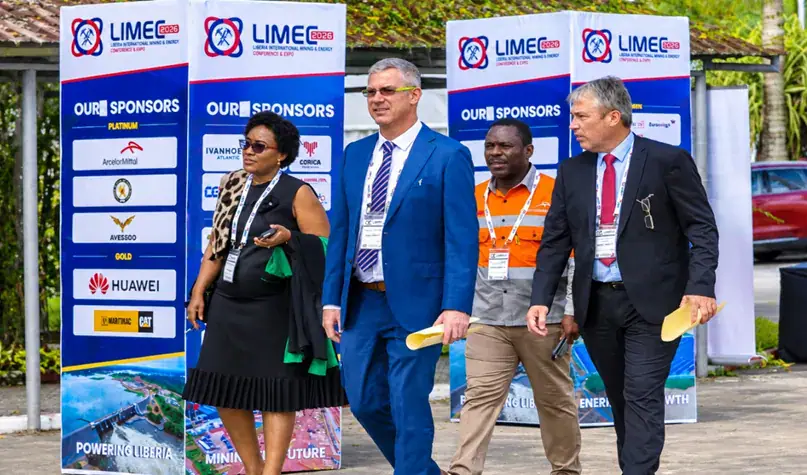
ArcelorMittal Liberia (AML) has made significant investments in Liberia's mining sector since 2011, with cumulative investments approaching $4 billion. The company's operations have become a crucial part of Liberia's economic development, supporting thousands of jobs, expanding national infrastructure, and generating government revenue. AML's Chief Executive Officer, Michiel van der Merwe, highlighted the company's achievements at the Liberia International Mining and Energy Conference (LIMEC).
Employment is one of the direct benefits of AML's investment, with the company estimating that its operations support approximately 8,000 direct and indirect jobs. Liberians account for 90 percent of AML's permanent workforce, with 5,508 Liberians recruited by contractors in 2025. The mining operation also generates demand for various services, creating opportunities for Liberian businesses and stimulating local markets.
AML's Phase II expansion is expected to deepen the economic benefits of its operations. The project includes Liberia's first large-scale iron ore concentrator, enabling the production of higher-grade iron ore concentrate for international markets. This development represents a significant step toward moving Liberia up the mineral value chain. The expansion is already reflected in rising exports, with AML shipping approximately four million metric tons of iron ore in 2024 and achieving a record 10 million metric tons in 2025.
The rehabilitation and expansion of the 245-kilometer railway connecting AML's mines in Nimba County to Buchanan Port is another major national benefit. Although the railway and port facilities belong to the Government of Liberia, AML has invested approximately $800 million in rehabilitating and expanding their capacity. The infrastructure is increasingly important for Liberia's ambition to attract additional mining investors.
Under the Third Amendment to the Mineral Development Agreement (MDA), ratified in January 2026, the railway is intended to become a multi-user corridor, allowing other mining companies to seek access under arrangements determined by the government. An independent railway operator is expected to assume responsibility for the corridor in 2030. This arrangement could lower infrastructure barriers for new investors and open opportunities for further mining development.
AML's social investments have supported healthcare, education, scholarships, housing, and community infrastructure in its operational areas. These interventions complement employment and government revenue by helping address development needs in communities hosting the company's operations. The broader economic opportunity lies in ensuring that mining investment stimulates growth beyond the concession areas.
Van der Merwe emphasized the importance of cooperation among government, investors, industry, and communities for Liberia's development. He reaffirmed AML's intention to remain in the country for decades, stating that the company has played a significant role for the last twenty years and is ready to do so for another forty years or more. The ultimate measure of the partnership will be how effectively these investments translate into more jobs, stronger public revenue, competitive local businesses, improved infrastructure, and better living conditions for Liberia's people.
Key points
- ArcelorMittal Liberia's investment approaches $4 billion, supporting 8,000 jobs and generating significant revenue for Liberia's economy.
- The company's Phase II expansion includes Liberia's first large-scale iron ore concentrator, enabling the production of higher-grade iron ore concentrate for international markets.
- The railway is intended to become a multi-user corridor, allowing other mining companies to seek access under arrangements determined by the government.