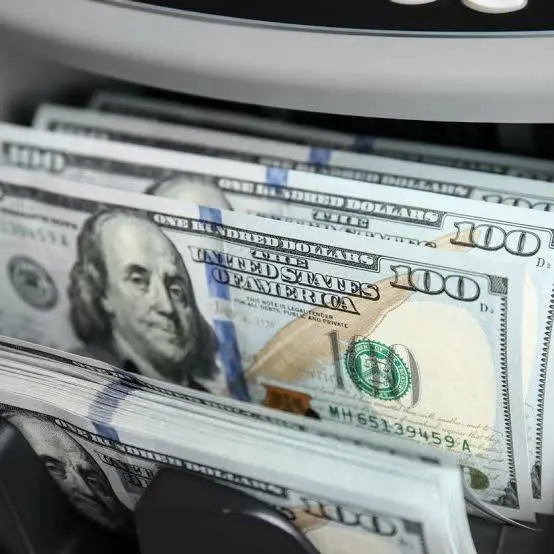
On Wednesday, Arab investors led a buying spree in Egyptian government debt instruments, also known as hot money deals, with purchases worth over 52.7 billion Egyptian pounds, equivalent to $1.006 billion. According to data from the Egyptian Stock Exchange's information center, foreign investors sold 2.031 billion pounds, while local investors sold 50.730 billion pounds. This influx of hot money comes as Egypt's stock market prepares for a holiday on Thursday, October 6, in celebration of the Armed Forces Day.
The surge in hot money deals coincides with a rise in the US dollar against the Egyptian pound. In major state-owned banks, the National Bank of Egypt and Banque Misr, the dollar's buying price reached 52.34 pounds, and the selling price reached 52.44 pounds, a 7-piastre increase from the previous day's closing price. This marks a significant shift in the foreign exchange market, with the dollar increasing by 3.09 pounds during the third quarter of 2026.
Hot money, or short-term investments, refers to large inflows of foreign capital into emerging markets like Egypt, aiming to capitalize on high-interest rates offered by government debt instruments, such as treasury bills and bonds. These investments are termed "hot" due to their swift entry and exit, as investors seek quick profits from interest rate differentials and exchange rate fluctuations.
In the third quarter of 2026, Egypt's government debt instruments attracted hot money worth 27.6 billion pounds. During this period, the dollar's value rose by 3.09 pounds. Arab investors injected 27.664 billion pounds, approximately $550 million, into Egypt's hot money market during this quarter.
The influx of hot money has contributed to the Egyptian pound's decline against the US dollar. By the end of the first October session, the pound had lost 1.4 pounds compared to its value at the beginning of September, closing at 52.27 pounds for buying and 52.37 pounds for selling in major state-owned banks. This represents a significant depreciation from the opening price of 50.87 pounds for buying and 50.97 pounds for selling at the start of September.
The net flow of hot money into Egypt increased during the month, reaching 80.585 billion pounds, equivalent to approximately $1.5 billion. This substantial inflow has been facilitated by the recent depreciation of the Egyptian pound against the US dollar, making Egypt's debt instruments more attractive to foreign investors.
The Egyptian Stock Exchange will resume trading on Sunday, October 11, after a holiday on Thursday, October 6. Market analysts are closely monitoring the impact of hot money flows on the exchange rate and the overall performance of the Egyptian economy.
Key points
- Arab investors have injected $1.006 billion into Egypt's government debt instruments.
- The Egyptian pound has depreciated by 3.09 pounds against the US dollar during the third quarter of 2026.
- Egypt's hot money market has attracted approximately $1.5 billion in inflows during the month.