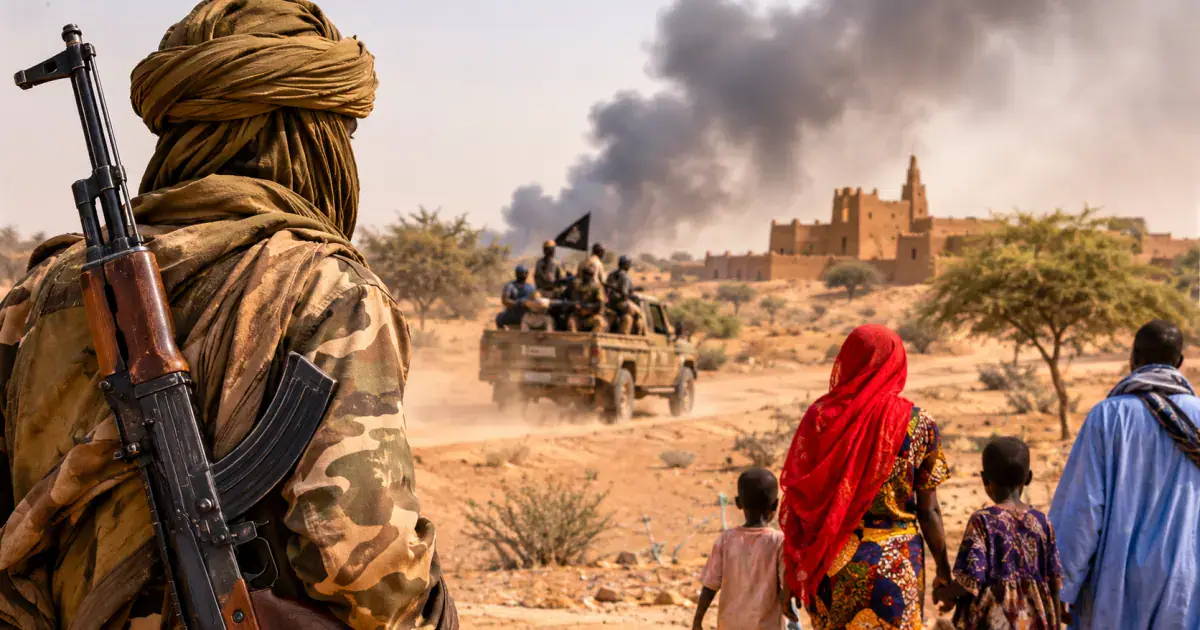
The Sahel region, which includes parts of Mali, Burkina Faso, and Niger, has seen a decrease in violent clashes between jihadist groups, including the Group of Support for Islam and Muslims (JNIM) and the Islamic State in the Sahel. However, this apparent calm does not necessarily mean a reduction in the terrorist threat. According to experts, the reduced clashes may be a result of the groups' exhaustion and redeployment of resources.
The rivalry between JNIM and the Islamic State in the Sahel has led to intense fighting in the Liptako-Gourma region, resulting in significant human and material losses. The two groups have been competing for control of territories, populations, and resources. Despite the apparent calm, the groups continue to carry out attacks, ambushes, and destabilization operations against state forces.
The Islamic State in the Sahel is seeking to preserve its influence in disputed territories, while JNIM is expanding its presence in southern areas, including border regions with Benin and Nigeria. This shift in the geography of the threat poses significant challenges for governments in the region, as the groups are no longer limited to their traditional strongholds.
The rainy season has also played a role in the reduced clashes, as the degradation of roads and logistical challenges have slowed down the movement of armed groups. However, attacks have still been reported during this period, indicating that the groups have adapted their tactics to the changing environmental conditions.
Another factor contributing to the apparent calm is the possibility of local arrangements between authorities and armed groups. In Mali, for example, there have been reports of the release of detainees suspected of belonging to JNIM as part of negotiations around the circulation of fuel convoys to Bamako.
The situation in the Sahel region remains complex, with multiple factors at play. The Alliance of Sahel States (AES) has expressed concerns that the apparent calm does not necessarily mean an improvement in the security situation. The AES is working to address the root causes of the conflict and prevent the spread of terrorism in the region.
The international community is also engaged in efforts to stabilize the region, including through diplomatic initiatives and security cooperation. However, the situation remains fragile, and continued vigilance is necessary to prevent the terrorist threat from escalating again.
Key points
- The apparent calm in the Sahel region does not necessarily mean a reduction in the terrorist threat.
- Jihadist groups continue to carry out attacks and expand their presence in new areas.
- The situation in the Sahel region remains complex, with multiple factors contributing to the apparent calm.
Reporting sources
- Sahel,derrière l'accalmie djihadiste une guerre en pleine recomposition · 24haubenin.info