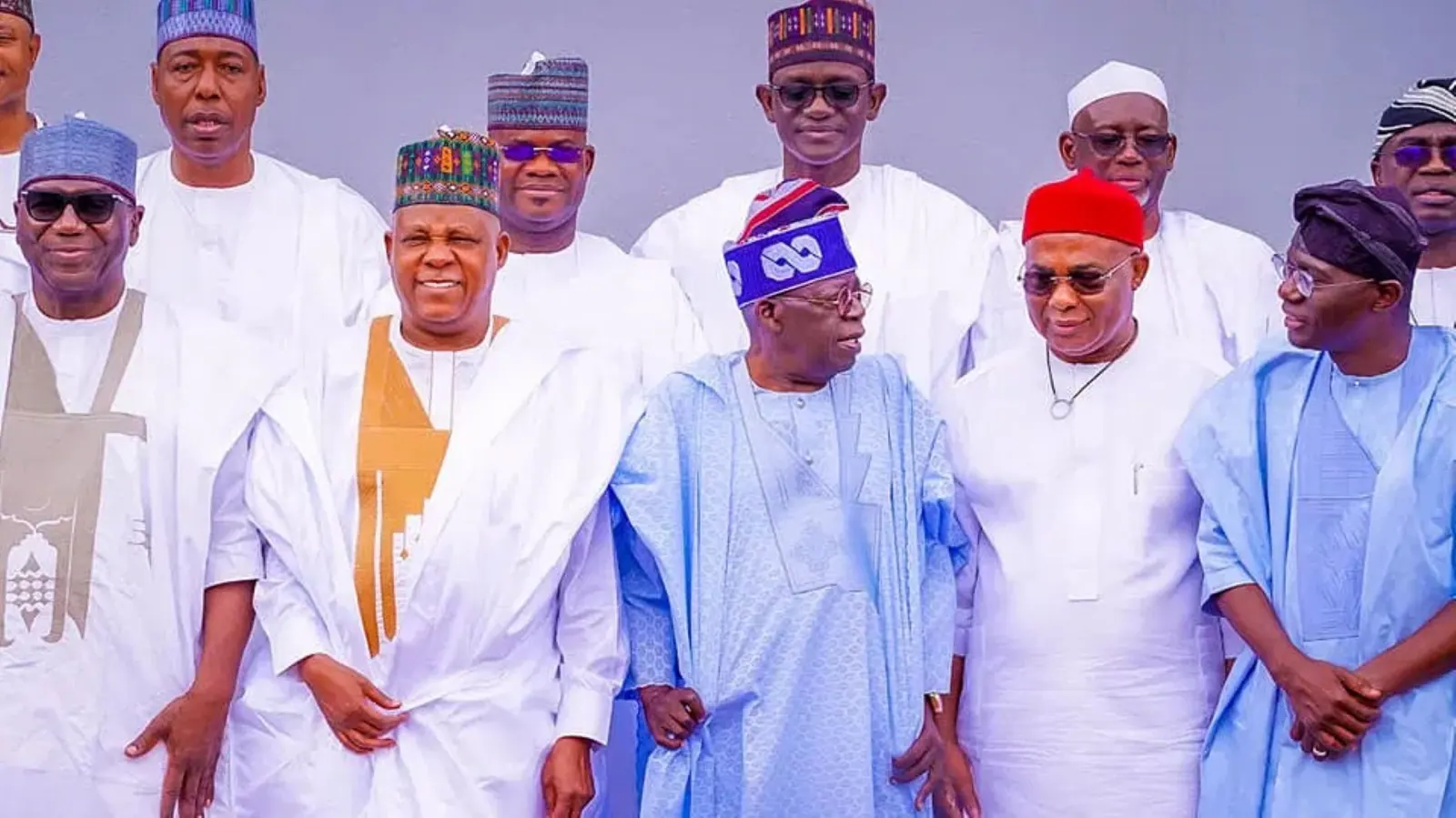
The All Progressives Congress (APC) in Nigeria is grappling with a significant internal conflict ahead of the 2027 general election. The disagreement centers on whether politicians can support President Bola Tinubu's re-election while backing candidates outside the APC for governorship and legislative positions. This issue has gained prominence following the disagreement between APC governors under the Progressive Governors Forum (PGF) and FCT Minister Nyesom Wike's Rainbow Coalition.
The current conflict draws parallels with the 2003 election, where five governors of the defunct Alliance for Democracy (AD) lost their South-West states despite supporting former President Olusegun Obasanjo's re-election bid on the platform of the Peoples Democratic Party (PDP). The AD had supported Obasanjo, but its governors contested the governorship elections on the AD platform, resulting in the party losing control of five out of six South-West states.
The circumstances surrounding the 2003 election and the current APC situation are different, as the APC controls the Federal Government and has an incumbent president seeking re-election on its platform. Unlike the AD in 2003, the APC has a presidential candidate whose campaign is expected to operate alongside those of its governors and legislative candidates. The APC governors have declared that they will not participate in or support any political arrangement that could undermine Tinubu's re-election or adversely affect APC candidates.
Wike's position is different, as he maintains that his Rainbow Coalition is intended to mobilize support for Tinubu's re-election without becoming an APC structure. He argues that support for the president does not require politicians to support APC candidates at other levels. This position creates a political arrangement in which a politician could support Tinubu for president while contesting against an APC candidate for governor, senator, or member of the House of Representatives.
The disagreement between the APC governors and Wike has extended to the control of legislative structures, with Wike naming some governors he said were opposed to his coalition. Wike also linked the disagreement to the interests of some governors in the composition and leadership of the National Assembly after the 2027 elections. He alleged that some governors had influenced APC primaries to secure tickets for candidates they could rely on after the election.
The issue facing the APC is not the absence of a presidential candidate, but the possibility that support for the president could become separated from support for APC candidates at other levels. Wike's position is based on the proposition that such separation is possible, citing voting patterns in previous elections where voters in some states supported candidates from different parties for presidential, National Assembly, and governorship positions.
The conflict within the APC has significant implications for the 2027 general election, as control of the Senate and House of Representatives seats will affect the balance of power within the ruling party. The outcome of the election will depend on various factors, including the strength of the party, incumbency, internal divisions, and the broader political environment.
Key points
- The APC conflict draws parallels with the 2003 election, where AD governors lost their states despite supporting Obasanjo's re-election bid.
- Wike's Rainbow Coalition aims to mobilize support for Tinubu's re-election without becoming an APC structure.
- The disagreement within the APC has significant implications for the control of legislative structures and the balance of power within the ruling party.