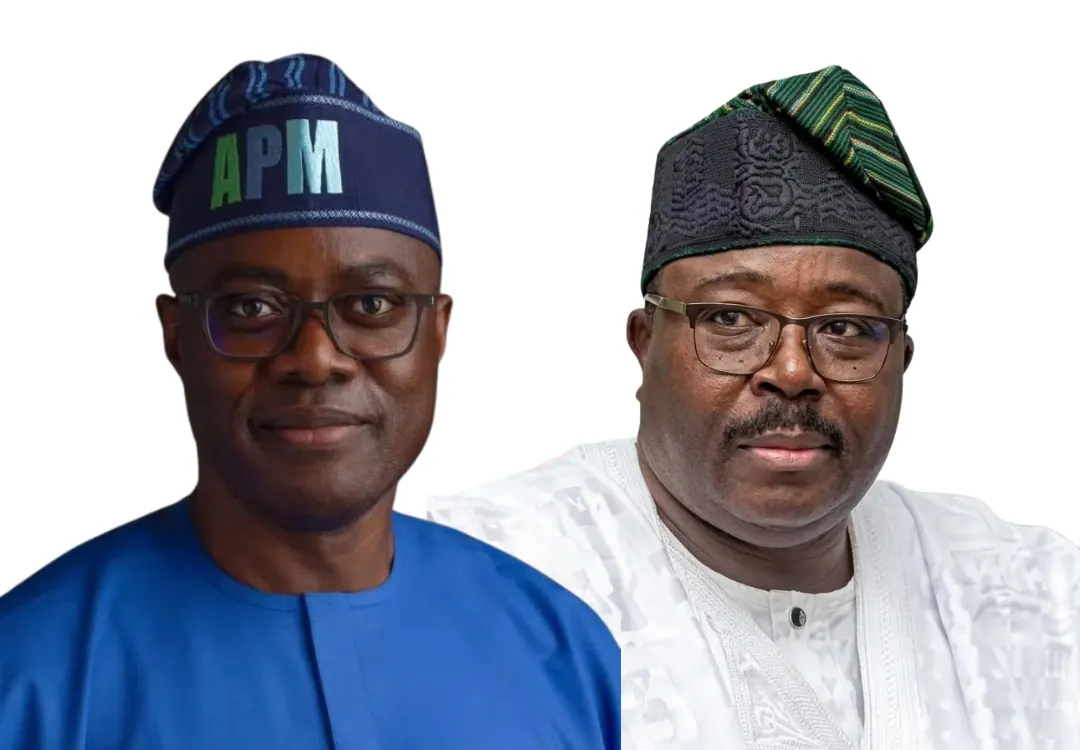
The campaign organisation of the All Progressives Congress (APC) governorship candidate in Oyo State, Sharafadeen Alli, has criticised Governor Seyi Makinde over his recent comments on increased federal allocations to state governments. Mr Makinde, who is also the presidential candidate of the Allied Peoples Movement (APM), made the comments at his party's North-central zonal town hall meeting in Lafia, Nasarawa State. He stated that state governments were receiving more money from the Federation Account but questioned whether the increase had translated into improved living conditions for Nigerians.
Mr Makinde's comments have generated controversy, with the Senator Sharafadeen Alli Campaign Organisation accusing him of failing to address economic hardship in Oyo State despite increased funds from the Federation Account. The campaign organisation's Director of Media and Publicity, Bisi Oladele, reacted to Mr Makinde's remarks, stating that his admission of increased funds should prompt questions about how the funds had been used by the state government. The organisation argued that the responsibility for judiciously deploying the funds rested with state governments.
The campaign organisation described Mr Makinde as "clueless" and "an embarrassment" to Oyo State, arguing that his comments reflected poor governance in the state. They also accused Mr Makinde of opposing local government autonomy in Oyo State, alleging that his administration had prevented the 33 local government councils from functioning independently. The organisation questioned why hunger remained a major concern despite increased allocations, arguing that greater financial resources should translate into tangible improvements in the lives of residents.
Oyo State has recorded a substantial increase in revenue from the Federation Account in recent years. In its 2025 budget, the state government projected N293 billion in direct FAAC allocation for the year. The budget also projected total recurrent revenue of N436 billion, showing the significance of Federation Account receipts to the state's finances. By the end of the third quarter of 2025, Oyo had already recorded N265 billion in statutory and other FAAC-related revenue.
The increase in FAAC allocations continued into 2026, with Oyo receiving N21.17 billion in net FAAC allocation in January, up from N13.68 billion in January 2025, representing a 55 per cent year-on-year increase. The state's gross allocation for January was N24.18 billion, including N15.80 billion in net VAT allocation. This increase is part of a national trend, with FAAC distributions rising sharply at the national level.
At the national level, FAAC distributions have risen sharply, with the three tiers of government receiving N3.18 trillion in May and N3.40 trillion in June 2026. States received N759.14 billion in June alone, with gross FAAC revenue standing at N18.72 trillion between January and June, while N12.59 trillion was distributed after deductions and other adjustments. This increase in revenue has raised questions about how state governments are using the funds.
The APC campaign organisation's criticism of Mr Makinde reflects the ongoing debate about the use of increased federal allocations by state governments. The organisation's comments highlight the need for state governments to be transparent about how they are using the increased funds and to demonstrate tangible improvements in the lives of residents. The controversy surrounding Mr Makinde's comments is likely to continue as the debate about the use of federal allocations by state governments continues.
Key points
- The APC campaign organisation in Oyo State has criticised Governor Seyi Makinde over his claim that increased federal allocations have not reduced hunger among Nigerians.
- Oyo State has recorded a substantial increase in revenue from the Federation Account in recent years, with a 55 per cent year-on-year increase in January 2026.
- The controversy surrounding Mr Makinde's comments reflects the ongoing debate about the use of increased federal allocations by state governments.