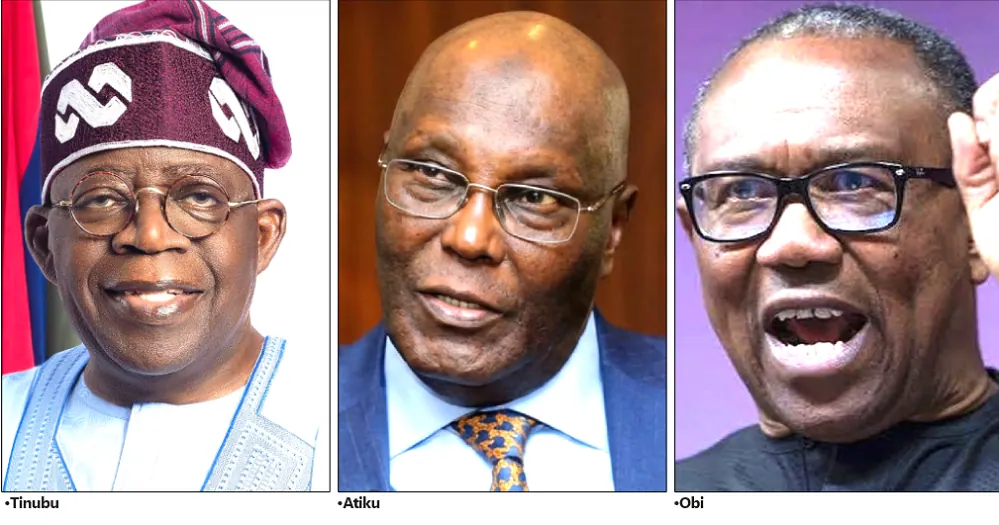
The 2027 general election in Nigeria is shaping up to be a highly contested affair, particularly in the northern region. The ruling All Progressives Congress (APC) is defending its electoral mandate, while the opposition has restructured itself, presenting a multi-cornered contest. The traditional dual-monopoly of the APC and the People's Democratic Party (PDP) has collapsed, and the northern electorate now faces a contest among the APC, the African Democratic Congress (ADC), and the Nigeria Democratic Congress (NDC).
The Northwest region, comprising Kano, Kaduna, Katsina, Sokoto, Jigawa, Kebbi, and Zamfara, remains the decisive heavyweight of Nigerian electoral strategy, with over 22 million registered voters. In 2023, the zone fractured along multiple lines, with Rabiu Musa Kwankwaso sweeping Kano, Atiku Abubakar picking up critical pluralities across Katsina, Kebbi, and Sokoto, while President Bola Ahmed Tinubu secured narrow, indispensable tallies in Kaduna and Jigawa.
The high-stakes divorce between Rabiu Musa Kwankwaso and his political protégé, Kano State Governor Abba Kabir Yusuf, has created a fierce battle for the political soul of Kano. Yusuf's defection to the ruling APC has broken the unified front of the Kwankwasiyya movement, triggering a battle for the masses who wear the red cap. Critics argue that Yusuf's move has effectively created a rival centre of power in the state capital.
The APC's defensive apparatus in the Northwest is fortified by sitting governors pursuing customised stabilisation strategies. In Kaduna, Governor Uba Sani has spent his term healing the deep factional rifts left by his predecessor, Nasir El-Rufai. Sani's task has been made easier by El-Rufai's fall from grace, with the former governor facing multiple court cases over allegations of corruption and financial misconduct.
In Katsina, Governor Dikko Radda has anchored his political standing on rural security interventions, creating the Katsina Community Watch Corps to shield farming communities from armed bandits. Radda's calculated bet is that demonstrating physical protection in rural districts will insulate the APC from voter retribution. Similar calculations drive APC administrations in Sokoto, Kebbi, and Jigawa.
The Northeast region, covering Adamawa, Borno, Yobe, Bauchi, Gombe, and Taraba, presents a different dynamic, with the contest shifting from demographic volume to questions of regional identity and splintered party foundations. The Northeast was long considered Atiku Abubakar's foundational power base, but his machinery is now operating through the ADC.
The opposition's failure to present a single, consolidated ticket threatens to squander the incumbent's greatest vulnerability, with widespread economic distress fuelling deep public anger across northern agrarian communities and urban centres. The ruling party faces an electoral field severely divided against itself, rather than encountering a coordinated northern uprising.
Key points
- The Northwest region is crucial in determining the outcome of the 2027 general election.
- The opposition's division threatens to benefit the ruling APC.
- The Northeast region presents a unique dynamic, with the contest centred on regional identity and party foundations.