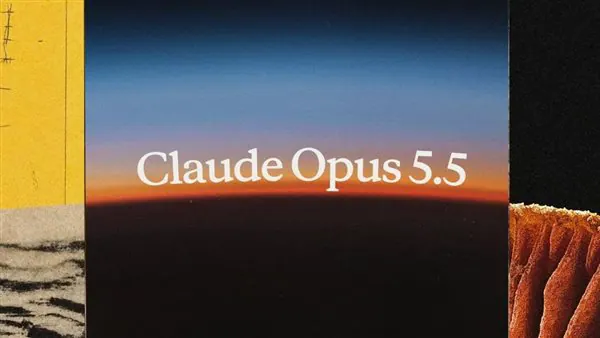
On September 22, 2026, Anthropic announced the launch of Claude Opus 5.5, the first model in its new Claude 5.5 family. This AI model is claimed to be the company's most powerful to date, with enhancements aimed at improving coding efficiency, accelerating response times, and reducing operational costs. Claude Opus 5.5 is designed to handle complex and lengthy tasks, particularly in areas such as programming, data analysis, and knowledge work.
According to Anthropic, Claude Opus 5.5 offers performance comparable to its Claude Fable 5.1 model in most tasks but at a 40% lower operating cost. The model requires fewer computational resources, allowing for reduced usage costs for businesses and developers. The pricing for Claude Opus 5.5 is set at $4 per million input tokens and $20 per million output tokens, representing a 20% decrease compared to Claude Opus 5. Additionally, the cost of reading from the cache is $0.20 per million tokens, a 60% decrease from the previous model.
Anthropic has also focused on improving the speed of Claude Opus 5.5, which can produce outputs at a rate over 30% faster than Claude Opus 5. The company offers a "fast mode" through its Claude Code tool and platform, allowing users to access speeds up to 2.5 times faster than the standard mode. However, this feature comes at a higher cost, priced at $8 per million input tokens and $40 per million output tokens.
Programming is a key area where Anthropic aims to make an impact with Claude Opus 5.5, especially when dealing with large-scale programming projects that require reviewing thousands of lines of code or making extensive changes to an entire codebase. In early tests, a user utilized the model to review and repair a 200,000-line codebase in under 3 hours, a task that Claude Opus 5 would take over 20 hours to complete, using 2.5 times more tokens.
Claude Opus 5.5 excels in handling lengthy and complex programming tasks, such as migrating projects from one programming language to another, reviewing massive codebases, and identifying and fixing inefficiencies. In one experiment, the model successfully executed a code migration involving 680,000 lines of code in under a day. These results indicate that Anthropic is targeting professional applications of AI, rather than just simple tasks like generating short code snippets.
Alongside performance, Anthropic has worked on developing the safety and alignment systems for Claude Opus 5.5. The model achieved the best results among Anthropic's models in the automated behavior test, which uses thousands of simulated scenarios to measure adherence to specified boundaries and instructions. According to Anthropic, Claude Opus 5.5 is less likely to undertake irreversible actions and more resistant to prompt injection attacks.
The launch of Claude Opus 5.5 expands Anthropic's presence in the advanced AI model market, focusing on combining the ability to execute complex tasks with reduced usage costs and accelerated software development. Anthropic plans to release additional models, Claude Sonnet 5.5 and Claude Haiku 5.5, in the coming weeks, which are expected to benefit from similar improvements in performance, efficiency, and safety.
Key points
- Claude Opus 5.5 offers a 40% reduction in operating costs compared to its predecessor, Claude Opus 5.
- The model achieves performance comparable to Claude Fable 5.1 but with a lower cost.
- Anthropic plans to release more models in the Claude 5.5 family, including Claude Sonnet 5.5 and Claude Haiku 5.5.