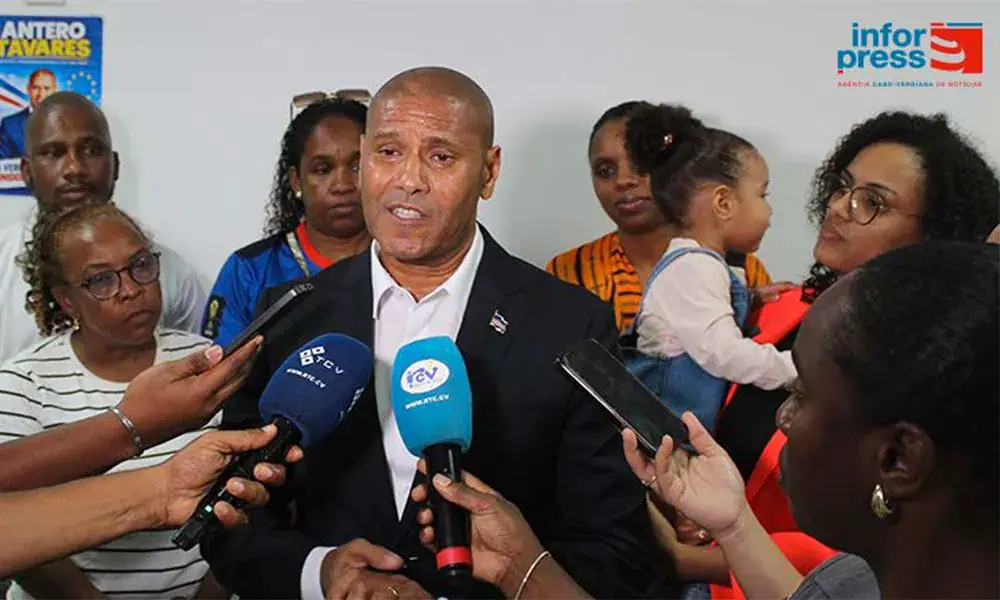
Antero Tavares, a 58-year-old judge from the Praia municipality, accepted the election results with serenity, congratulating re-elected President José Maria Neves on his victory. Tavares stated that he had no doubts about the outcome and acknowledged Neves as the winner. He expressed his congratulations to Neves, wishing him success in his second term. Tavares' statement was reported by the Cabo Verdean News Agency (INFORPRESS).
Tavares also addressed the high abstention rate, which reached 68%, describing it as a sign of citizens' distrust in the system. He urged the National Elections Commission (CNE) to tackle this issue promptly, rather than waiting for the next electoral period. Tavares emphasized the need for solutions to reverse the current trend and encouraged Cabo Verdeans to come together to ensure the country's continued stability and serenity.
During his presidential campaign, Tavares focused on social inclusion and sustainable development, prioritizing the needs of communities facing difficulties in accessing opportunities. His platform aimed to promote a more inclusive presidency, closer to citizens' concerns, and to reduce regional disparities. Tavares also highlighted the importance of valuing the different islands and promoting balanced development.
According to provisional results, with 97% of polling stations counted, José Maria Neves secured 63.8% of the votes, equivalent to 80,063 votes. The closest candidate, Joana Rosa, garnered 31.6%, or 39,645 votes. Tavares received 1.3% of the votes, or 1,598 votes. The elections were observed by over 200 international observers from various organizations, including the Economic Community of West African States (ECOWAS), the African Union (AU), and the Community of Portuguese Language Countries (CPLP).
The electoral process involved 419,448 registered voters, with 343,065 in Cabo Verde and 76,383 abroad. A total of 1,302 polling stations were set up, with 1,059 in the country and 243 abroad. The voting period took place between 8 am and 6 pm. If no candidate had secured more than half of the valid votes, a second round would have been held on November 29.
Cabo Verde has had five presidents since gaining independence from Portugal in 1975. The country has transitioned from indirect to direct elections, with José Maria Neves being re-elected after previously winning in 2021 with 51.75% of the votes. According to the Constitution, the President of the Republic is elected by universal suffrage, and only a Cabo Verdean citizen of origin, over 35 years old, and with permanent residence in the country for the past three years can be eligible for the position.
The electoral process and results have sparked reflection on the country's democratic development. The high abstention rate and concerns about the system's credibility highlight the need for further improvements. President-elect José Maria Neves will begin his second term, while Antero Tavares has vowed to continue working for the well-being of Cabo Verdeans and promoting unity and stability in the country.
Key points
- Antero Tavares congratulated José Maria Neves on his re-election as President of Cabo Verde.
- The 2026 presidential election saw a high abstention rate of 68%, which Tavares attributed to citizens' distrust in the system.
- Tavares' presidential campaign focused on social inclusion and sustainable development, prioritizing the needs of vulnerable communities.