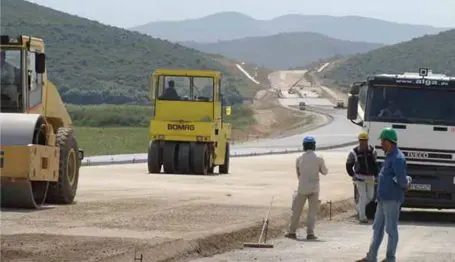
The Algerian government is making progress on the Béjaïa-Ahnif highway, a crucial infrastructure project. The Director of Public Works in the region recently announced that another section of the highway will be completed by early 2020. This section, which connects the town of Amizour to the agricultural village of Ilmathen, spans 10km and is part of the third section of the highway.
The construction of this 10km section is 70% complete, with the Director of Public Works expressing optimism about its timely completion. This section is part of a larger 26km third section of the highway, which will connect Akhnak to Amizour. However, the completion of the entire third section is dependent on the finishing of the Sidi Aïch tunnel, a critical component of the project.
The Sidi Aïch tunnel, which is 1,691 meters long, is a significant engineering challenge. The tunnel's construction is 65% complete, but progress has been slow due to the poor quality of the soil. The tunnel's soil has been classified as category V, the worst of the five categories, making it difficult to excavate. To overcome this challenge, the Chinese company CRCC has had to adopt a manual excavation method to ensure the stability of the terrain.
The manual excavation method has been implemented to prevent collapses and ensure the safety of the workers. Despite the challenges, the project is moving forward, with 300 meters of the tunnel still to be excavated. The tunnel is a critical component of the highway, as it will allow traffic to bypass the town of Sidi Aïch.
The third section of the highway is considered the most difficult part of the project due to the mountainous terrain and the presence of several villages. The project requires significant excavation and construction work, including 60 meters of excavation to ensure the stability of the slopes. The Algerian National Highway Agency (ANA) has described the project as a complex one, requiring careful planning and execution.
The ANA has emphasized that the project is a priority, with a focus on building a high-quality highway that meets international standards. The agency has noted that the project will have a significant impact on the region, improving connectivity and facilitating the transportation of goods and people. The completion of the highway is expected to boost economic growth and development in the region.
The project is being implemented by a Chinese-Algerian consortium, CRCC-SAPTA, which has extensive experience in large-scale infrastructure projects. The project is expected to be completed in the near future, with the 10km section being completed by early 2020. The successful completion of the project will be a significant achievement for the Algerian government, which has invested heavily in the development of the country's infrastructure.
Key points
- The 10km section of the Béjaïa-Ahnif highway is expected to be completed by early 2020.
- The completion of the entire third section of the highway is dependent on the finishing of the Sidi Aïch tunnel.
- The project is a priority for the Algerian government, with a focus on building a high-quality highway that meets international standards.