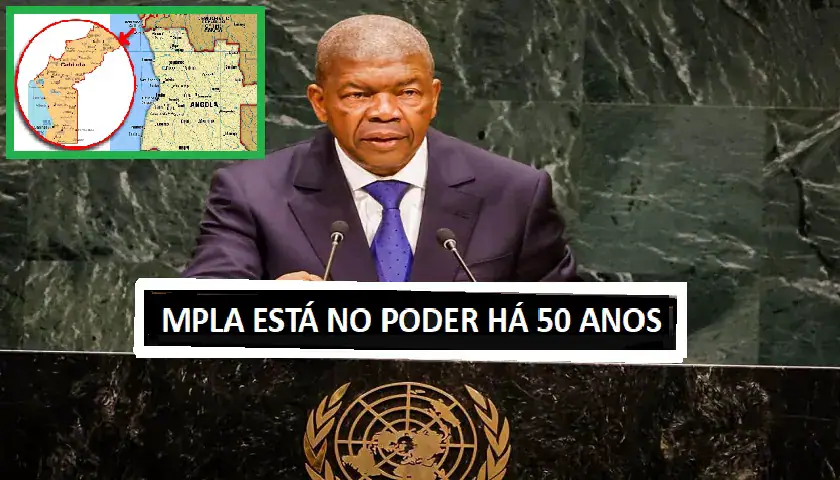
Angolan President João Lourenço recently spoke at the United Nations General Assembly, presenting himself as a promoter of peace and regional mediator. However, his address was criticized for not mentioning Cabinda, a territory whose sovereignty is disputed. Lourenço's stance on Cabinda reflects the Angolan government's position that the territory is a domestic issue, not a relevant international conflict.
The Angolan government, led by the MPLA party, considers Cabinda to be an integral part of Angola, citing the Alvor Agreements of 1975. However, this stance has been contested by autonomist and independence movements, such as the FLEC-FAC. By not addressing the issue at the UN, Lourenço avoided internationalizing the crisis and providing a diplomatic platform for the Cabindese cause.
Lourenço's interventions at the UN aim to position Angola as a peace diplomat in Africa, advocating for reform of international institutions, including a permanent seat for Africa on the Security Council. However, this image of stability is contradicted by the government's treatment of internal claims in Cabinda. The Angolan government views Cabinda as a matter of internal security and territorial integrity, refusing to renegotiate sovereignty.
Cabinda is a significant contributor to Angola's oil reserves, and the MPLA government is reluctant to make concessions that could compromise its revenue. In 2006, the government signed an agreement with the Cabindese Forum for Dialogue (FCD), which was criticized for marginalizing other factions of the FLEC and civil movements that continue to demand negotiations or a referendum.
Critics argue that Lourenço's government has consistently prioritized maintaining control over Cabinda over finding a diplomatic solution. The government's stance has been supported by the principle of sovereignty and non-interference in international law, which distinguishes between conflicts between states and internal disputes.
The dual standard applied by Lourenço's government has been criticized by some as a form of hypocrisy. While Angola promotes stability in the region to gain legitimacy from international organizations, it maintains a firm stance on Cabinda to preserve the unity of the state. This approach is reflective of the Realpolitik that often guides state diplomacy.
The lack of international support for the Cabindese cause has been attributed to geopolitical factors, including the prioritization of regional stability by major powers and the African Union. The fragmentation of Cabindese factions and civil society has also weakened the ability to present a united front and exert effective diplomatic pressure on international institutions.
Key points
- The Angolan government's stance on Cabinda has been criticized for contradicting its image of stability and peace promotion at the international level.
- The Cabindese cause has received limited international support due to geopolitical factors and the prioritization of regional stability.
- The fragmentation of Cabindese factions and civil society has hindered the ability to present a united front and exert effective diplomatic pressure.