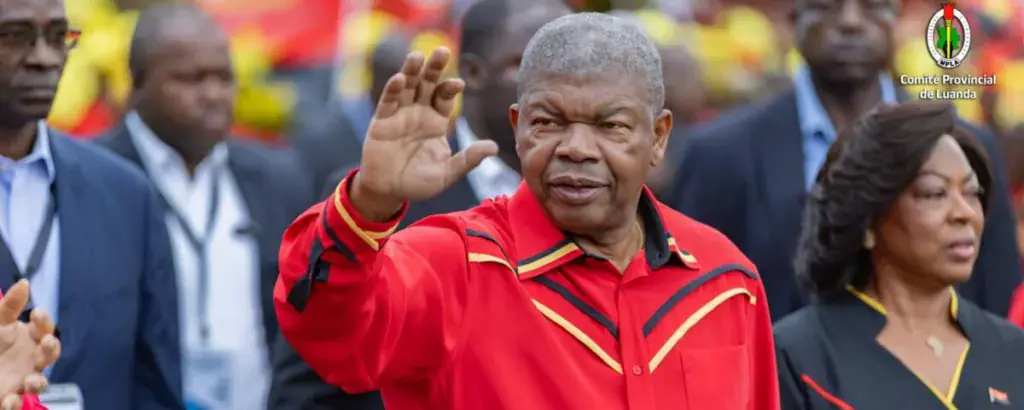
Angolan President João Lourenço has been accused of treating the country as his private property, with many citizens expressing concerns over his governance style and use of presidential powers. With a population of over 38 million people, Angola is a country where one man's decisions have a significant impact on the lives of its citizens. Despite this, Lourenço's leadership style has been criticized for being overly centralized, with many decisions being made without transparency or accountability.
According to critics, Lourenço's governance style has led to a lack of trust in institutions and a sense of hopelessness among citizens. Many Angolans feel that the president's small circle of advisors and beneficiaries are the only ones who benefit from his leadership, while the majority of citizens continue to struggle with poverty and lack of access to basic services. The president's office has not responded to these concerns, but critics argue that Lourenço's approach to governance is not only undemocratic but also unsustainable in the long term.
One of the key concerns is the use of presidential authorizations for contracting and procurement, which has been criticized for lacking transparency and accountability. According to a study by Olívio Quilumbo and Hélder Preza, Lourenço has approved over $61.5 billion in presidential authorizations for contracting and procurement without following the usual competitive bidding process. This has raised concerns about corruption and cronyism, with many arguing that the president's approach to governance has created a culture of impunity and corruption.
The use of presidential authorizations has been defended by some as a necessary measure to respond to urgent needs, but critics argue that this approach has been abused and has undermined the rule of law. The Law on Public Procurement does not provide a clear basis for such decisions, and many have questioned the lack of transparency and accountability in the use of presidential authorizations. This has led to concerns about the concentration of power in the president's office and the lack of checks and balances on his authority.
The concerns about Lourenço's governance style are not new, and many have drawn comparisons with his predecessor, José Eduardo dos Santos. While dos Santos was criticized for distributing favors and opportunities to a wide circle of clients, Lourenço has been accused of narrowing down the circle of beneficiaries and maintaining a predatory approach to governance. The fight against corruption has been touted as a key priority for Lourenço's administration, but many argue that this has been used as a pretext to silence critics and consolidate power.
The impact of Lourenço's governance style on ordinary Angolans has been severe, with many struggling to access basic services such as healthcare and education. The country's infrastructure, including roads, schools, and hospitals, is in a state of disrepair, and many citizens feel that the government has failed to deliver on its promises. The lack of transparency and accountability has also led to a culture of silence and fear, with many citizens afraid to speak out against the government for fear of reprisals.
As the country prepares for future elections, many are calling for a more nuanced and inclusive approach to governance. The concerns about Lourenço's leadership style and use of presidential powers are likely to continue to be a major issue in the run-up to the elections. With the country's economy and stability at stake, it remains to be seen whether Lourenço will be able to respond to these concerns and provide a more accountable and transparent form of governance.
Key points
- President João Lourenço's governance style has been criticized for being overly centralized and lacking transparency and accountability.
- The use of presidential authorizations for contracting and procurement has raised concerns about corruption and cronyism.
- The impact of Lourenço's governance style on ordinary Angolans has been severe, with many struggling to access basic services such as healthcare and education.