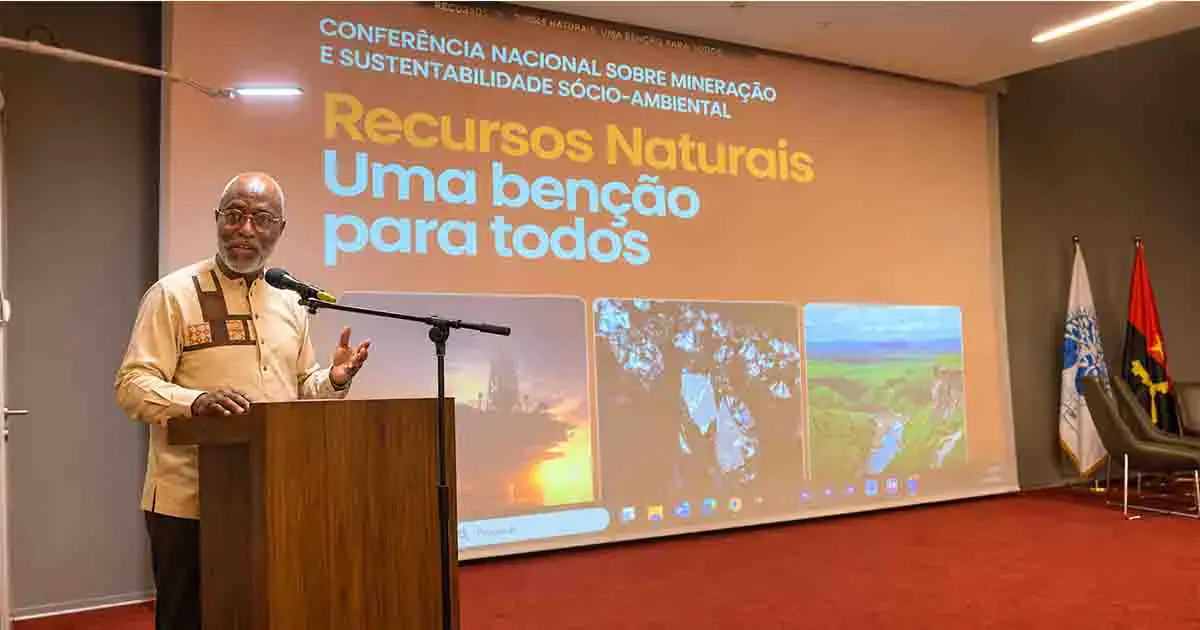
Angolan civic activist and political analyst Sérgio Calundungo has emphasized the need for mining companies to adopt effective measures to prevent social and environmental impacts of their operations. Speaking at the National Conference on Mining and Socio-Environmental Sustainability in Luanda, Calundungo stressed that compliance with national legislation does not guarantee respect for human rights of local communities. He highlighted the importance of companies obtaining social legitimacy from local populations.
Calundungo referenced the United Nations Guiding Principles on Business and Human Rights, approved in 2011, which are based on three pillars: the state's duty to protect human rights, companies' responsibility to respect them, and ensuring access to effective redress mechanisms. He noted that social responsibility initiatives, such as building schools and healthcare units, do not exempt mining companies from identifying and mitigating risks to the environment and local populations.
The activist pointed out that the lack of prior dialogue is a possible cause of conflicts in extraction zones. He advocated for effective consultation with communities, rather than just obtaining licenses and conducting environmental studies. Calundungo also emphasized that public hearings should not be limited to formal procedures, but should ensure adequate access to information and effective participation from potentially affected populations.
Calundungo further argued that the criteria used to evaluate the performance of the extractive industry need to be revised. He believes that companies' results should not be measured solely by production volume or social investments. Instead, evaluation should also consider conflict reduction, trust-building between companies and communities, and lasting benefits left for local populations after mining operations cease.
The activist highlighted that investment and human rights protection should be considered complementary dimensions. This approach would ensure that natural resource exploitation contributes to improving local communities' living conditions. Calundungo's remarks underscored the importance of responsible mining practices that prioritize human rights and environmental sustainability.
The National Conference on Mining and Socio-Environmental Sustainability was a joint initiative of the Episcopal Commission for Justice and Peace and Integrity of Creation of the Episcopal Conference of Angola and São Tomé and the Tchota Platform. The conference aimed to promote sustainable mining practices and address the social and environmental impacts of extractive activities in Angola.
Calundungo's advocacy for human rights and environmental sustainability in the mining sector aligns with growing concerns about the industry's impact on local communities and the environment. His call for responsible mining practices and effective community engagement reflects the need for a more nuanced approach to natural resource exploitation in Angola and beyond.
Key points
- Mining companies must adopt effective measures to prevent social and environmental impacts of their operations.
- Companies should prioritize community engagement and obtain social legitimacy from local populations.
- Evaluation of mining companies' performance should consider factors beyond production volume and social investments.