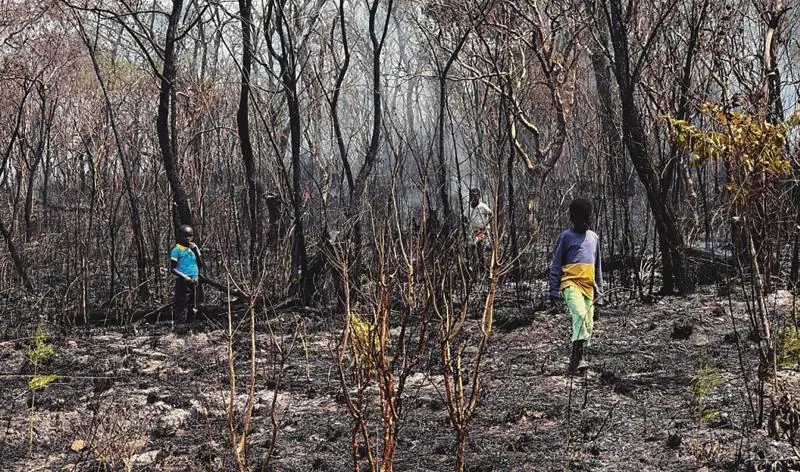
Angola is grappling with a significant challenge in managing wildfires, with approximately 30% of its territory affected by fires every year. Experts are advocating for a change in approach, emphasizing the need for the country to learn how to manage fires sustainably rather than just combating them. This comes as the world has witnessed an alarming increase in wildfires, with over 150 million hectares of vegetation burned globally between January and April 2026.
The global situation is dire, with the period between January and April 2026 seeing 50% more burned area than the recent average from 2012 to 2025, and double the area burned in the same period in 2024, which was the hottest year on record. The World Weather Attribution (WWA) network attributes this surge to climate change, driven by greenhouse gas emissions from fossil fuels. This trend suggests that the planet may be heading into a severe year of wildfires.
According to Simon Stiell, Executive Secretary of the UN Climate Change, the escalating number of wildfires is a clear indication of how global warming is impacting the world. He emphasizes that the costs of these wildfires, exacerbated by climate change, are straining national and household budgets, reducing food availability, and driving up prices at a time when the crisis of fossil fuel costs is already affecting billions of people worldwide.
Africa has borne the brunt of the wildfires, with a record 85 million hectares burned on the continent by April 2026, 23% more than the previous record. Countries such as Gambia, Senegal, Guinea, Mauritania, Mali, Ghana, Togo, Benin, Burkina Faso, Niger, Nigeria, Cameroon, Chad, Central African Republic, Sudan, and South Sudan have all reported significant wildfires. The WWA notes, however, that wildfires in African countries are often underreported.
The situation in Angola is particularly concerning, with experts like Osvaldo Ferraz calling for a new approach to fire management. The current strategy focuses on extinguishing fires, but Ferraz argues that Angola needs to adopt a more sustainable approach that includes managing and mitigating the impact of wildfires. This shift is crucial for protecting the country's environment and resources.
The WWA's analysis suggests that the likelihood of continued wildfires is high, given the current climate trends. The network stresses the importance of countries adapting to this new reality by implementing effective fire management strategies. For Angola, this means moving beyond mere firefighting to a more comprehensive approach that addresses the root causes of wildfires and their impact on the environment.
The Novo Jornal has highlighted the urgency of this issue in its recent edition, which is available digitally. The publication emphasizes that the challenge of wildfires requires immediate attention and action from governments, experts, and the public to mitigate their effects and work towards a more sustainable future.
Key points
- Experts call for a shift in approach to manage wildfires sustainably in Angola.
- Africa has seen a record 85 million hectares burned by April 2026.
- Climate change is driving the increase in global wildfires, exacerbating economic and environmental impacts.