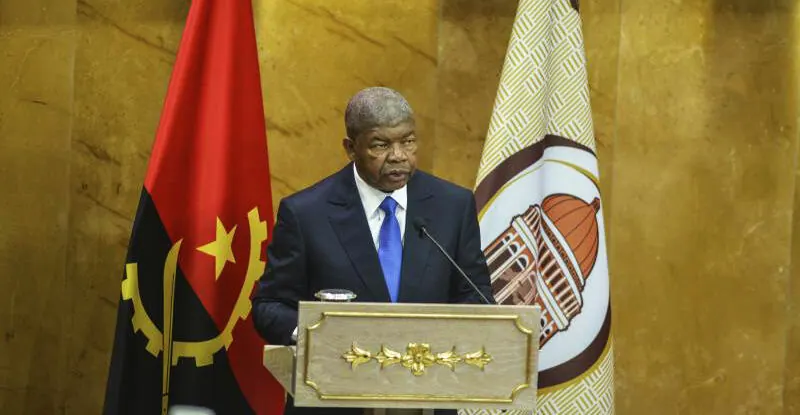
President João Lourenço of Angola has marked a decade in office, a period characterized by significant challenges and contrasting achievements. When he assumed power in 2017, Lourenço vowed to restore public morality, attract foreign investment, diversify the economy, and rebalance national development. His tenure has seen notable diplomatic advances and an unprecedented anti-corruption campaign. However, persistent structural issues in poverty reduction and improving living standards remain.
Lourenço's first term was marked by a bold and unexpected break with the previous power circles. He rapidly distanced himself from his predecessor, José Eduardo dos Santos, and undertook a radical reconfiguration of the state apparatus, military, and police leadership, as well as the ruling MPLA party. This initial move garnered him unprecedented sympathy both domestically and internationally, creating the illusion of a swift and painless transition to a modern state under the rule of law.
The second term has been characterized by significant wear and tear, exacerbated by global economic crises, galloping inflation, currency devaluation, and widespread disillusionment among the population. Evaluating his two terms requires looking beyond official speeches and propaganda narratives. While there was political will to dismantle traditional patronage systems and open up civic space, the government has been criticized for excessive centralization of power and slow implementation of economic reforms.
One of Lourenço's most successful aspects has been economic and international diplomacy. Angola has emerged from its previous isolation and established itself as a regional, continental, and Atlantic stability pivot. Hosting several high-profile international summits has been a notable diplomatic achievement, demonstrating Luanda's recovered financial and institutional credibility. The country has diversified its traditional geopolitical alliances, notably with the United States and the European Union.
A key aspect of Lourenço's legacy is the Corredor do Lobito project, a massive infrastructure and logistics initiative backed by Western capitals. The project aims to connect the Democratic Republic of Congo and Zambia's mines to the Atlantic, positioning Angola as a critical commercial corridor in Southern Africa. However, the challenge lies in translating this external projection and investment into local jobs and tangible development.
The fight against corruption has been a defining feature of Lourenço's presidency. The campaign has recovered billions of dollars in assets and properties diverted during the previous era. However, the process is marred by controversy, with critics arguing that it is selectively targeting certain individuals while sparing others. The recovered funds have not always translated into visible social investments or public infrastructure.
After a decade in office, Angola has made progress in macroeconomic stabilization, budgetary discipline, and creating an environment conducive to private investment. However, the country still faces significant challenges in the real economy and social welfare. The much-anticipated economic diversification remains largely on paper, and the agricultural sector continues to be dominated by subsistence farming.
Key points
- President João Lourenço's decade in office has seen significant diplomatic advances and an unprecedented anti-corruption campaign.
- The fight against corruption has been a defining feature of Lourenço's presidency, with billions of dollars recovered in assets and properties.
- Despite progress, Angola still faces significant challenges in poverty reduction, economic diversification, and improving living standards.